NOW YOU SEE ME: PRADA AND ELMGREEN & DRAGSET MAKE US LOOK–AND LOOK AGAIN

Written By: Ali Y. Khadra & Khansaa Houlbi

In a dimmed room in King’s Cross, Prada and Elmgreen & Dragset rewired the gaze – inviting us to sit, watch and wonder if the watching was mutual.

Ahhh, the algorithm. Our ever present oracle of taste, vanity, and distraction. The world wide web has become an expansive universe of seeing and being seen, of connecting and being relentlessly pursued for connection. One click on a small glowing box and the possibilities feel endless. What a thrilling moment to exist. What an exhausting one too.

Progress comes dressed in efficiency, accessibility and speed. It has delivered infinite inspiration while also flooding our feeds with overproduction. We are left craving stimulation at a faster and faster pace, as though meaning might land between swipes. This crowded theatre of spectatorship is a subject Prada has long interrogated. The house has staged these questions through its collections, but most vividly through Prada Mode, a travelling social club that convenes art, music and conversation around contemporary culture.

Courtesy of Prada

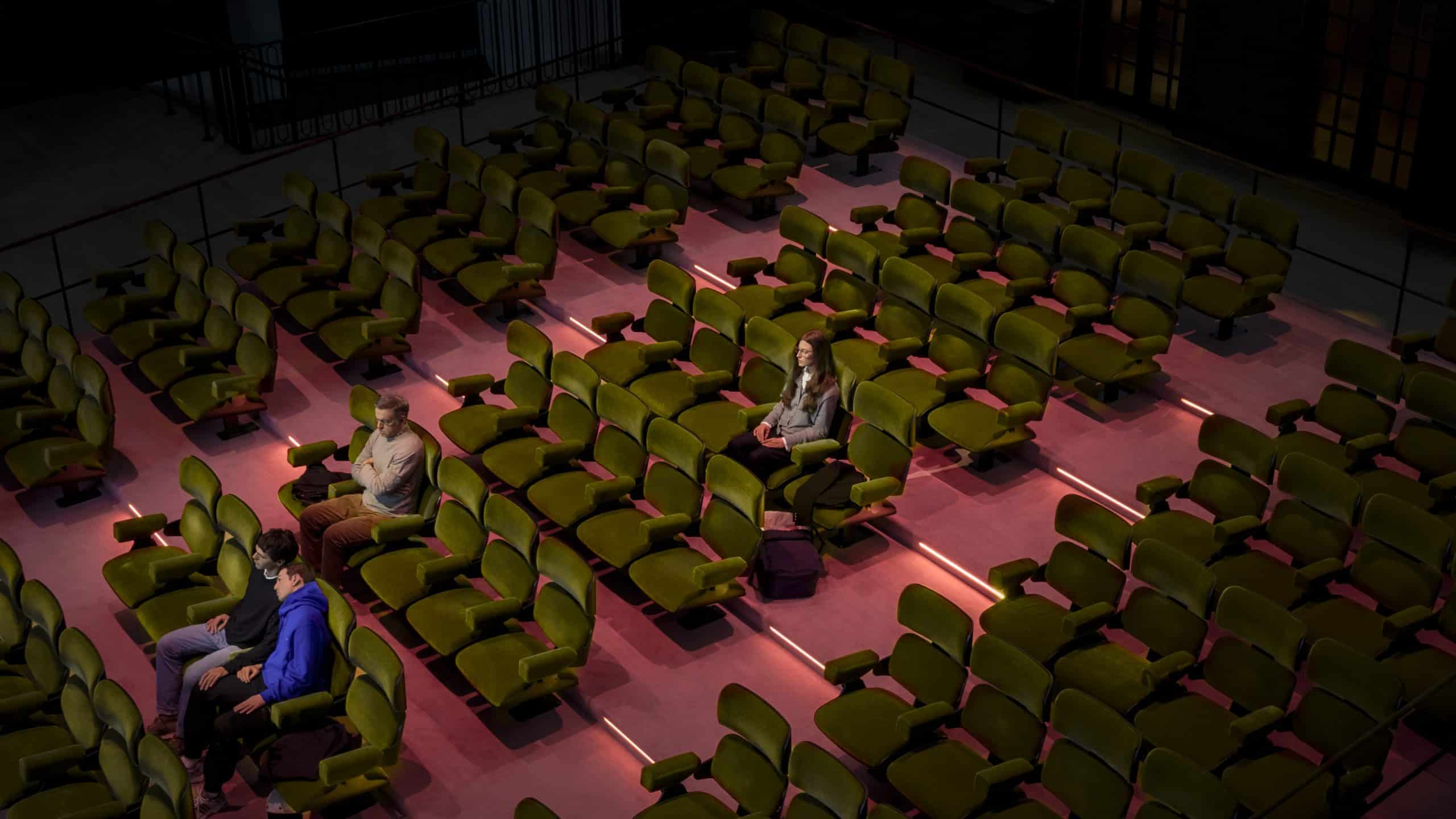
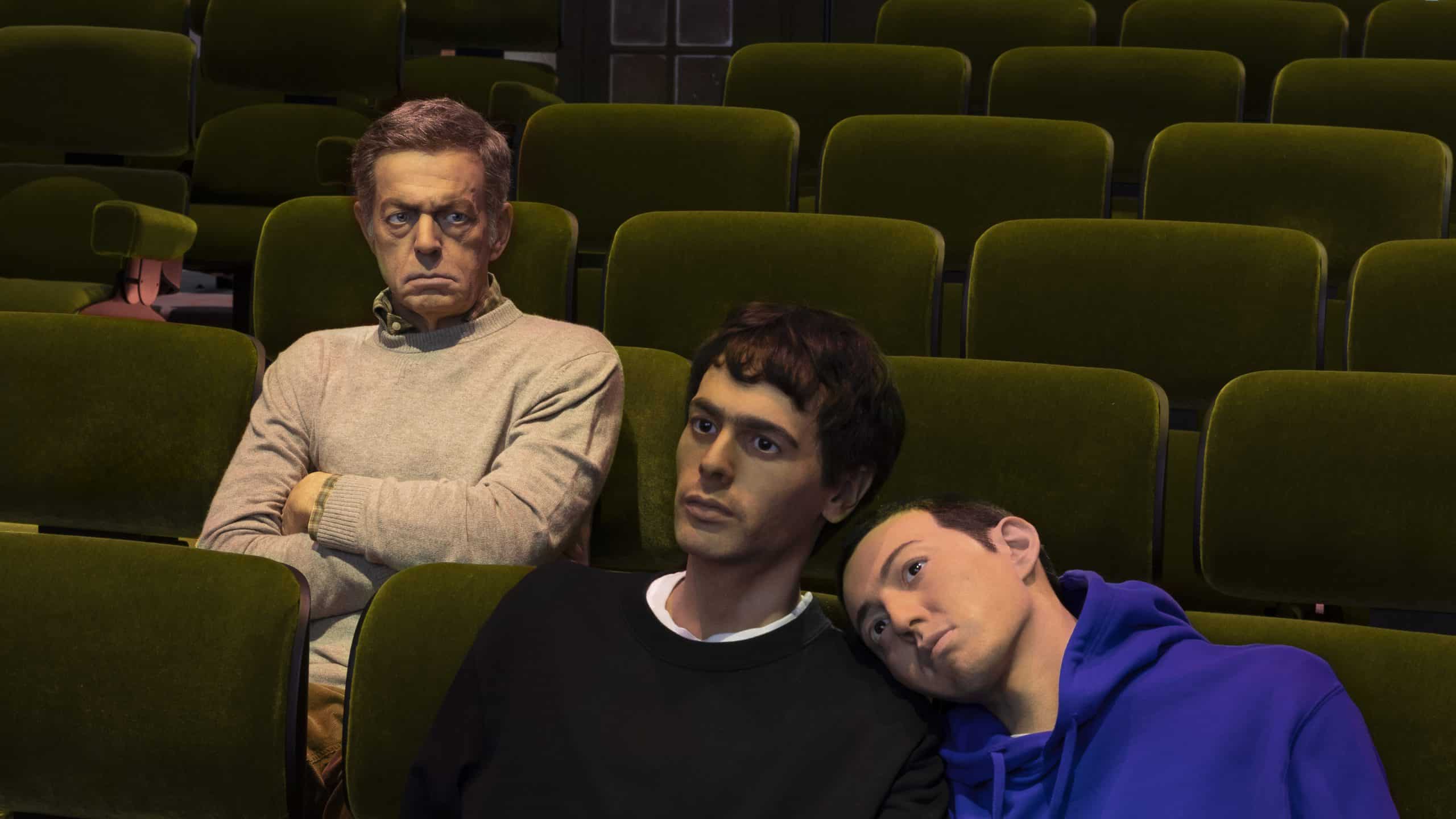
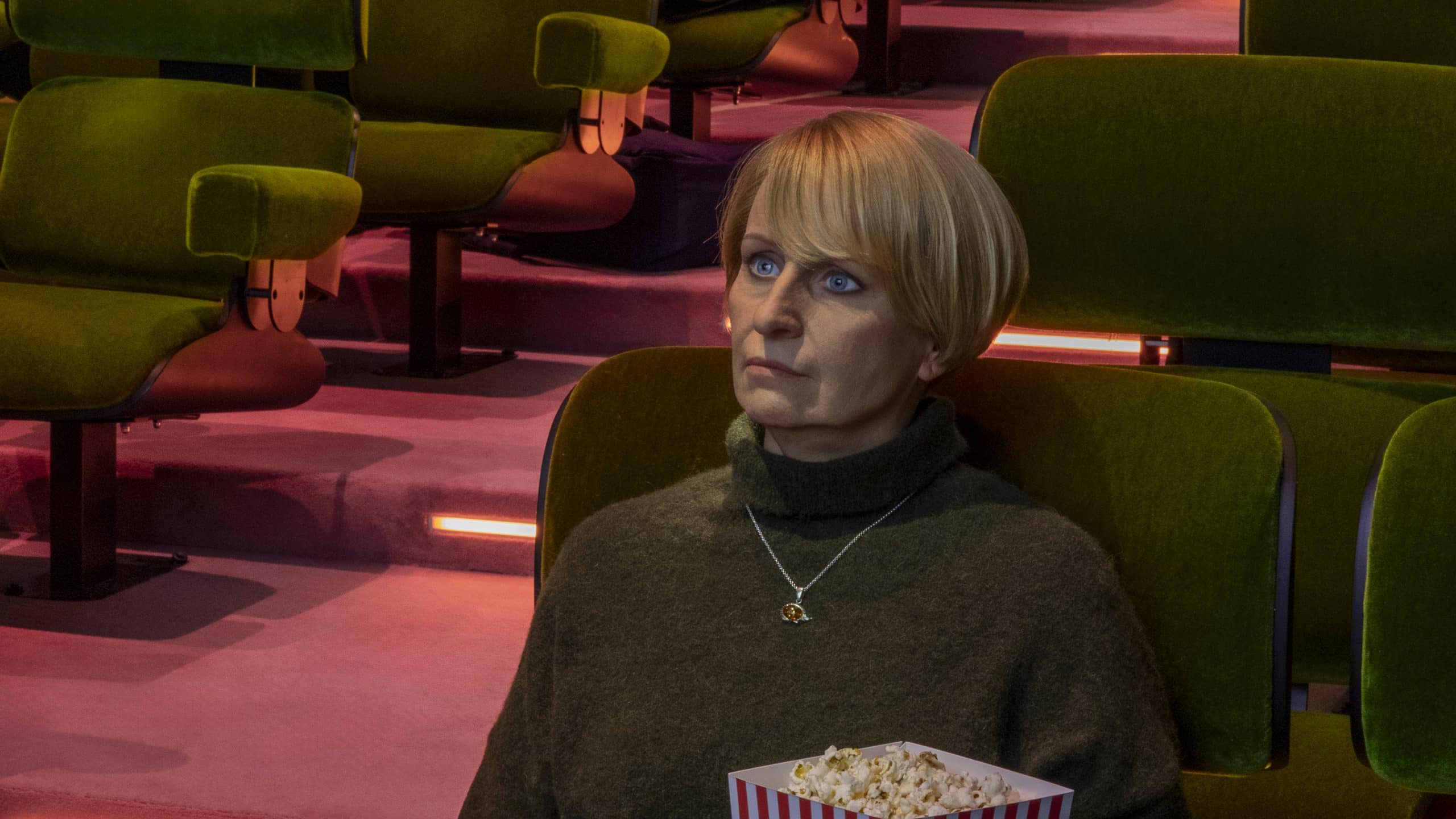
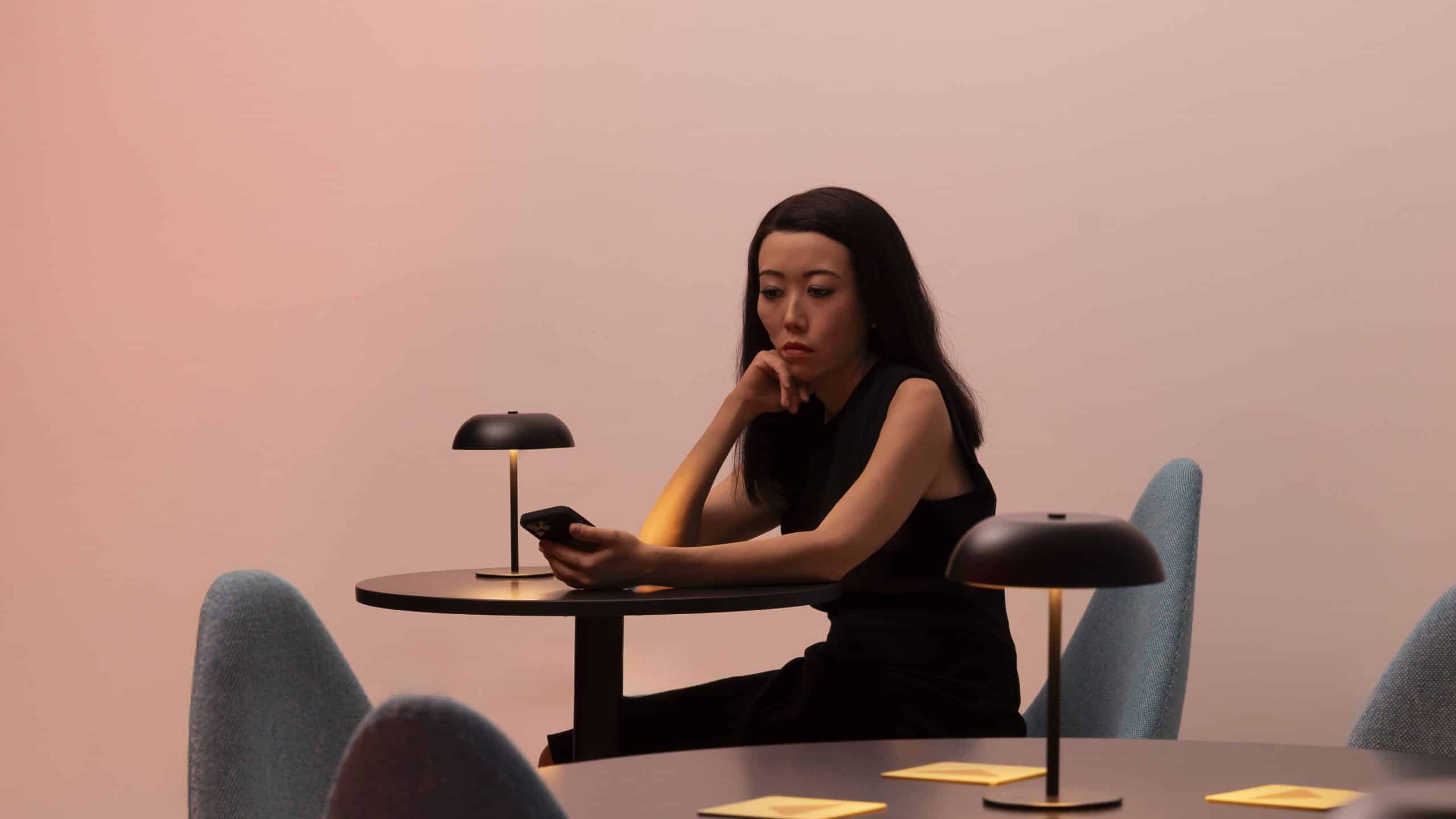
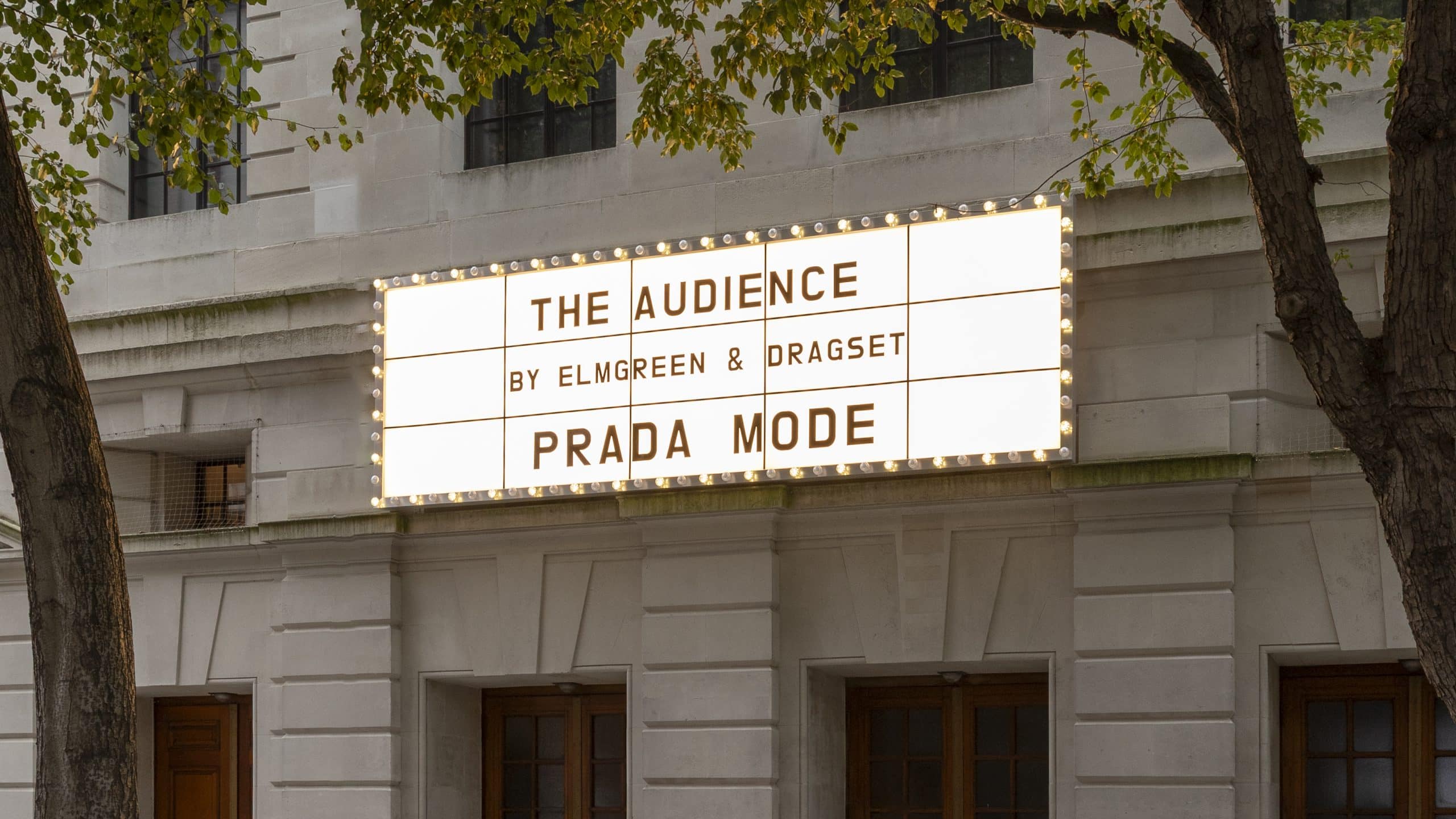
For its thirteenth edition, Prada Mode arrived in London at Town Hall in King’s Cross, reimagined in collaboration with Elmgreen & Dragset. Coinciding with Frieze, this multi-day encounter revolved around The Audience, an immersive installation that invited visitors to consider their own role as observers. A cinema played an intentionally blurred film on repeat, featuring a painter and a writer debating their creative practice. Five auditorium seats were occupied by hyperreal sculptures frozen in various states of attention. Nearby, a solitary woman appeared to FaceTime one of the film’s characters. Reality and fiction traded positions, subtly asking us who is watching whom.

We travelled to London to witness this clever collision of art and spectatorship, and sat down with Elmgreen & Dragset to learn more.


Courtesy of Prada

ALI Y. KHADRA: Can you tell us how this collaboration with Prada Mode came about?

MICHAEL ELMGREEN AND INGAR DRAGSET: We’ve had an ongoing dialogue with Fondazione Prada for many years, going all the way back to realizing [installation] Prada Marfa in Texas 20 years ago. Even though it was a self-initiated and self-funded project, Prada helped out by selecting and donating the shoes and bags that are still on display in the foreverclosed boutique in the ‘wild west’. In 2022 we did a big survey exhibition at the Fondazione Prada in Milan, focusing on the role of the body in our digital era. The Audience, our Prada Mode project this autumn, is in a way a continuation of the dialogue we started back then. How do we understand ‘audience’ now that we largely live and consume through different online platforms. We chose the format of a cinema to explore this theme, which made sense also considering Prada’s involvement with film and filmmakers over many years.

AYK: Can you walk us through the creative process behind The Audience – from concept to completion?

E&D: We have always been inspired by cinema; some of our favorite filmmakers are Eric Rohmer, Michael Haneke, Wim Wenders, Ingmar Bergman, and Alice Rohrwacher. Their work has informed how we approach our installation works, how sets and furnishings can convey a particular psychological state, atmosphere, or idea. In some ways, you could see The Audience as a deeper exploration into why not only movies, but the act of watching, of being part of an audience, is noteworthy in itself. The project began with that curiosity: what does it mean to gather and to experience something together? We wanted to explore the audience as both subject and mirror: how their reactions form part of a story, and how their habits reflect where we are as a society at a given moment. An audience is never neutral; it brings its own histories and desires. Throughout the process, we thought a lot about the rituals of spectatorship and how cinemas, theaters, and art museums create a kind of shared experience, almost temporary communities; for a moment, a group of people is experiencing the same thing. While each person is having a private moment, their thoughts, reactions, and presence still contribute to the larger physical and emotional landscape of the space. This exploration is also tied into the loss of communal spaces with the advent of new technologies, social media and streaming services, which can have the effect of isolating people from each other. With The Audience, we hoped to investigate the intersections of these ideas.

Courtesy of Prada

AYK: The installation is present at the Town Hall, why was it important for it to be displayed in that specific location?

E&D: Town Hall is a fascinating building. It was originally conceived as a civic space for public assembly. We were intrigued by the idea of turning such a site into a cinema, a setting also created for collective experience but associated with escapism and intellectual stimulation. The transformation of the main hall into a cinema resonates with our work in general, which often questions how spaces shape behavior. By transforming a space built for one purpose into another, we are able to play with the associations people might have with Town Hall.

AYK: What drew you to the idea of a blurred film loop as the narrative core of The Audience?

E&D: We had this idea of visitors entering the installation and immediately feeling like they’re arriving late to a film screening. That’s why the film is looped, so there’s no definite beginning or end. Then there’s the fact that the entire film was shot blurred, and although the images on the screen are nearly impossible to discern, there are these extremely lifelike sculptures surrounding you in the cinema seats. That contrast between the blurry film and the hyperreal figures creates a tension: the movie remains out of reach, while the audience, usually invisible, is rendered in minute realistic detail. Even if you want to focus on the movie, your attention turns to the figures, the ‘audience’.

AYK: What was the collaborative process like when scripting the film within The Audience?

E&D: As with all our works, our collaboration is based on conversation. Many people ask if it’s more challenging to work as a duo, but for us, it’s this constant editing process, and it’s incredibly generative to always have someone to bounce your ideas off of. What is fun about collaborative writing is that the story takes a different turn from what you individually might have expected. We keep sending sequences back and forth to each other, which we then have to react to. It is a bit like the Exquisite Corpse drawing game, just with words. We agreed early on that the two men, who seem to be in a dysfunctional relationship, were artists in two different fields; one is a writer and one is a painter, and within the script they discuss each other’s practices and audiences, which brings about a meta perspective in the installation as a whole.

Courtesy of Prada

Courtesy of Prada

AYK: How did the interplay of sculpture and film evolve in this project?

E&D: In the case of this installation, one can’t really live without the other. The two exist in dialogue: the blurred moving image invites projection and imagination, while the figures anchor that ambiguity in something tangible. Together they form a kind of closed circuit between seeing and being seen.

AYK: Do you see your installations as having an ending or are they designed to live in a permanent state of becoming?

E&D: We see visitors as co-creators. Every person will bring something different to each artwork, seeing them in ways we couldn’t have imagined ourselves. Hopefully, each work creates an atmosphere for reflection and maybe even subtle shifts in perception. In that sense, our installations don’t have a fixed ending – they exist in a state of becoming, shaped both by context and the audience that engages with them.

AYK: What do you think is lost or gained when art viewers become content consumers?

E&D: Assuming you mean consumers of social media content, there’s been a lot of overlap between The Audience and online content; the installation circulated widely on Instagram and took off in a way we didn’t totally expect. And there’s no denying that social media can be a powerful tool for sharing art with a wider audience. We feel, though, that something essential is lost when art is viewed exclusively online. The Audience is an immersive work that can really only be fully experienced in person, with all your senses. The hyper-connectivity of our time can isolate people, and being part of a physical audience creates a togetherness, often with people you might not think you have things in common with. It’s both intimate and collective and can create a feeling of belonging, and we hope that The Audience served a bit as a reminder of this.

AYK: How would you say this piece fits into your larger body of work?

E&D: We are interested in what happens when we transform exhibition spaces into something that eliminates the feeling of a traditional ‘white cube’. We’ve previously called this approach “dressing up the white cube in drag”. When a gallery suddenly takes on another identity, like an abandoned swimming pool, a hospital ward, or a living room, we’ve noticed that visitors will approach the sculptural works on display in a different manner. The perception of both one’s physical presence, the work and the spatial environment gets slightly altered.

AYK: And lastly, what is your favorite sorbet flavor?

MICHAEL ELMGREEN: Lemon-mint.

INGAR DRAGSET: Cucumber. And we both love the sorbet that they make from their own grapes at Rochelle Canteen in Shoreditch, London.
END OF STORY