
Bright Ambition Starring Bader Kabbani in Fendi
Written By: William Buckley
At night, the bright lights of New York City’s streets shimmer like stars. Headlights of yellow cabs streak past like comets. Street lamps flare like small suns. Among those suns, Bader Kabbani steps into Fendi’s collection like superheroes’ suits. Black on black and white on white, against the city's celestial glow.
Fame used to come in quite a clear order: do the thing, become very good at the thing, land the big role, break through… then the fame. But Bader Kabbani has noticed that, for him, this sequence is slightly out of sync. The Saudi actor, writer, director, and producer is already being courted by fashion houses, shot for magazine covers, and invited into rooms that, in days of yore, would have come later. He hasn’t had that breakthrough role yet, he says. Given his journey so far, we chalk this up in no small part to an extremely endearing humility.
Bader left Jeddah as a teenager, studied law, and returned to Saudi Arabia as its cultural landscape was beginning an incredible shift. He worked at Vice, taught himself filmmaking by actually making films, and picked up an award at the Madrid International Film Festival for his efforts. He trained as an actor in Madrid and later at Juilliard, signed with an agency
in the US, and has written, produced, and directed projects of his own. He is now in New York, writing his first feature while auditioning, producing, modeling and continuing to build a life in an industry that rarely offers anyone an easy route in. He wonders, he says, whether he has earned the recognition he is already receiving.
But Bader belongs to a generation where the old timetable of fame has become increasingly upended. Anyone aspiring to anything can now utilize a bevy of digital platforms to reach an audience. Those audiences can watch the auditions, the travel, the fittings, the failures, and the snapshots of work still in progress. A public can embrace a person long before their defining role.
And while Bader is wary of that, the audience already paying attention is responding to something real, whether that’s his ambition, the narrative he’s built, his cultural fluency, his curiosity, or his work ethic. He’s moved between cities, careers, languages and expectations.
For him, the major role, the big breakthrough, is still to come. But the old idea that a career only begins when the industry formally announces it is outdated. Sometimes people arrive while they are still becoming. And Bader is doing both
WILLIAM BUCKLEY: You grew up in Jeddah and left for Miami when you were 16, before the huge cultural changes we’ve seen in Saudi Arabia. What was childhood like then, and what is it like going back now?
BADER KABBANI: Before I moved out, society was very traditional. At that age, I didn’t know what I was going to study or do with my life. My friends were going into traditional jobs and I remember thinking, “How am I ever going to make money?” My dad is a workaholic, my brother went into finance, and everything around me was very by the book. So my primary goal became proving I could do something by the book too. I did well at school, then moved
to the US and eventually went to law school. When I came back to Saudi, suddenly this creative industry was opening up. I remember thinking, ‘I wish this had happened a few years earlier’. When I left, pursuing the arts or film wasn’t even a conversation I could have with my family. At college I would go to auditions, hoping I might land something I could bring home as proof that this could be a career. That didn’t happen, so I came back and worked at a law firm for about a year. Then I got a job at Vice in Saudi. That was the first time I saw the cultural shift in action. I quit law and never looked back.
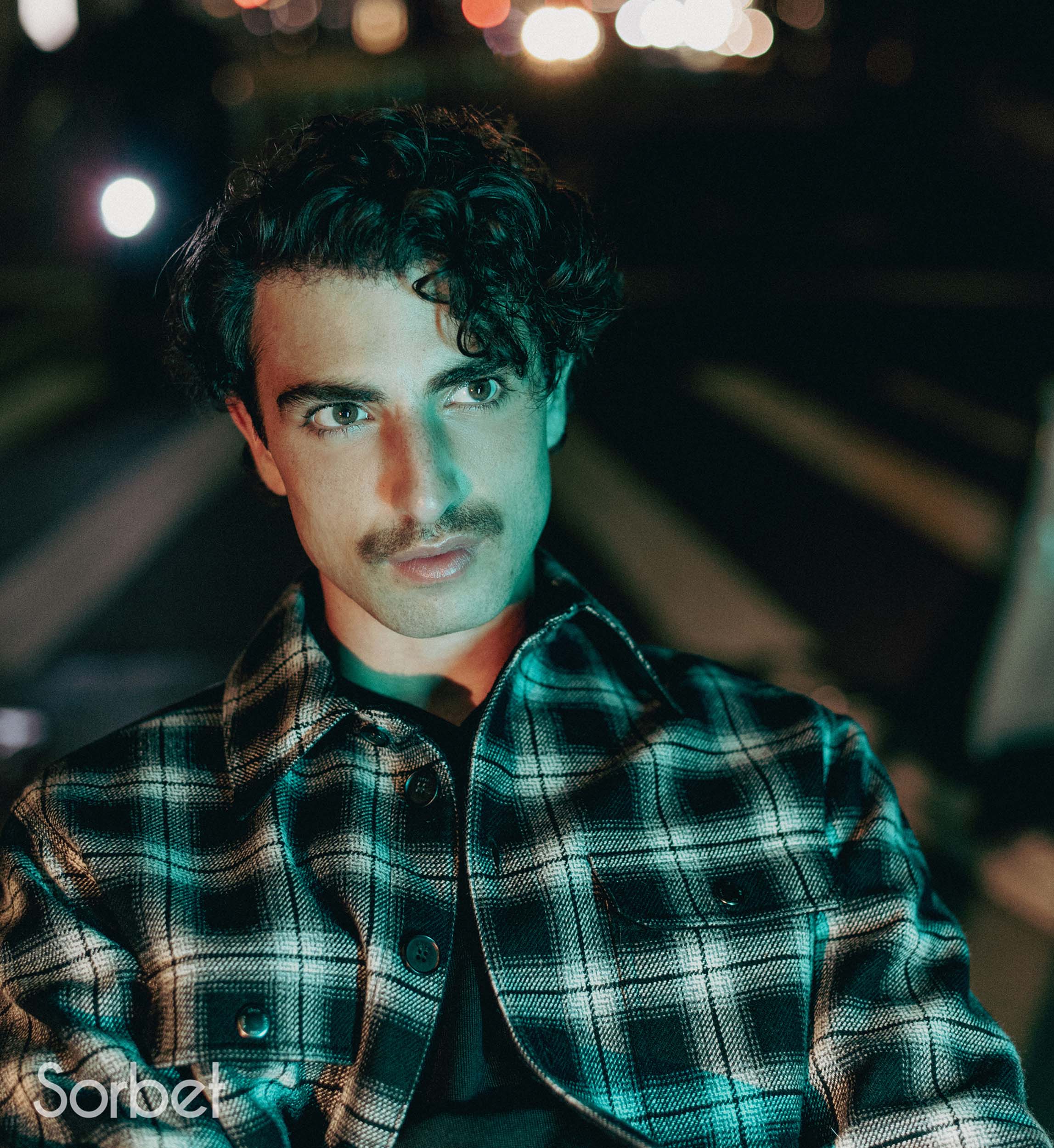
Check wool jacket, wool sweater, FENDI
WB: You had already lived in Los Angeles and London by then. Which city changed you most?
BK: We travelled a lot as a family, but I hadn’t really developed my own mentality until I lived by myself. LA was the first chapter where I had my own place, although most of my friends were Arab and Saudi, so I was in foreign territory while still connected to home. London was different. It was around Covid and I think that was where I really began to seek my own path.
I was still in law school, so I had this purpose in my head, but the creative part of me was becoming harder to ignore.
WB: Was film always there?
BK: Since I was seven. I would lock myself in my room and watch films all day. My brother was the golden child. He was a racer from a young age; cameras would come to the house and interview my parents, he was athlete of the year. And my parents, bless them, did not shy away from favoritism [laughs]. I was shy and quiet, so films became my escape. Ironically, my dad was the one saying he wouldn’t love for his son to become an actor, but I would steal his DVDs. He had this huge library. That’s where I fell in love with film.
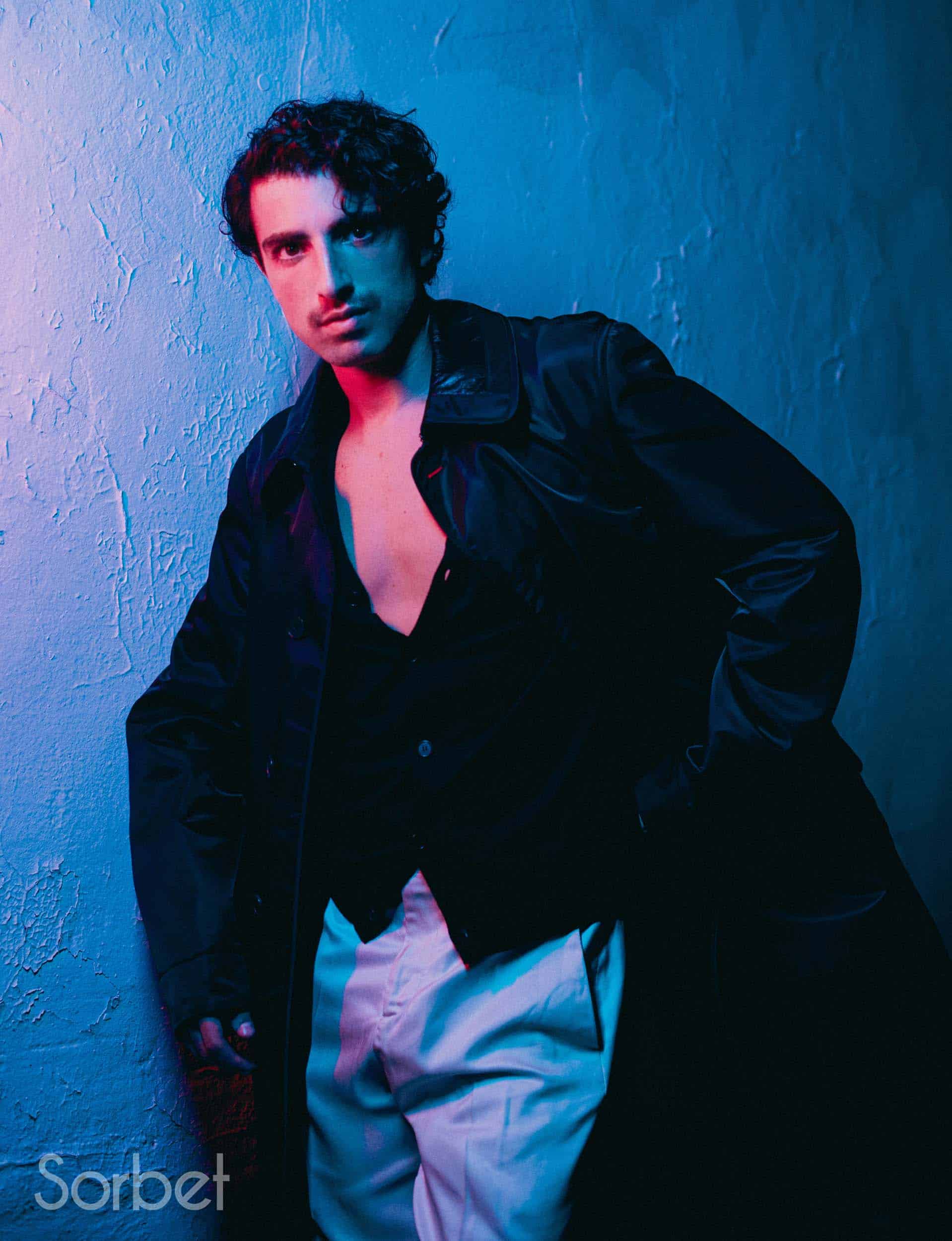
Check wool jacket, wool sweater, FENDI
WB: So you knew people made a living doing this, but it still felt fantastical?
BK: Completely. I knew filmmaking existed, but the idea of becoming part of it felt like fantasy. It wasn’t spoken about.
WB: Your parents were presumably happier with law?
BK: Absolutely. I think my mom still introduces me to people as her lawyer son.
WB: Even now?
BK: It’s better now, but I’ve had comments like, “If you want to get married and we have
to speak to the family, don’t you need a job?” I’m like, ‘I am working. This is the job.’ It’s just a language they’re not familiar with. Until they see me on a big cinema screen in something that feels undeniable to them, they’ll probably still interview think it’s a fantasy.
WB: But you’ve already entered an industry that is notoriously difficult to get into.
BK: That’s the dilemma. I’m incredibly grateful, and social media has helped, but I still very much feel like I haven’t done the thing I’ve always aspired to do, which is act. Sometimes I’ll be at a shoot or an event and think, what am I actually known for? I’m grateful for the attention, but I don’t always feel aligned with why it’s there.
WB: Almost as if the attention has arrived before the role you imagined would justify it?
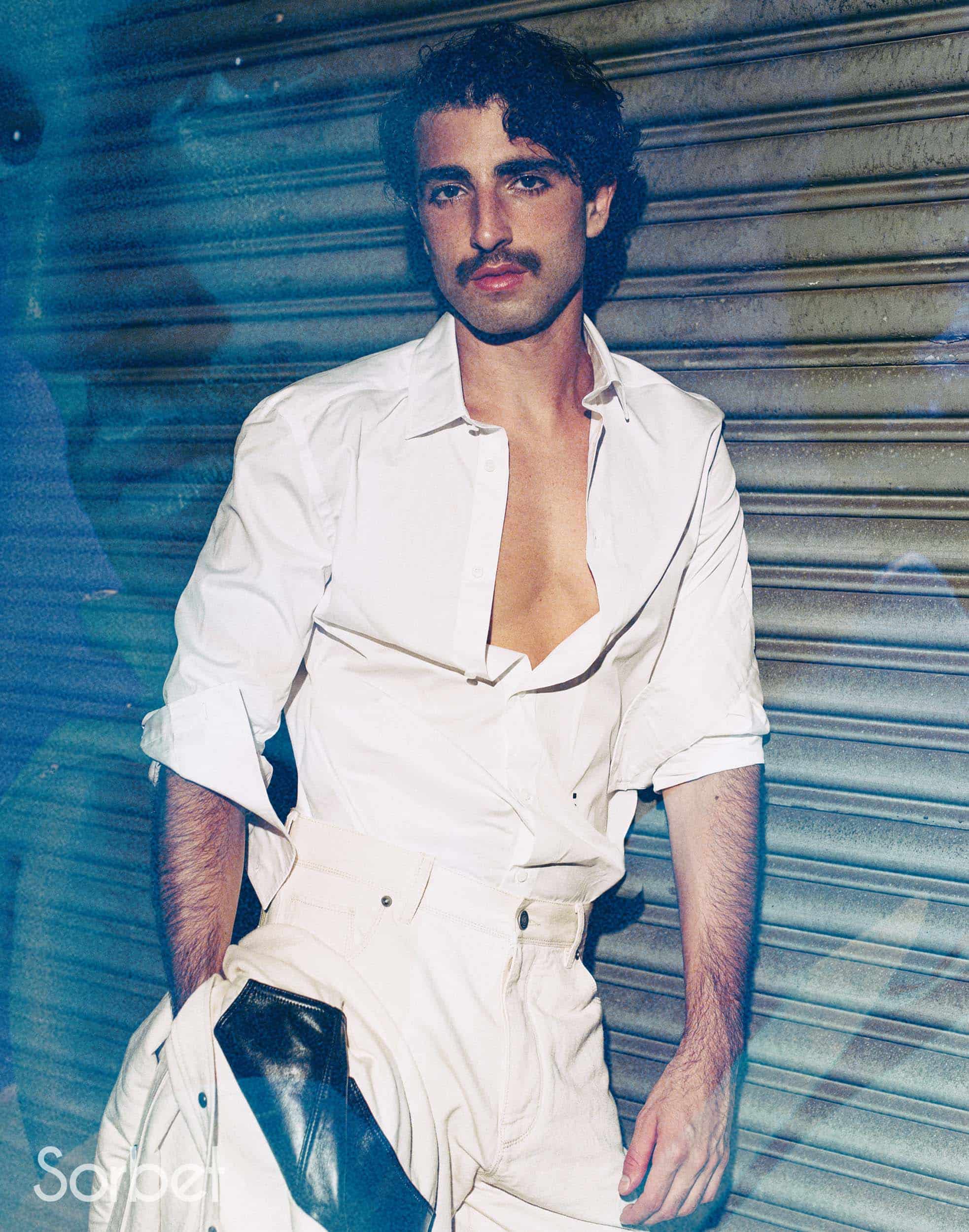
Shirt, ivory denim and black leather shirt, denim trousers, FENDI
BK: Exactly. I’m not doing this just to be seen. I’ve been on theater stages and felt that flow state, and that’s what I’m drawn to: tapping into different human experiences through scripts. But the shoots and events are part of the game. Usually you see someone get the role, and
then the attention follows. I worry that because the attention came before the role, it could somehow hurt my chances because people have already formed opinions.
WB: I wonder whether that chronology has simply changed. Social media allows people to build an audience before a huge vehicle arrives. You don’t need a studio marketing budget for people to discover you.
BK: I agree. It’s a huge advantage. But I also go to events and look around and think: noise without substance reeks. I haven’t yet delivered the things I spend day and night preparing for. I’ll be at home reading scripts, reaching out to directors I admire, asking to read their work. Sometimes I offer to help as a producer because the law background and my experience on sets are useful. Indie directors appreciate that. And if there’s a role, I’ll ask to audition. Sometimes I get it, sometimes I don’t. I feel like I have something to offer, and until I’ve offered it, the noise still feels like noise to me. Maybe that’s imposter syndrome.
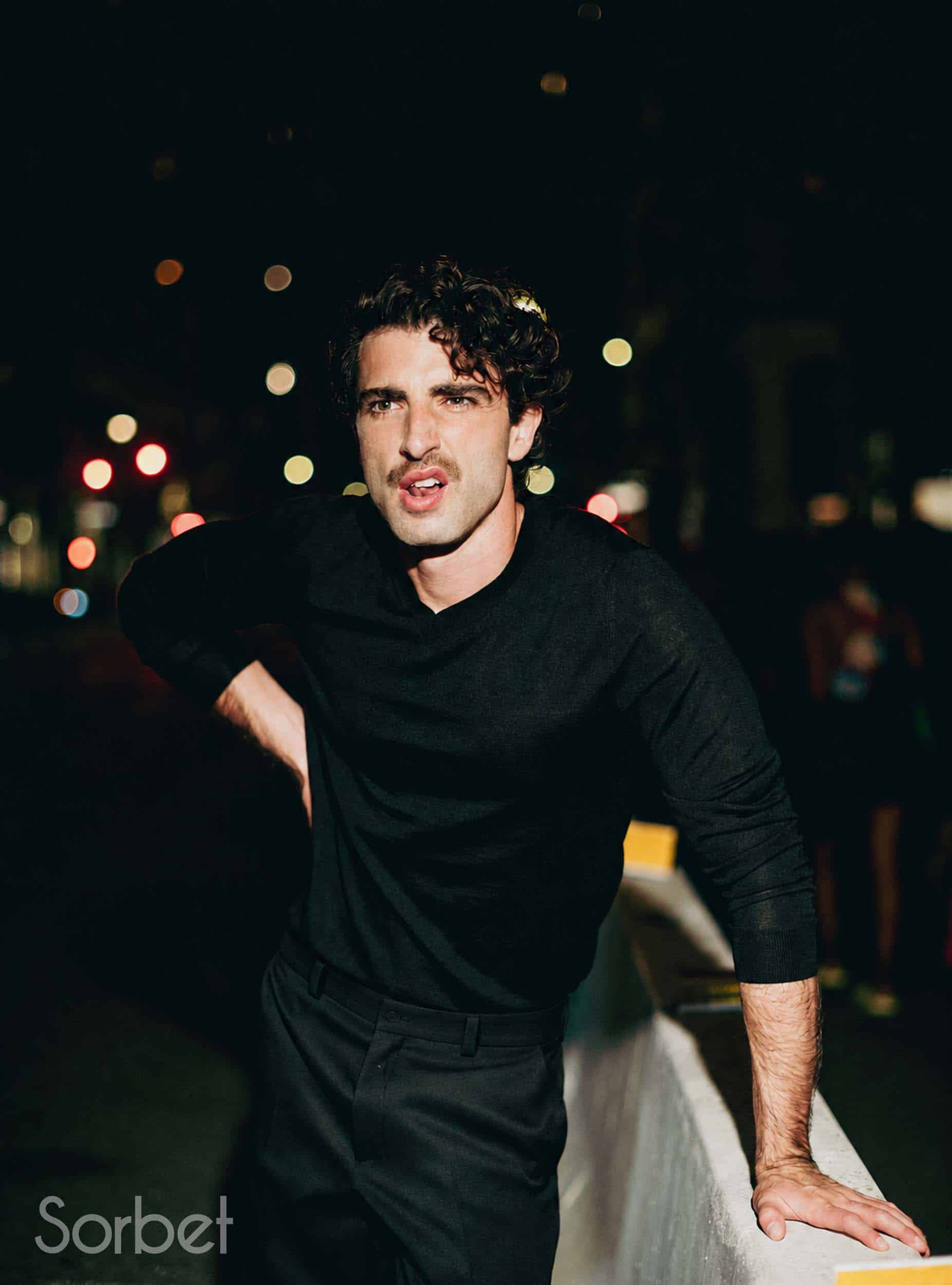
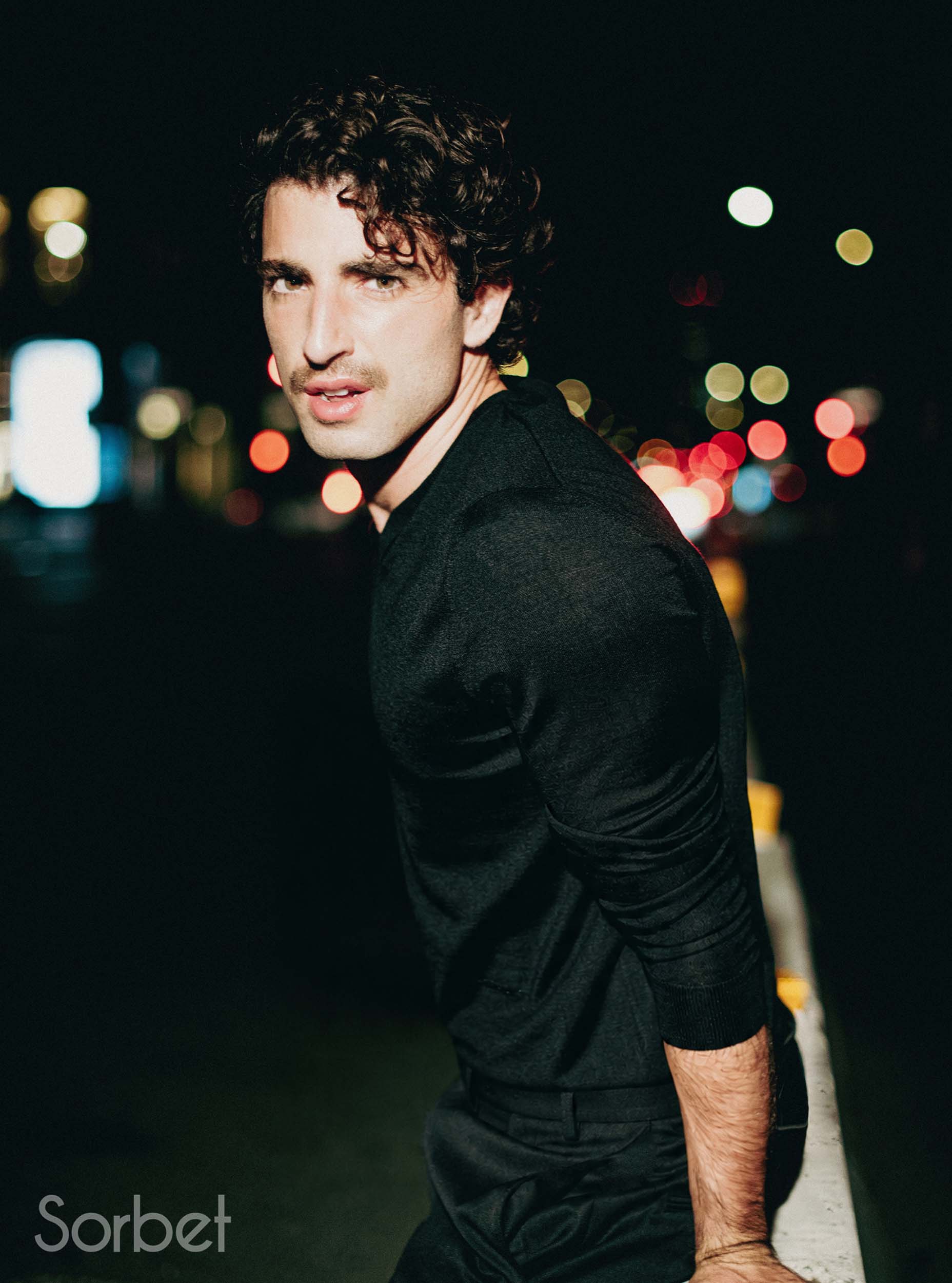
Wool sweater, trousers, FENDI
WB: You act, write, direct, and produce. Was that always the plan?
BK: I wish it were just acting [laughs]. Producing is the dirty work of production and often gets the least credit, but it’s also what I have the most control over. Directing came from writing my own scripts. If they won’t cast you, you have to write the roles yourself. I recently shot a short film in Mexico City. These things take time because I have to earn money and reinvest it into the work. My father said, “If you want to do this, do it, but I can’t help you. Why is it my job to make your dream come true?” From his perspective he’d be investing in art and he doesn’t see the return in that.
WB: Although he did help with your first film.
BK: He did. When I was in law school he gave me about £1,000. I paid the DOP [director of photography] something like £150 for a day rate. That was me learning to produce in real time.
I started incredibly small, made the film, and ended up getting a little award from the Madrid International Film Festival. That was the first time I thought, ‘I don’t need a formal education to make a film.’ I can educate myself by doing it. On set, almost nothing goes exactly to plan, so you’re constantly solving problems.
Over time that accumulated into producing skills. Now I can read scripts from bigger directors and productions and understand where I can add value. I’ll direct what I can direct, write in my downtime and produce when I need to. Acting is still the thing I want most, but it’s also the thing I have least control over.
WB: How did Juilliard change you?
BK: I had trained before, at an acting studio in Madrid, but Juilliard was another level. You have to audition to get into the division, so even when I felt like an imposter, I could remind myself that I had been accepted.
On the first day I had stage fright in a way I’d never experienced. My jaw locked, my arm went tense, my feet went numb. I thought I might pass out. Then they handed me a 30-page script that I had to perform with no breaks, with huge monologues. I knew I had to get through the physical anxiety as well as the acting.
I had a scene partner who matched my energy. We would meet in the park four times a week and repeat the scene until we knew it so well that memory was no longer the obstacle. Then we could experiment. That changed me. It became less about surviving the text and more about being present. I also started sharing TikToks about the experience because my audience is largely Saudi. I wanted people to see that this world in the arts is real and that there is room for us. I was the only Arab in my class. I don’t know whether that’s because Arabs aren’t applying, but I wanted to encourage Saudi actors to travel, train and gain that outside perspective. It helped me enormously.
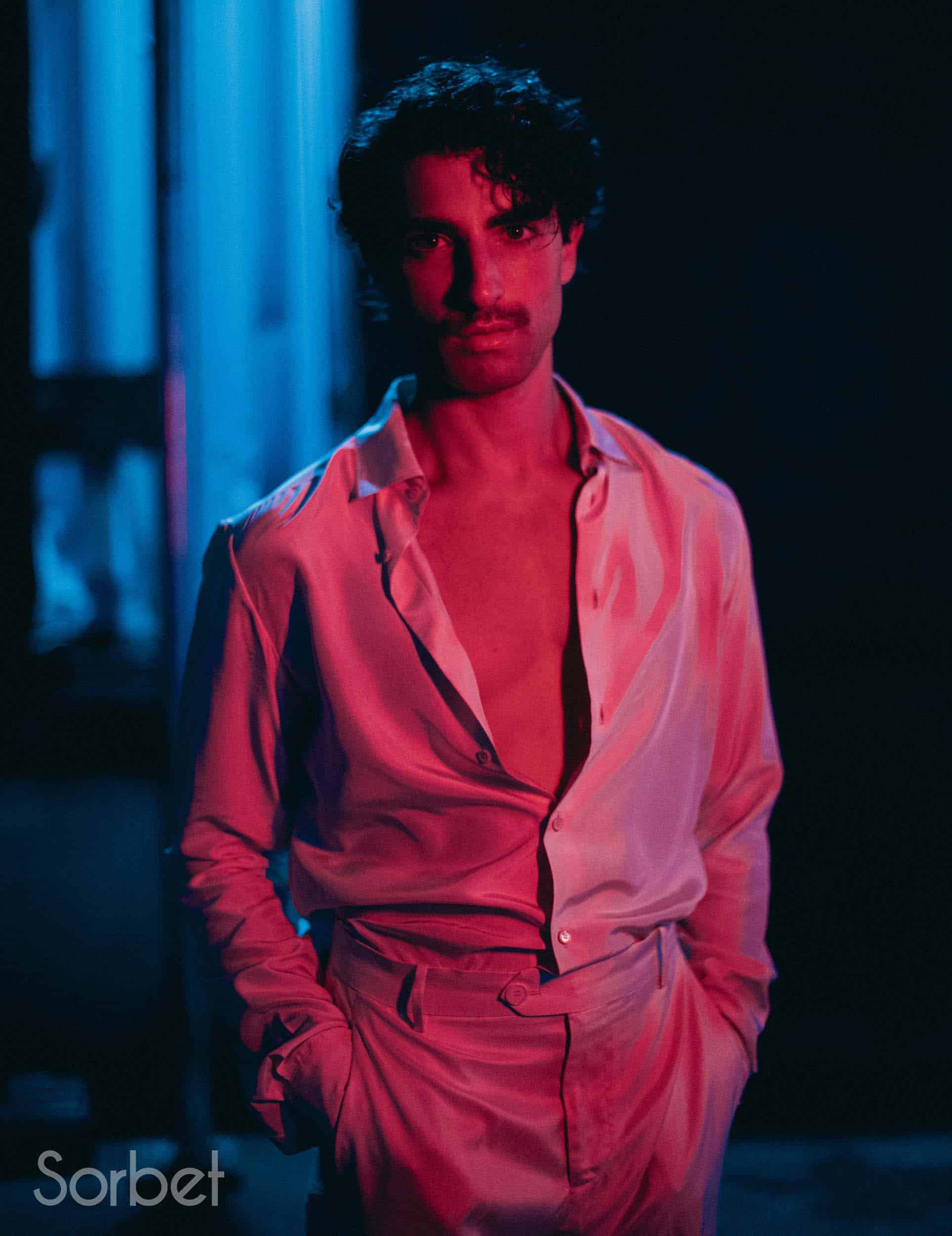
Silk shirt and trousers, FENDI
WB: Saudi’s film industry is still very young. Does that give you an advantage, or does it create another set of problems?
BK: Both. People know me there, but I’ve still struggled to get the roles. There can be a very specific idea of what a convincing Saudi looks or sounds like on screen. I’m from Jeddah, from the Hijaz. It’s historically a region with external influence, and I don’t necessarily fit the stereotype people expect.
I came back to Saudi after Juilliard wanting to work there. I connected with Saudi actors and writers and was excited to be part of what was happening, but I kept hitting walls with casting. I’ve even been asked to wear contact lenses at auditions. At some point I realized I wasn’t going to hate how I look because of a role. I had faced enough challenges elsewhere in my life that this became something I could dismiss rather than internalise. Eventually I decided to move to the US. It’s not starting from zero because I have the training and experience, but it is a new beginning.
WB: Representation of Arabs in American film has also changed enormously. Fifteen or 20 years ago, the range of roles was painfully narrow.
BK: Exactly. That’s why I really look up to someone like Ramy Youssef. He made comedy that is connected to his Middle Eastern heritage but is also grounded in reality. We’re not all terrorists, we’re not all one stereotype. Arab people exist in every part of society. What he has done sets a precedent. The industry is changing enough that I’m not discouraged by it in the way I might have been 15 years ago. Of course, I still get auditions where the character is a refugee, because that remains one of the dominant narratives people write about the Middle East. But, ultimately, it comes down to who gets to create the narrative.
WB: Is that why writing and producing matter to you, even if acting is the dream?
BK: Exactly. After this call I’m going back to writing my first feature.
WB: What’s it about?
BK: I want to explore the internal dilemma between where I come from and where I’m headed. I think a lot of Arabs who live away from where they come from experience that tension. There are family tensions that grow out of it too. My relationship with my father has shaped me as an artist and a writer. It has also taught me compassion. I’ve accepted that his mentality and mine can be completely different even though we come from the same household. I’m connected to my origin, but I also try to stay open enough to relate to other people. That contradiction is interesting to me as a storyteller.
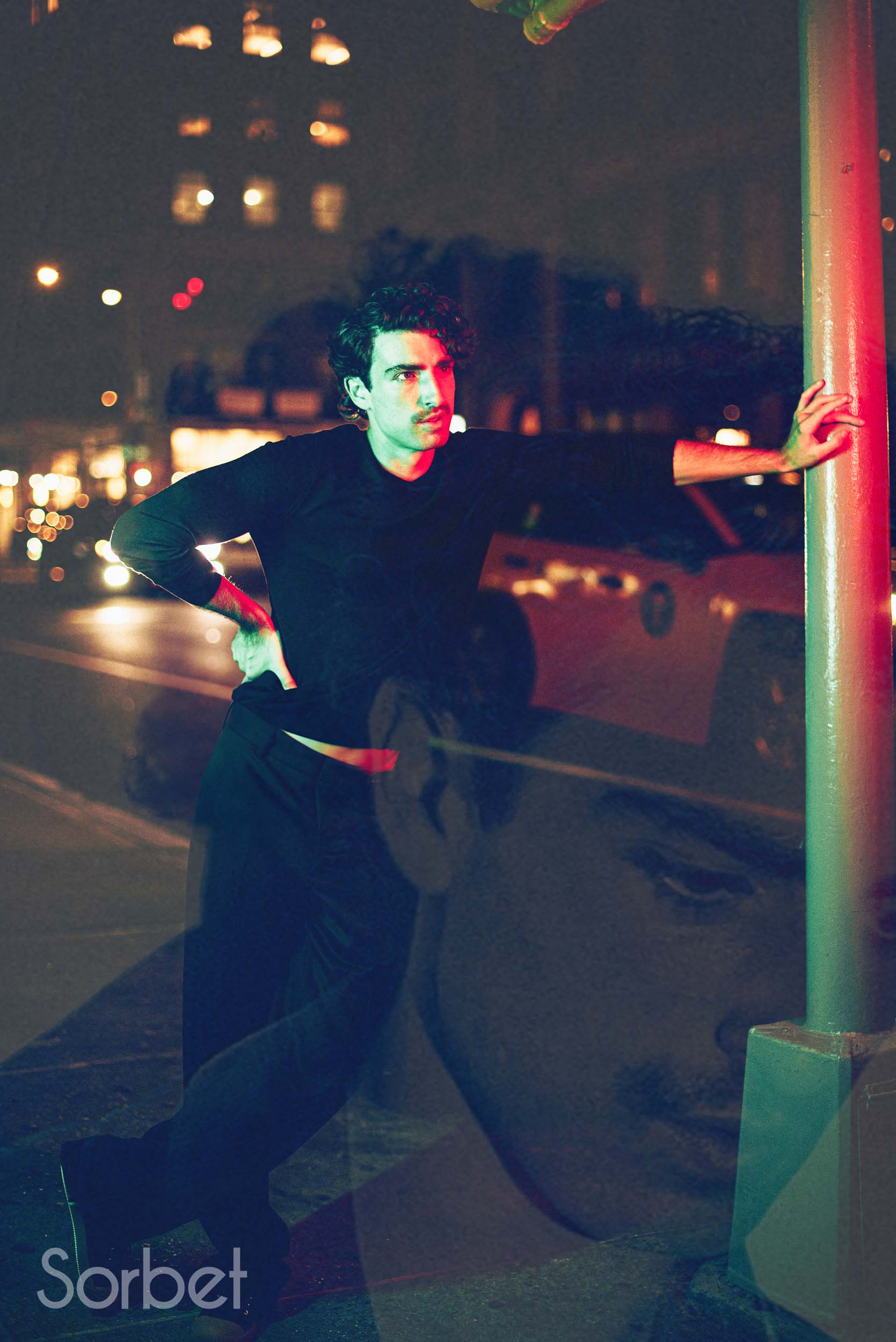
Wool sweater, black trousers, nappa low-top sneakers, FENDI
WB: What kinds of roles do you dream about when you remove the question of stereotype entirely?
BK: I’d love to play a superhero. I’d love to play a spy. People tell me I look one way and sound another, which is actually perfect for a spy. A spy has to morph into different characters. I studied history for my bachelor’s degree too, especially the First and Second World Wars, so I’d love to play a soldier. My appearance changes a lot depending on my hair, facial hair or even how tan I am. I look different in every photo, and I want to use that. That ability to morph is the dream. It’s why I learned Spanish.
WB: You trained in Madrid without speaking much Spanish initially, right?
BK: Yes. In Madrid people speak Spanish much more than English, so I had to take language classes while reading scripts and watching films, especially Almodóvar’s. I fell in love with it. It didn’t feel forced. The film I shot in Mexico City is about a Palestinian who leaves the Arab world and ends up at an ayahuasca ceremony in Mexico City. He speaks to the shaman in Spanish, but it’s his third language, which is also my third language, so the accent made sense for the character. Then I learned how many people from Lebanon and elsewhere in the Arab world had migrated to Latin America and shared some version of that journey. Learning the language started opening other kinds of roles to me.
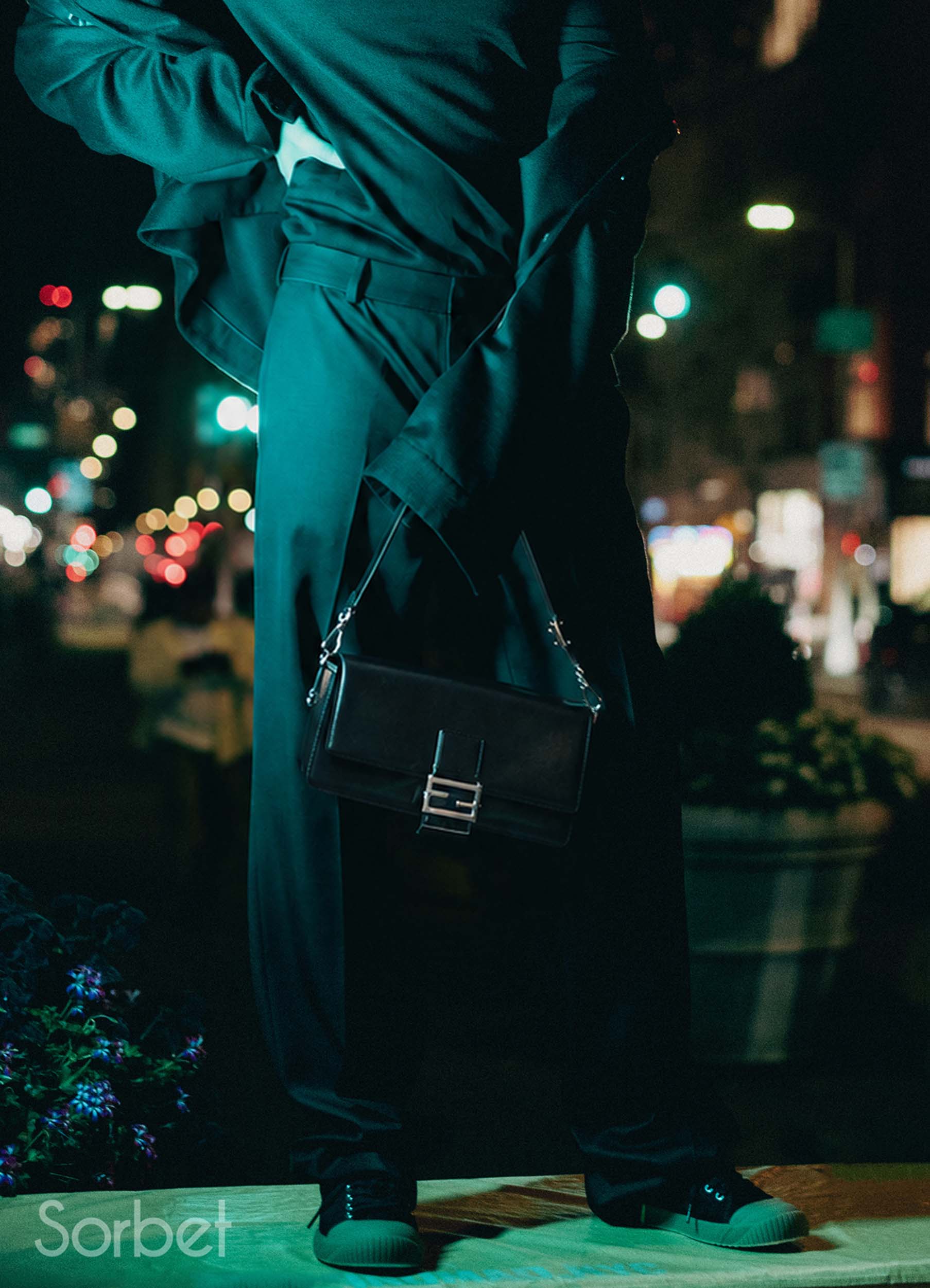
Cashmere and leather blouson, wool sweater, trousers, Baguette Urban leather bag, nappa low-top sneakers, FENDI
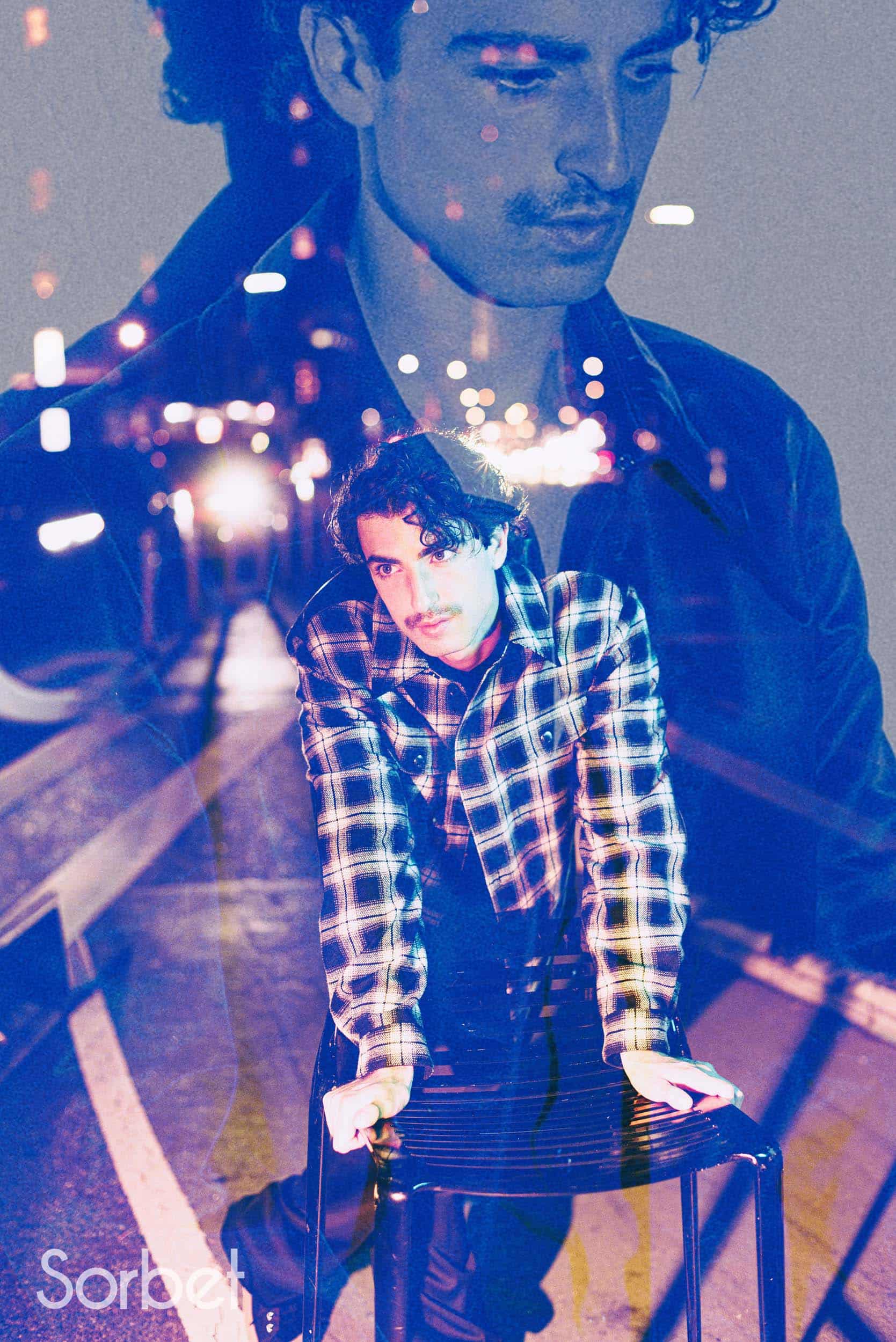
Check wool jacket, wool sweater, trousers, nappa low-top sneakers, FENDI
WB: Does that make the arguments about Saudi dialect frustrating too?
BK: Very. In Saudi film, people often prefer the Najdi dialect. I’m Hijazi. But after learning an entire language in two years, when someone tells me I couldn’t adopt a dialect for a role, that doesn’t make sense to me. Actors train. That’s the job. To be clear, I’m talking about specific experiences I’ve had with people who have the leverage to make those decisions. It’s part of being in a very new industry. Maybe my path is to write stories about Hijazi people and create the narratives that aren’t there yet.
WB: You’ve talked about worrying that modeling, fashion and events could eclipse the acting. But perhaps those things are also part of building enough familiarity that people eventually write with you in mind.
BK: I hope so. On paper, I’ve probably done more modeling than acting recently, and more events than time on set, because those things come faster. Roles aren’t in my control. So I’m riding the wave. I had something going in the Middle East, and moving to New York was a risk. I’ve only been here two weeks. But my intention is to align myself more fully with why I started doing this in the first place.
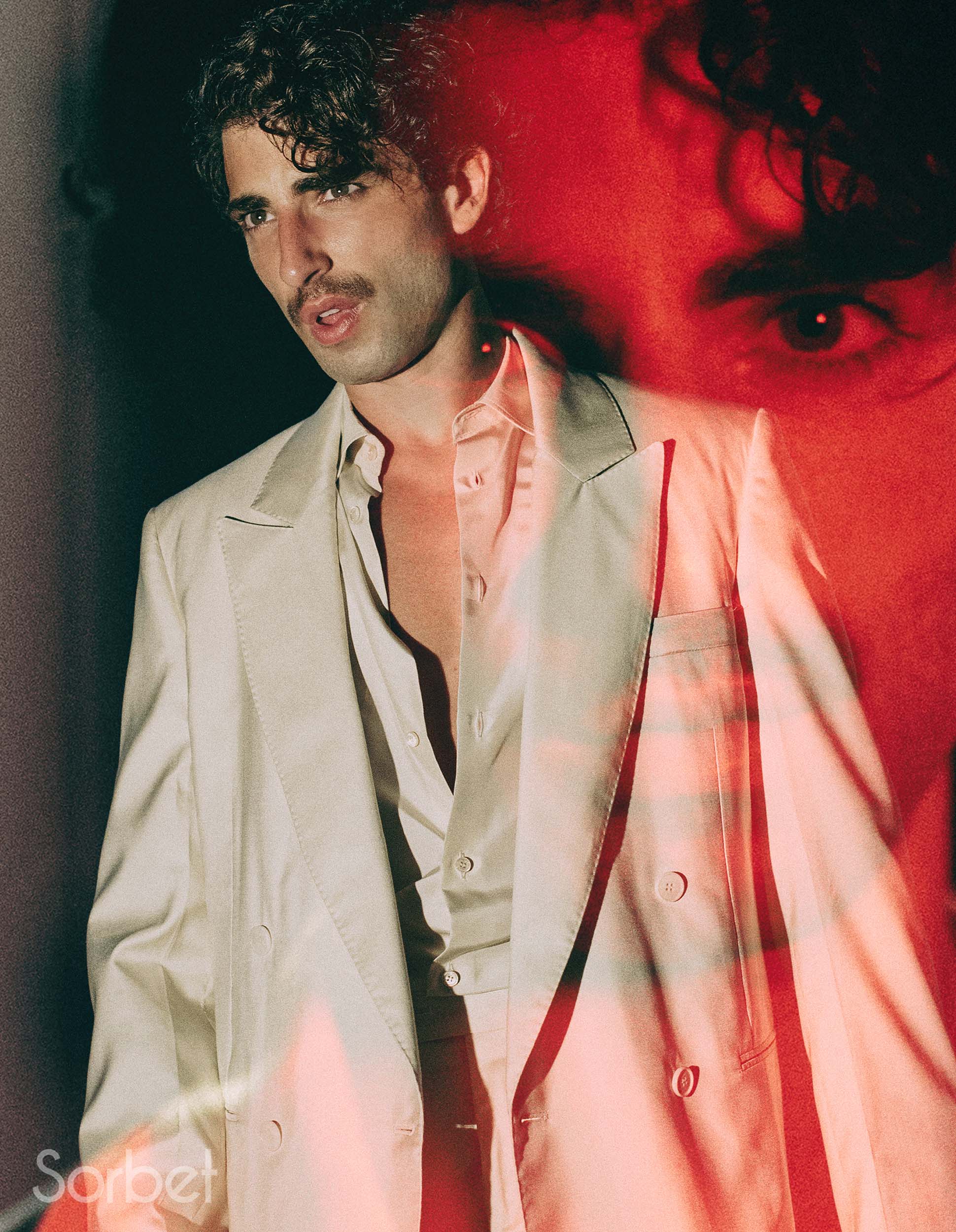
Silk poplin blazer, silk shirt, silk poplin trousers, FENDI
WB: Why New York rather than LA?
BK: LA feels very far from the Middle East, and I don’t want to disconnect from home. I still want to move between both worlds. Also, I’ve lived in LA before. I’m from Jeddah, where you spend so much of your life in a car, and I couldn’t move somewhere and do that again. In New York I can walk everywhere. There’s theater, television, film, writers, actors. I just feel more like a New Yorker.
WB: You’re on the Lower East Side, right?
BK: Yes. And you feel everybody’s ambition here. It’s where I need to be.
WB: Last question: favorite flavor of sorbet?
BK: Mango.
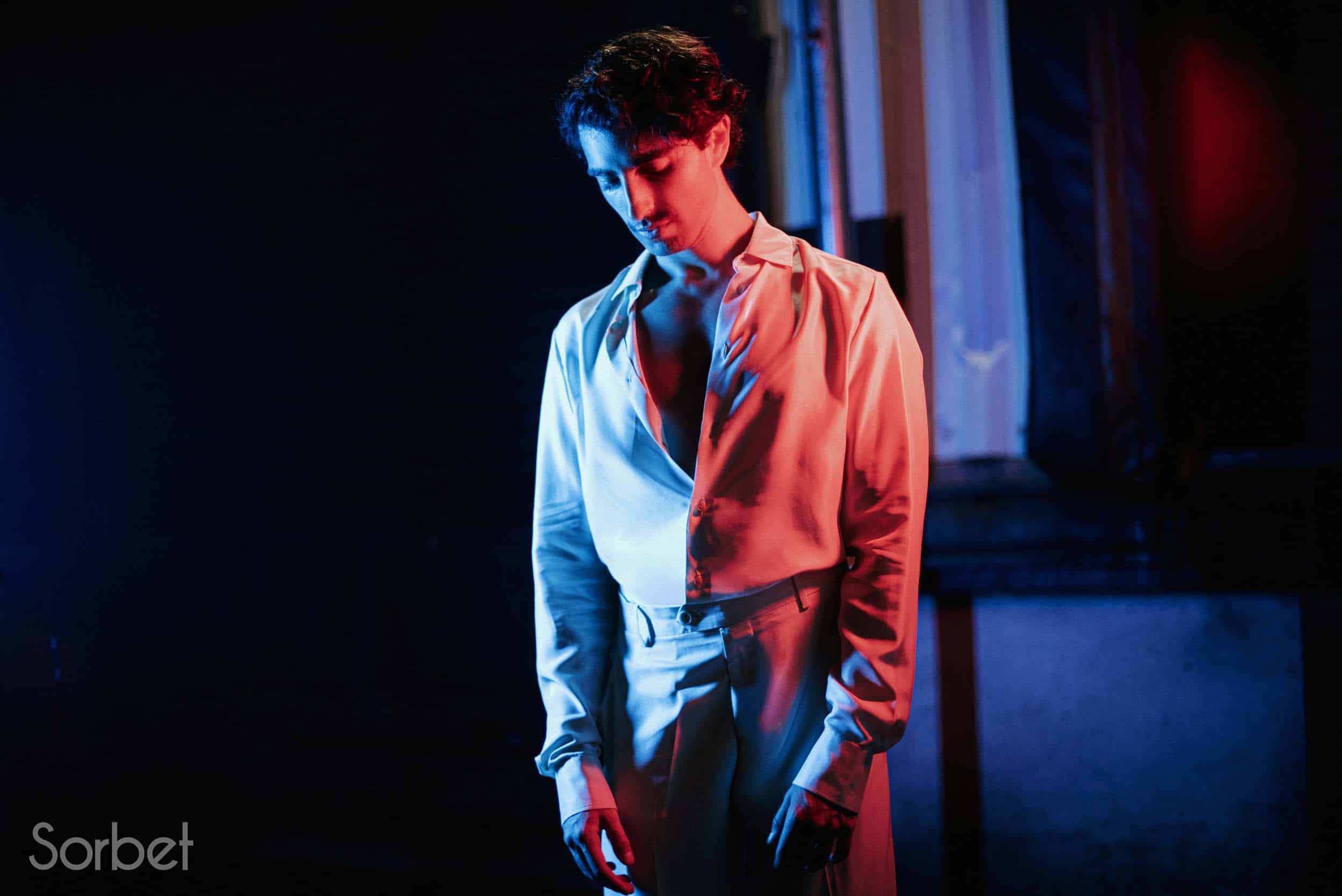
Silk shirt, silk poplin trousers, FENDI
Grab your copy of Sorbet Issue 53 // The Cosmos Issue: read.sorbetmagazine.com
Starring Bader Kabbani | Creative Concept Studio Sorbet | Videographer Alexandra Babyak | Editorial Direction William Buckley | Production Dakota Griffin | Grooming & Hair Adrian Alvarado | Fashion Fendi | City New York
Related Photoshoot, Fashion
- Fashion
- 5 Min Read
Mytheresa Welcomes Winter with a Hot New Brunello Cucinelli Drop
November 11, 2026
- Fashion
- 5 Min Read
A Plushie-Filled Festive Fairytale for Miu Miu’s Holiday 2026 Campaign
November 10, 2026