AL BACIO STARRING KISS FACILITY IN VALENTINO PRE-FALL 2026

Written By: William Buckley

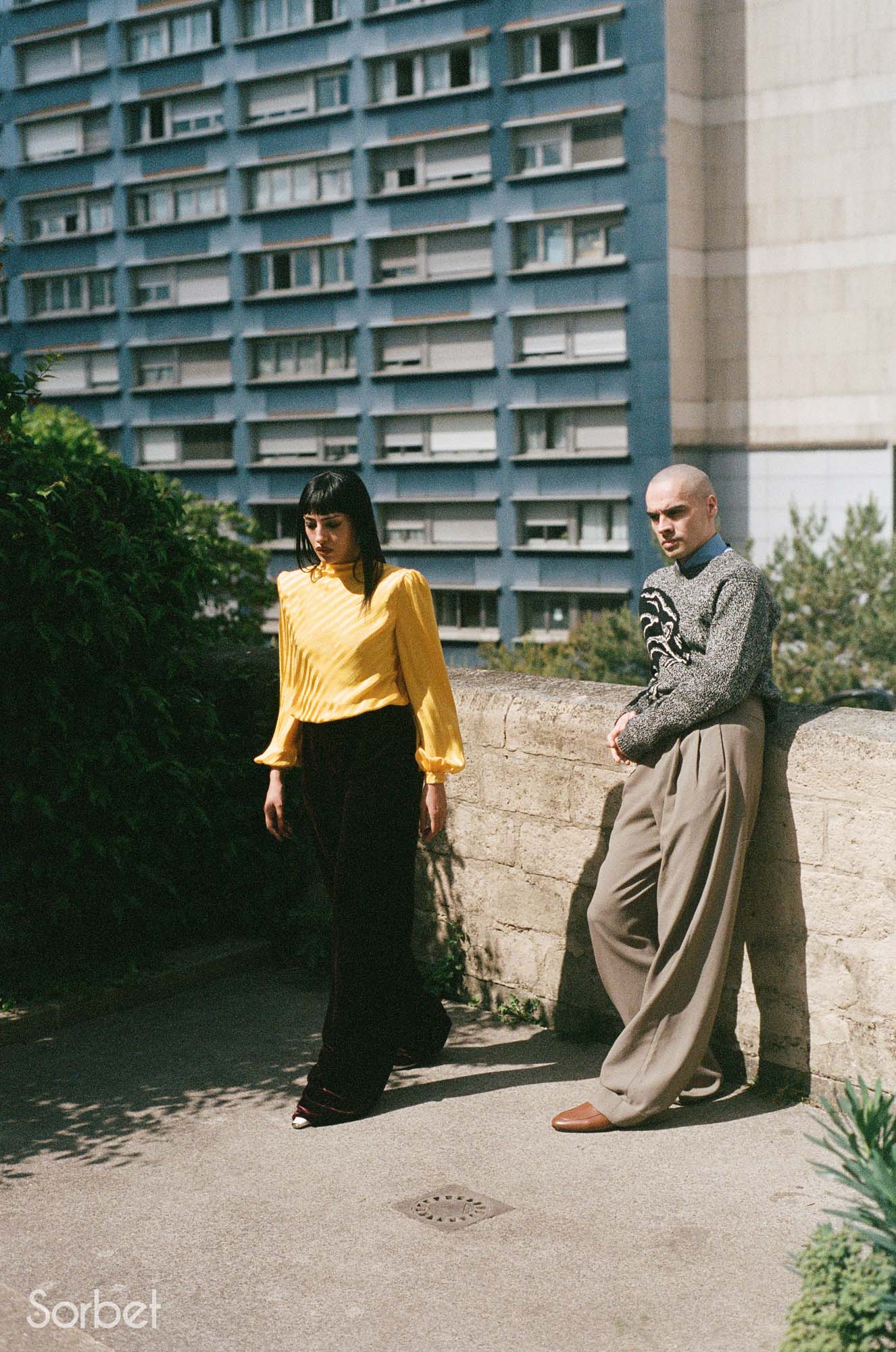
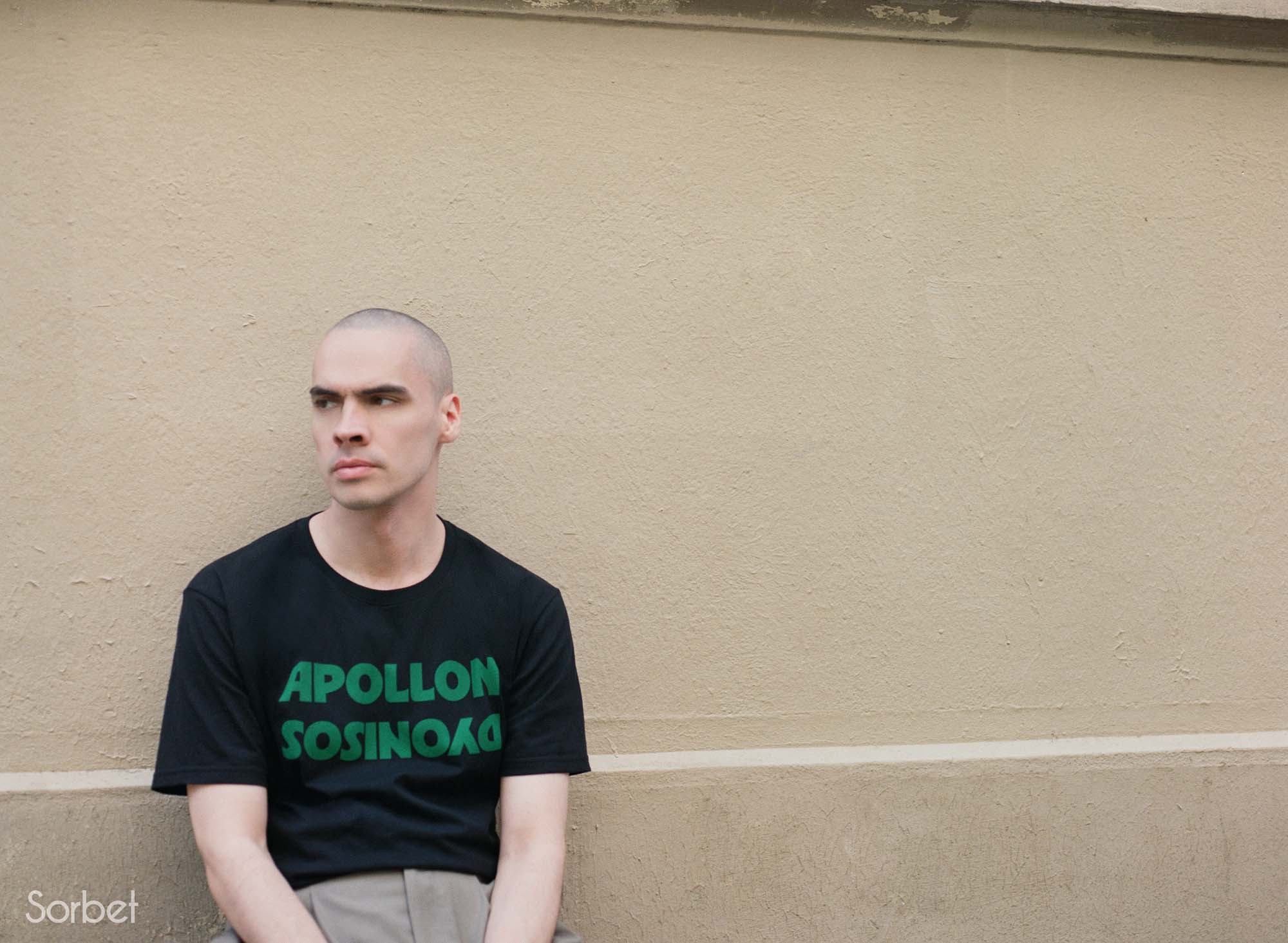
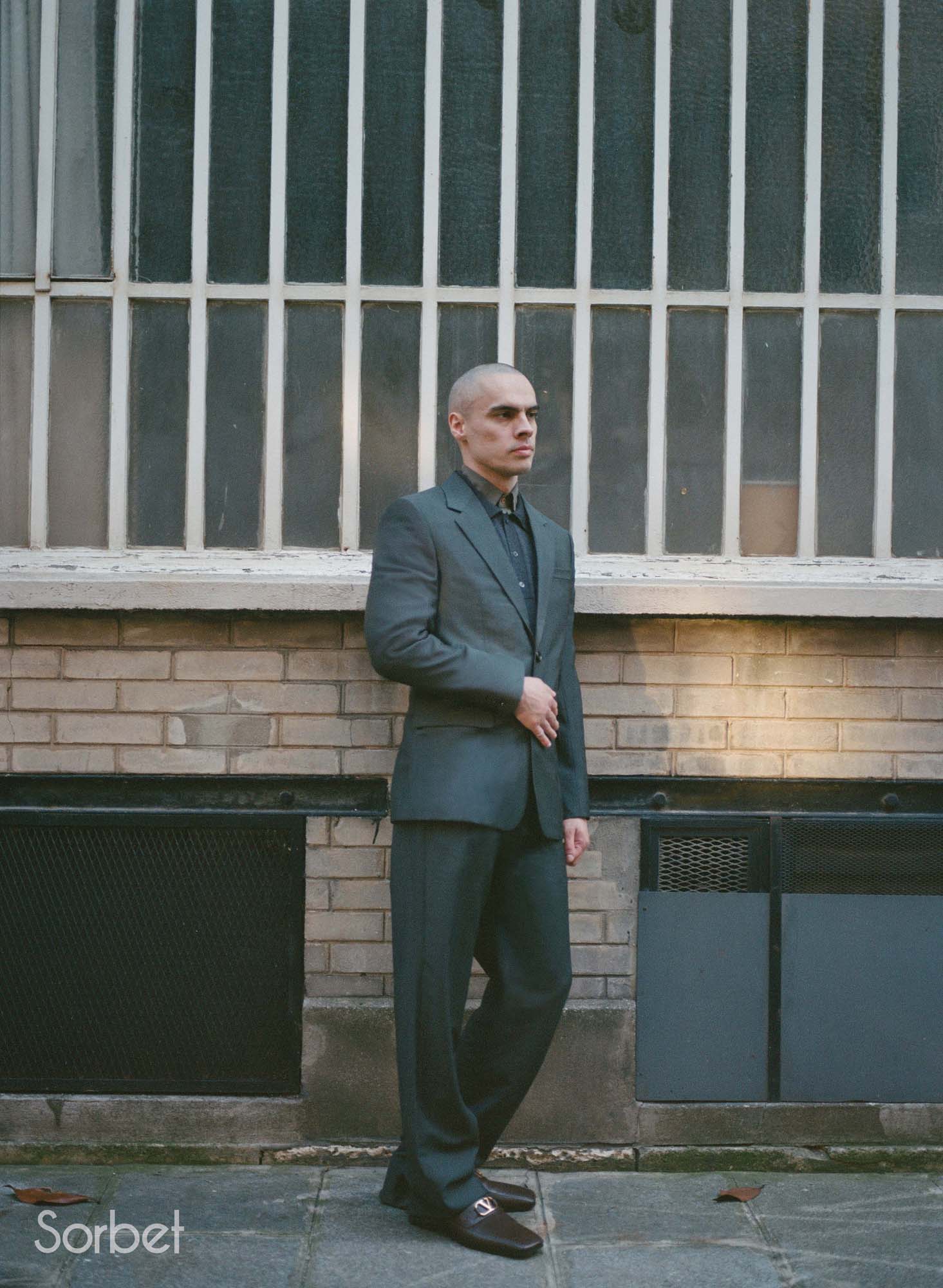
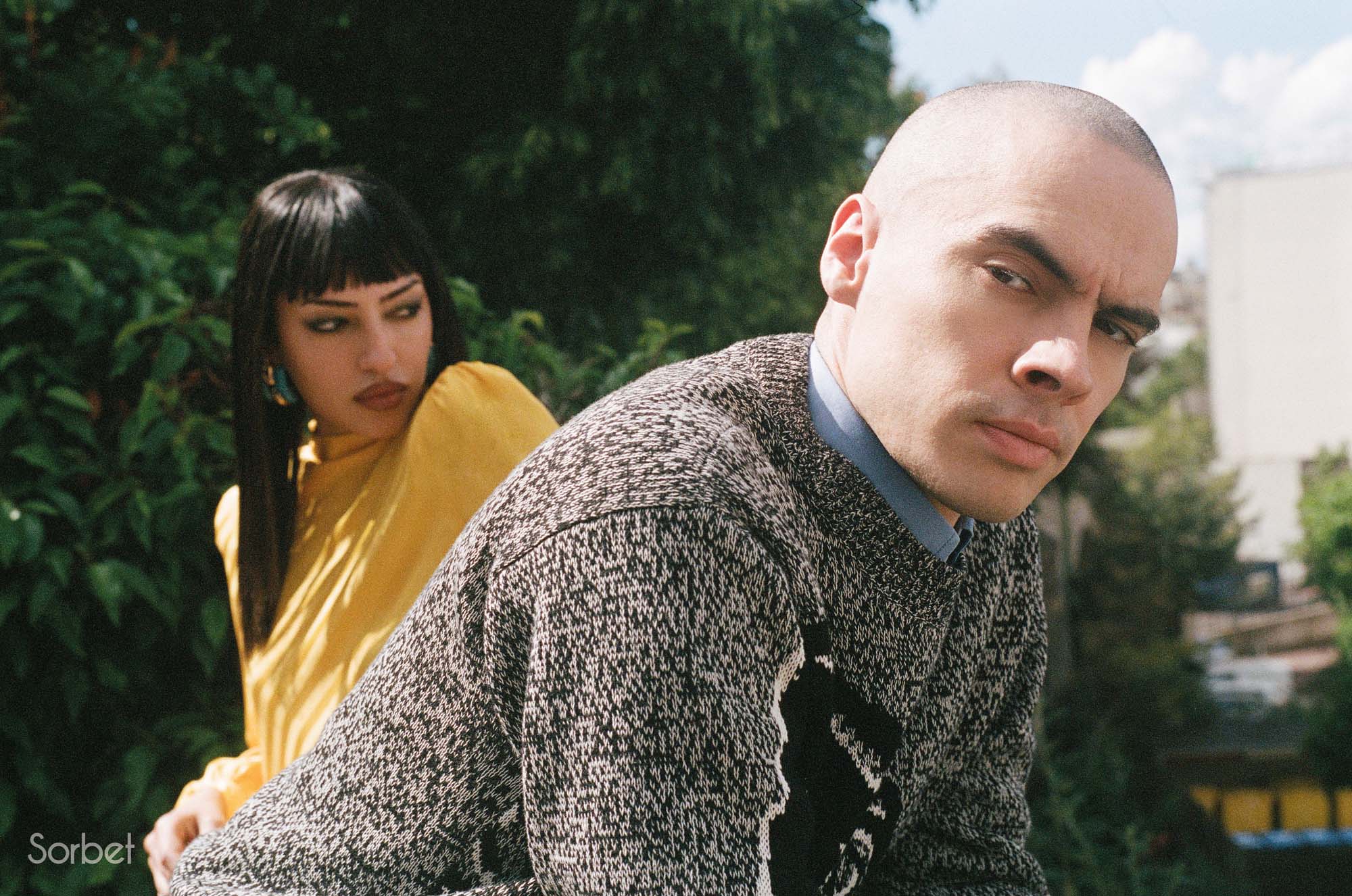
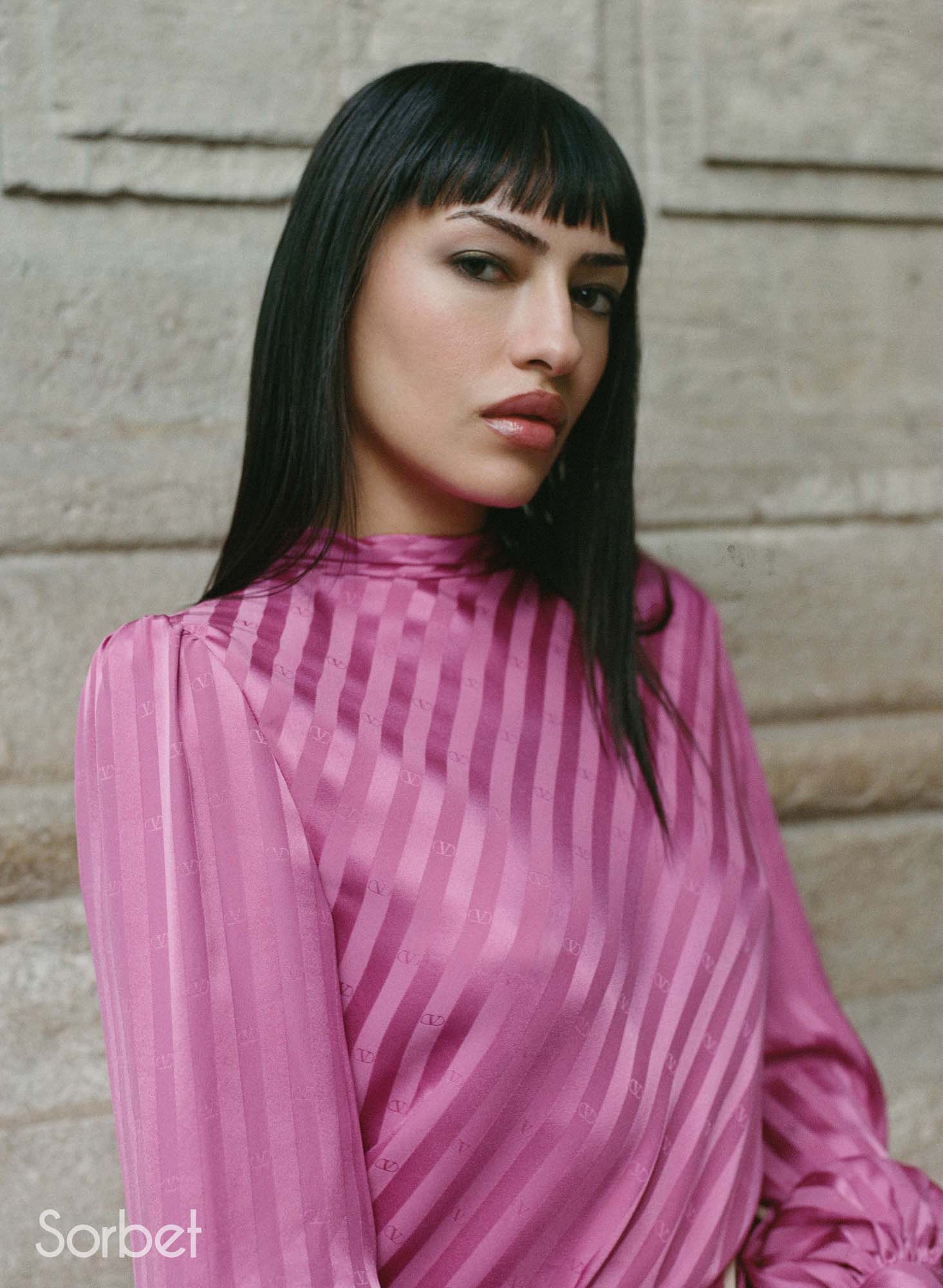
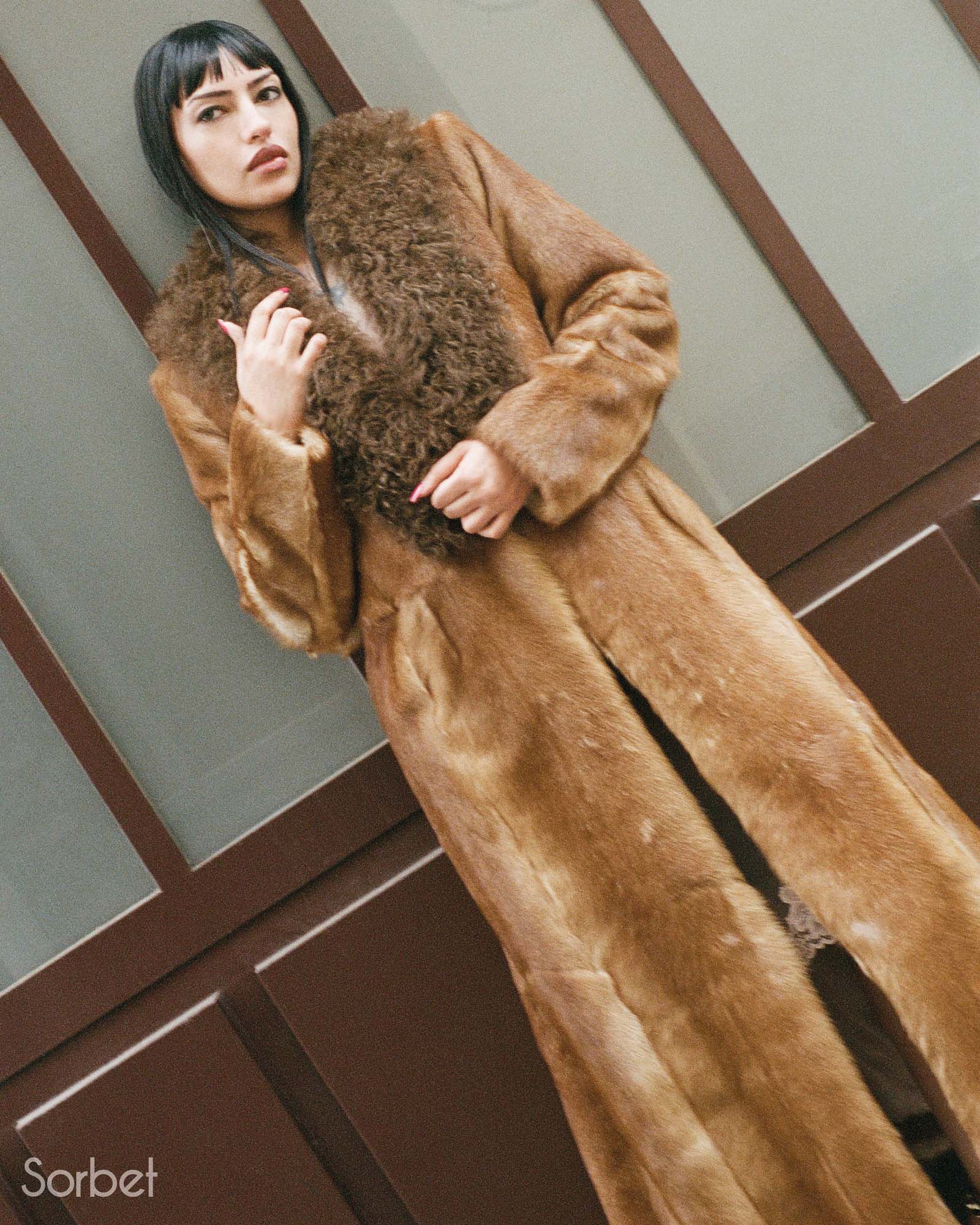
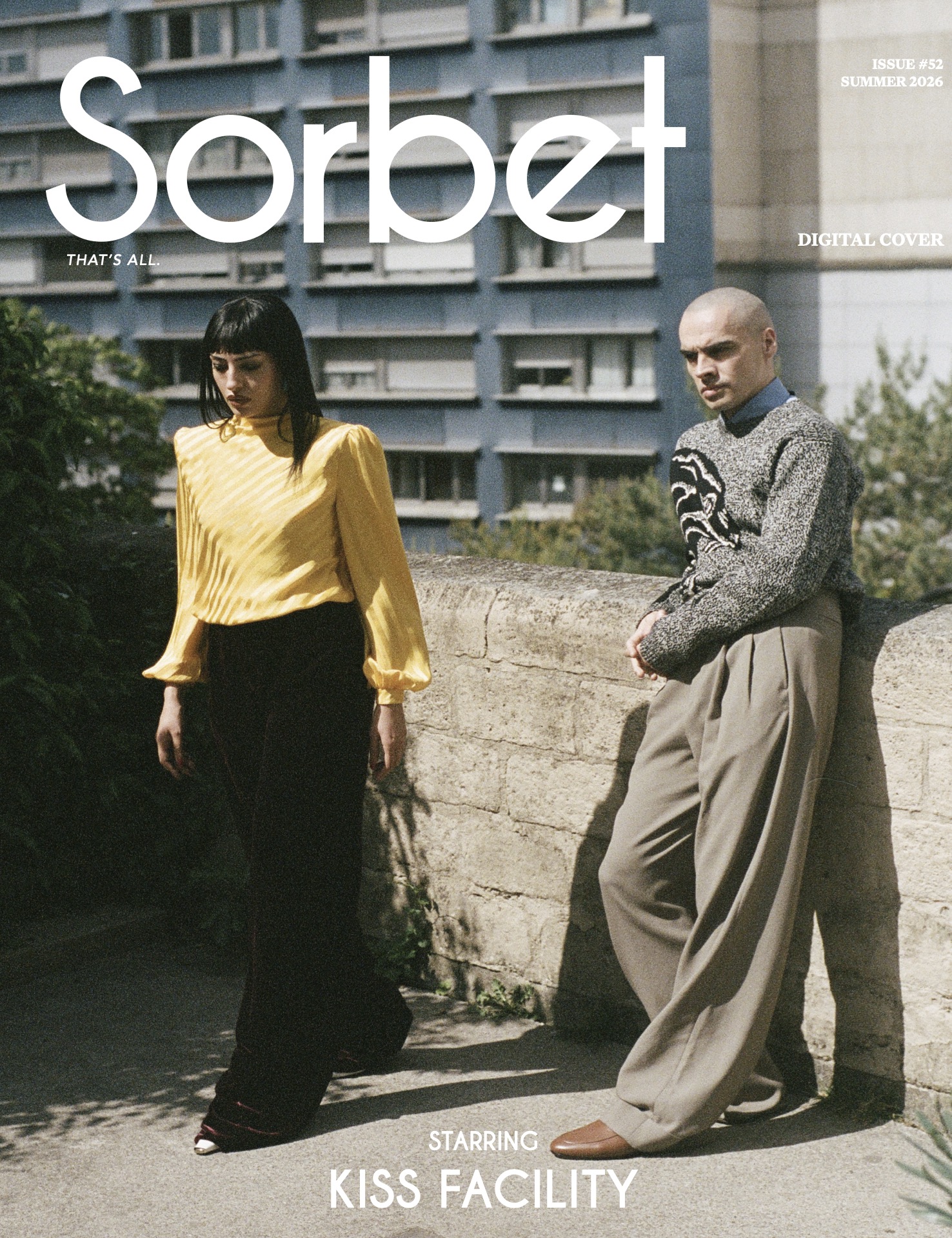
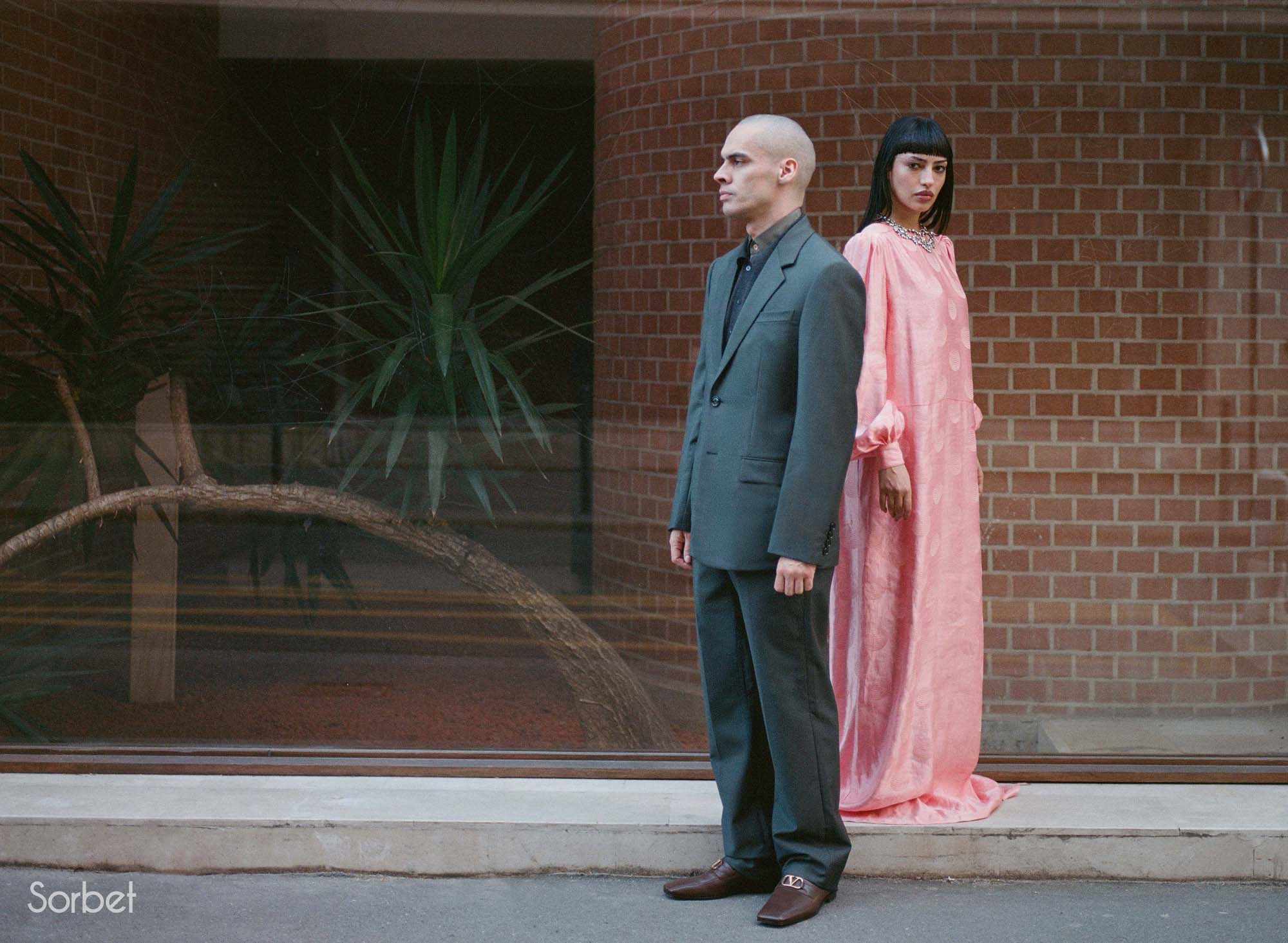
Captured along the streets of Bastille by Photographer Cheb Moha, Mayah Alkhateri and Salvador Navarrete - the pair behind grenre-bending electro music duo, Kiss Facility - wear Alessandro Michele's eclectic collection of silk gowns, structured suits, and graphic tees for Valentino, Pre-Fall 2026.

We shot this story on the streets of Bastille, Paris, but there was no time for an interview. Instead, we spent the next couple of weeks trying to pin each other down: Mayah in Istanbul, Salv in Paris, and me in Dubai. They’re moving around a lot right now, exploring, performing, being.

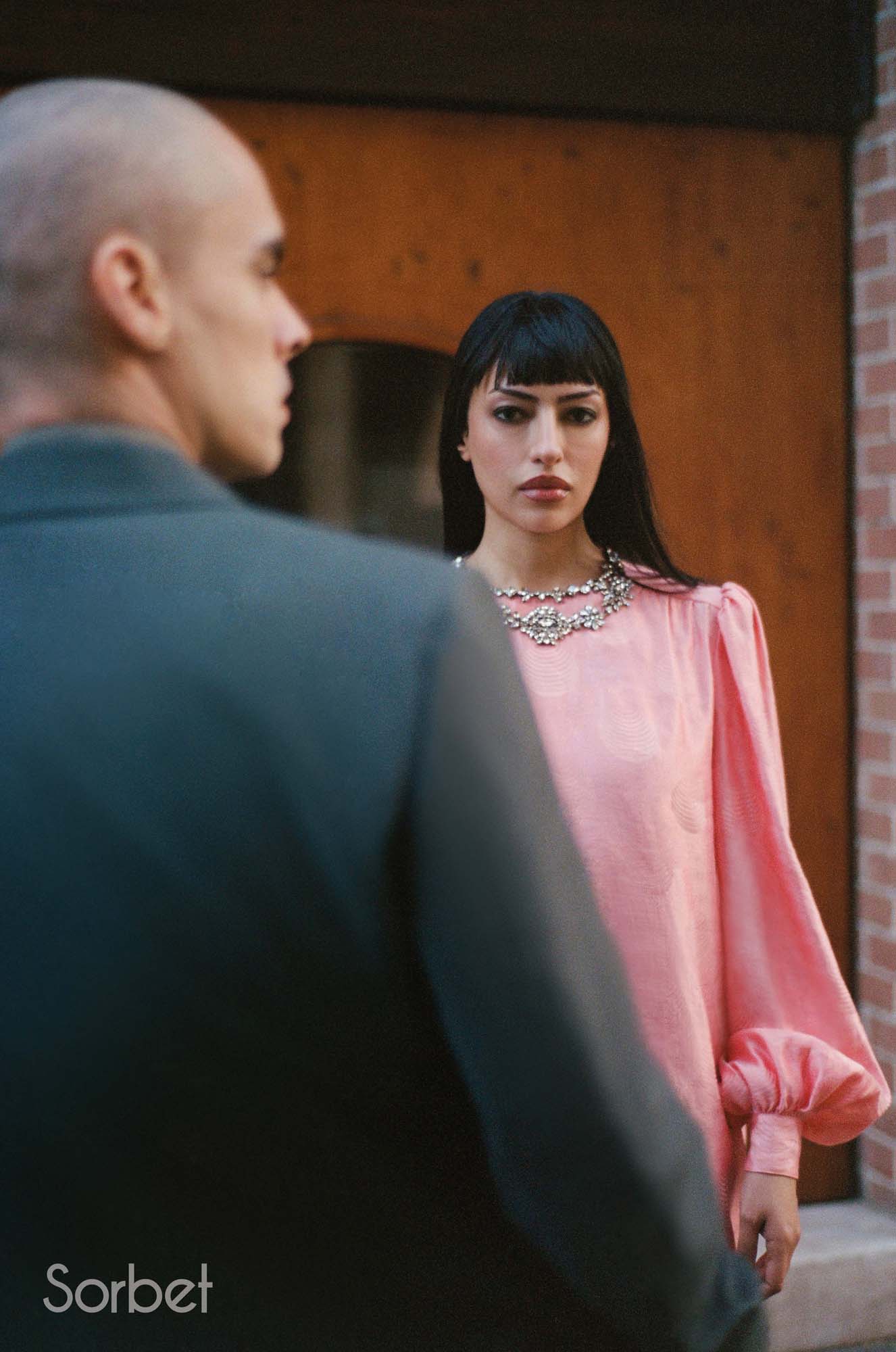
Salvador: wool jacket, polo, pants, and silk shirt; Mayah: evening dress in silk jacquard, VALENTINO. Salvador: VLogo signature loafer, VALENTINO GARAVANI

Kiss Facility has arrived at an interesting moment. Arabic-language artists are finding larger global audiences than ever before, while the shoegaze genre continues to evolve far beyond the scenes that first gave it a name. Yet neither is a particularly useful framework for understanding Kiss Facility. Fortunately, audiences seem increasingly comfortable moving between languages, genres, and scenes; Kiss Facility sits peacefully in that landscape. Their music does not feel bound by geography. It goes where it wants.

Mayah Alkhateri and Salvador Navarrete discovered each other where creatives usually do – on socials. Mayah found one of Salv’s songs online and sent it back to him in his DMs. They spent the next couple of years exchanging ideas, and eventually met up in London. They started Kiss Facility after moving to Paris.

Mayah brought melodies, lyrics, and references she’d carried with her for years: Fairuz, Mahmoud Darwish, Turkish and Persian music, family expectations, freedom, frustration, love. Salv brought a production pedigree that stretches from Glasgow to London to Paris, established through his work as Sega Bodega, and collaborations with artists including Björk, Arca, Shygirl, and Eartheater.

Salvador: light cotton shirt, wool sweater, and pants; Mayah: structured jacquard top with striped motif, ruby red sablé velvet palazzo trousers, VALENTINO. Salvador: VLogo signature loafer; Mayah: Rockstud pumps in white, VALENTINO GARAVANI

The result is music that feels familiar, but is impossible to locate geographically, or box-in categorically. Kiss Facility occupies a strange space between scenes. Too Arabic for indie music? Too indie for the Arabic music industry? Too romantic for noise music? Too noisy for romance? Whatever the answer, they seem completely comfortable in the unlabeled space they’re in.

Listeners across Europe, North America, Turkey, and the Middle East have gravitated towards their particular combination of distortion, romance, and longing. Their recently released album pushes further still, moving beyond the themes that shaped their debut EP and into new territory. Which perhaps explains why arranging this interview proved so difficult in the first place.

WILLIAM BUCKLEY: How did Kiss Facility first come together, and what were you each doing at the time?

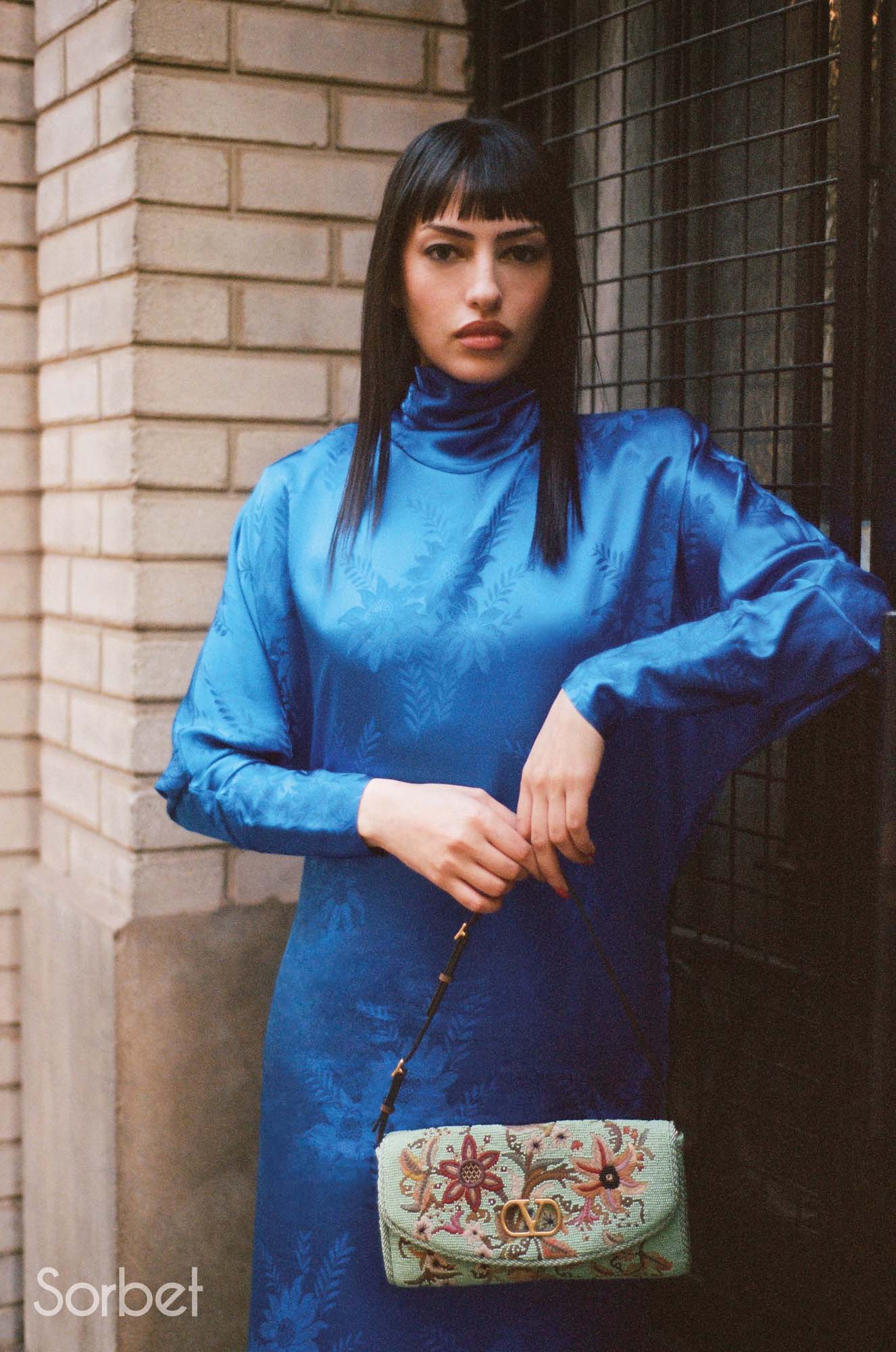
Shiny matte jacquard dress with sunflower motif, VALENTINO. Devain embroidered small shoulder bag, VALENTINO GARAVANI.

SALVADOR NAVARRETE: I was making music and we had both just moved to Paris and thought it would be something interesting. It made sense to try to make some ideas, and it really worked just for fun, and then it turned into a band there.

MAYAH ALKHATERI: For me, I was always listening to indie rock, like the Cocteau Twins and so many other artists, and I never found that sound in an Arabic language. There would be a lot of obviously experimental indie artists in the Middle East, but I couldn’t find the right track that I would listen to like when I listened to an artist I love in the West. I think Salv was the best person to do the sound, while I [bring] the Arabic melodies and lyrics. I wasn’t doing music until I met Salv.

WB: No way?

MA: Yeah, I was always wanting to do music but it never really worked out, because it’s really hard to find the right people to work with, the right environment and everything. So, I was just working closely with brands and fashion, did a bunch of things in Dubai and with Samsung, a campaign with Gucci. It’s so easy to do these things as well.

WB: So, were you doing those as a model or an influencer?

MA: As a model-slash-influencer, but it was not really the thing that I saw myself doing long-term. It was just an easy way out from studying chemical engineering, because I would never want to work in an office.

WB: You were studying chemical engineering?

MA: Yeah, at the Petroleum Institute in Abu Dhabi, for four years.

WB: That’s wild.

Salvador: wool jacket, polo, pants, and silk shirt; Mayah: evening dress in silk jacquard, VALENTINO

MA: Yeah, but it’s not really. I kind of had to, because the only real job my family see is either an engineer or a doctor. They would never see a musician as proper.

WB: Did you take any lessons or were you always a talented singer?

MA: Honestly, my dad used to play oud and sing. I always sang in school, and would enter competitions with other schools in the city as a hobby. It wasn’t something I studied because they would never let me study it, so it was just a thing I really enjoyed doing. And then it became a band with Salv.

WB: Do you call it a band? Is it a band?

MA: I think, honestly, ‘a band’ is limiting what it’s about. I see it as a world. If you have heard our first EP, the reason why we wrote the lyrics, and everything about the first EP, is because I went away from my family and I know a lot of Middle Eastern women struggling to be in a really oppressed environment, and with their family, and have the freedom to do what they want.

So, throughout the lyrics, I would talk about the mental issues going on in the Middle East. Not many people know that a lot of women are struggling. The ones that I know of, it’s like a community of women, or even men who are gay, or just queer people in general. So, I found that it should be a message with Kiss Facility that it is possible.

I mean, it’s cliché to say, but it’s really possible to do what you want to do. For the EP, I wrote all about that, but for the album it shifted away – because I already spoke about it. It’s a different era with the album – about love, about poetry that inspired me, from Mahmoud Darwish, Mahmoud Mohamed Shaker, Palestinian and Egyptian writers. Because I see Kiss Facility as a source of love, that’s the reason why it’s called Kiss Facility. I wrote a lot of names, and then me and Salv came together to decide that Kiss Facility would be the right name for the band. Do you know Genesis P-Orridge?

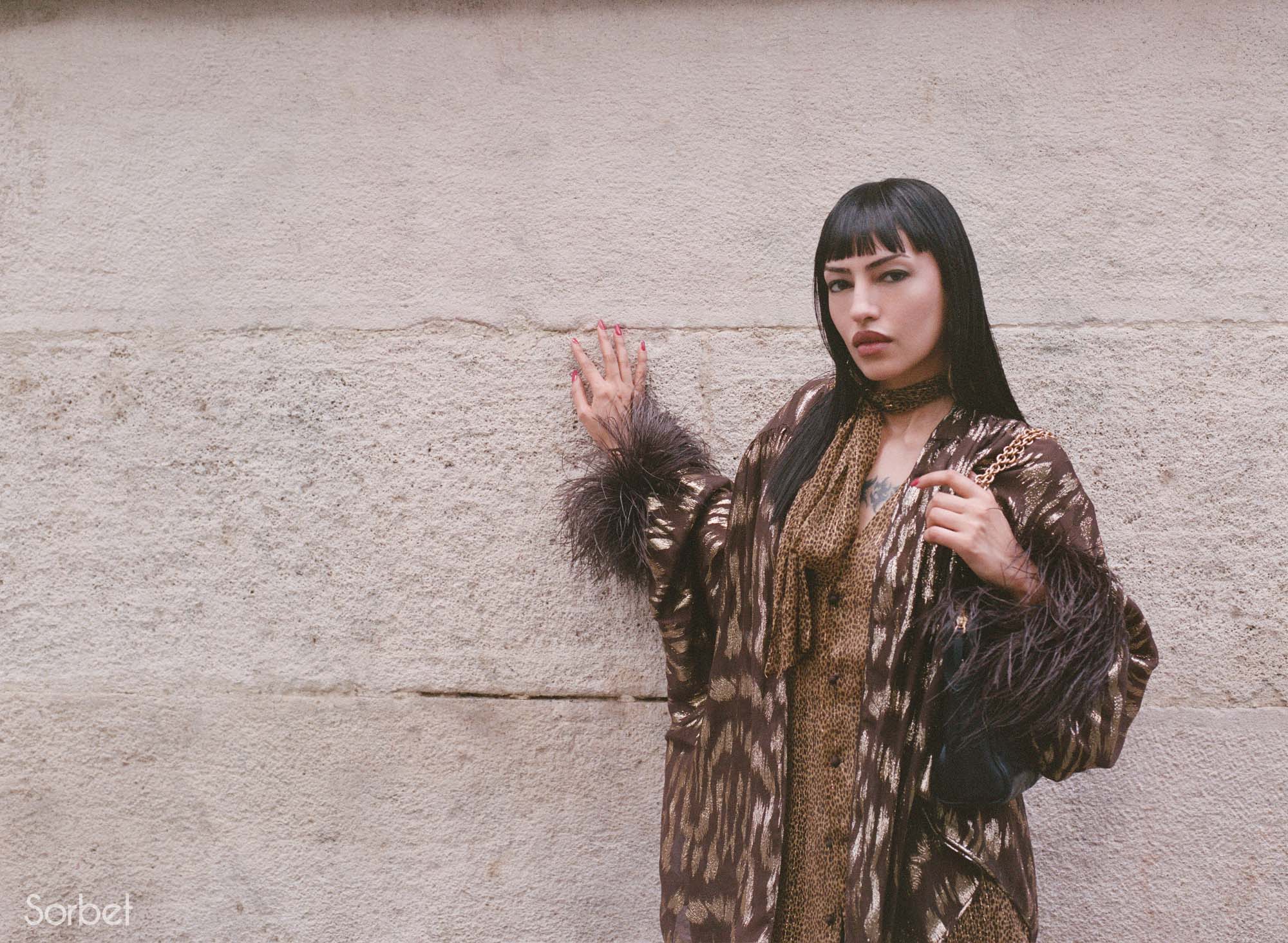
Crêpe de chine shirt with animal print motif featuring a neck scarf, and jacquard lurex overshirt, VALENTINO

Cotton crewneck T-shirt and wool pants, VALENTINO.

WB: I don’t.

MA: They formed the bands Psychic TV and Throbbing Gristle. The reason they made Psychic TV is because they wanted to send a message to people who never had a support system, and to make a cult for these types of people. It really is a cult in a good way – we always listen to their interviews and stuff, so it kind of inspired how I see Kiss Facility as well.

WB: What’s the journey been like from that meeting to the EP to an album, to where you are now? When did you realize it was becoming something serious?

MA: Honestly, from the first EP we realized that it could be something because we got a lot of messages from different people saying that Kiss Facility helped them. It’s like a healing source, and it really made us happy how the message was delivered. So, honestly, throughout making the EP or the album, it was just really easy, flowing, nothing really hard to make the music, and so it felt like it just happened.

WB: So, you have the Arabic influences, what are the other influences? You’re based in Paris, is that an influence? Are there other cultures, music genres, people, or other artists that inspire the music?

Silk shirt, wool jacket, polo, and pants, VALENTINO. VLogo signature loafer, VALENTINO GARAVANI

MA: The influence I would say is mainly Arabic, Turkish, and Persian, other language songs that I would listen to, in terms of writing melodies or lyrics. And one of the other influences is obviously the struggle part of how I went with my life and things like that. Because, honestly, if I was just happy, everything was normal, it wouldn’t… with making music, it has to come from this source to be something. It’s not like techno music, where it doesn’t need any. All the melodies [come from] a source of anger, but comes within hope, and not reflecting in a negative way. But it’s all coming from struggling and the experiences and my personal life, basically.

WB: So, why Paris at the moment?

MA: I always was between Paris and Dubai because I was doing fashion stuff, and it was so easy. I love it [in Paris] so much. And Salv was living in London.

SN: I wasn’t happy with London.

WB: I hear that quite a lot these days. So, does the Paris music scene influence the music in any way?

SN: I don’t think I could name that many Parisian artists; maybe three or four. There’s not much of a music scene right now, in my opinion, that’s even close to the scale of London’s. It’s quite a quiet town in terms of that, I think.

WB: Tell me a bit more about the album. Tell me about the process of recording an album with you guys. What’s the writing process, the production?

MA: We had to be isolated somewhere near the countryside. We had to book multiple Airbnbs and studios to just be far away from everyone, to make us more focused on the album. We made a bunch of demos in Orléans, in France. I don’t know how to pronounce it. It was the place where we made most of the album. I think the main thing that we needed was isolation to work on it.

WB: Does the song come first, and then the lyrics? Is it the track? How does that process work with you guys?

SN: We do it together and sometimes Mayah has a voice note that she’s excited by. Sometimes I have chords I’m excited by, and we just kind of riff off of each other. There’s never any rule.
Salvador: light cotton shirt, wool sweater; Mayah: structured jacquard top with striped motif, Pas Plus earrings, VALENTINO

MA: Like Salv said, it goes both ways. Sometimes voice notes, sometimes guitar that Salv wrote. The lyric never comes first. If we had the melody, it’s easier to write the lyrics. So, I’ve never listened to a song because the lyrics are amazing; I listen to a song because I enjoy listening to it, in terms of sound. I never really cared about lyrics. I would always want to have it in my own interpretation while I’m listening to it, rather than listening to what they have to say, because I’m not really into most people’s lyrics. The best lyricist I know is Eartheater, and some classical Arabic songs, Fairuz… but I would say I’m very strict with that.

WB: Arab artists are having a huge moment right now, whether it’s Bayou or Zeyne, there seems to be this wave of really exciting talent. Do you feel part of that wave?

MA: Nope.

Fluid jacquard dress with striped logo, VALENTINO

WB: [laughs]

MA: I don’t think so. They’re amazing; they do everything. But they mostly produce what other people want to hear. And for me, with Kiss Facility, it’s not like everyone loves it – we barely have an audience in the Middle East. Most of our audience comes from the USA, Europe, even Istanbul lately, because we made this song with Aleyna Tilki. I only know one amazing Arabic shoegaze artist from Iraq, but he lives in the USA, and he’s now blowing up in Europe, because it’s becoming a thing – shoegaze in different languages. The kids right now, they’re really into shoegaze.

WB: I don’t honestly know much about shoegaze. Can you explain it?

MA: For me, shoegaze is like the pink or brown noise you would listen to to focus on working. I like the noise aspect of shoegaze. It’s basically noise music; that is, you mix it with melodies… I just really love the noise and the guitars.

WB: Is the Arabic audience one that you would like to be more engaged with your music?

MA: Of course. That’s my dream, to be able to make our sound travel to that world because I do think there are a lot of people who would want to do these things. But one of the main reasons is most people don’t know how to go around it, or most people don’t have the sort of resources to do these things. I do feel like there’s more and more artists coming, not necessarily shoegaze, but more experimental. Nadah El Shazly, I love her stuff, and Yasmine Hamdan just released an album, she was part of Soap Kills. These are women that I honestly always support and look up to. I wish there were even more women who do these things, because they do it best.

WB: And more broadly, what’s the hope with Kiss Facility? Where do you see the journey?

SN: For now, shoegaze, but right now we only have three or four songs that are shoegaze. The reason we want to push that is because there isn’t much out there right now that sounds like it. The album it’s so different from our EP. We always love to experiment with new sounds – like with the album we pushed it to have more electronic sounds mixed with rock. We go with the flow – if we like a sound, we use it. No limitations.

WB: Alright, I love it.

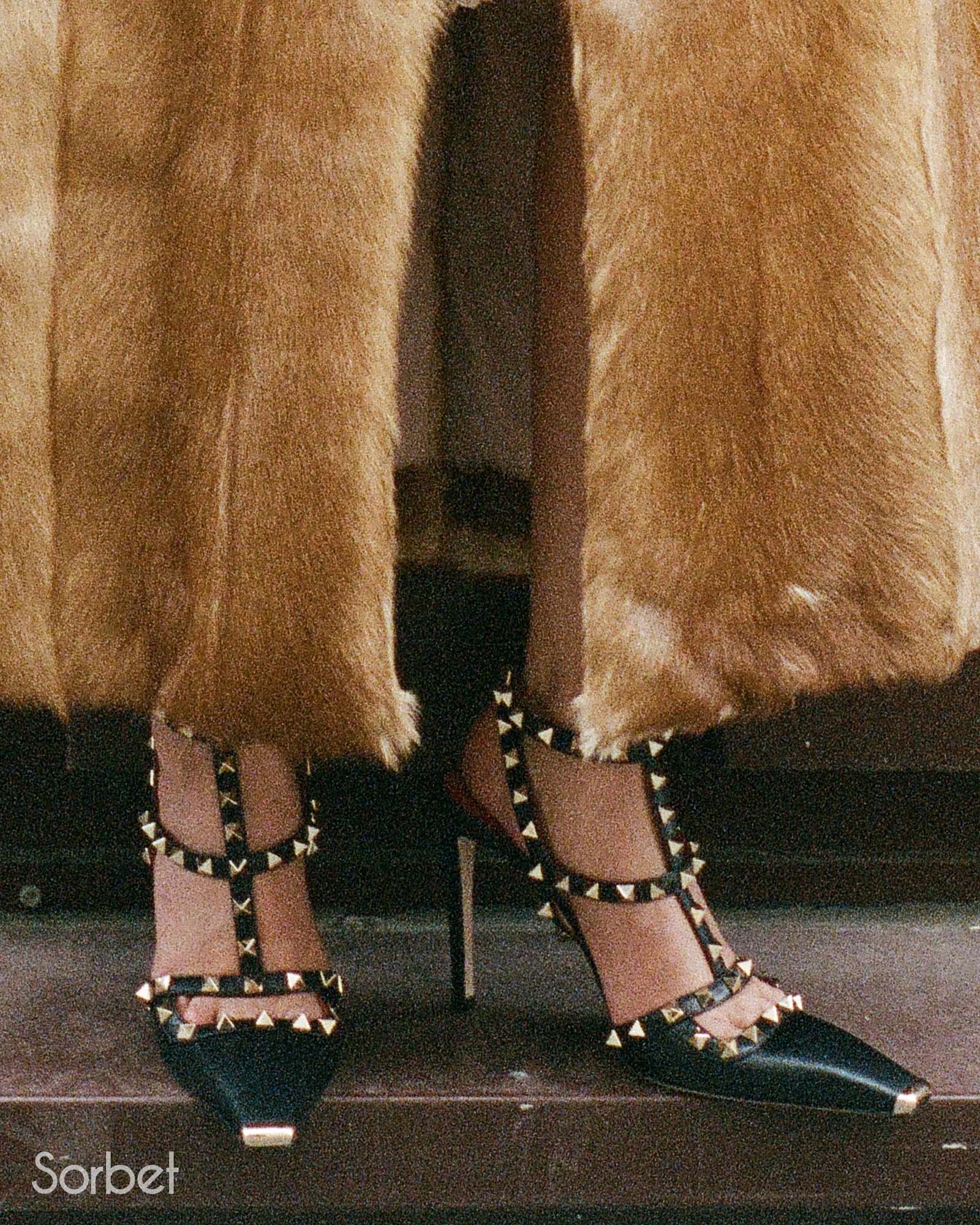
Otter-print faux fur coat, and skirt enriched with lace hem and elastic Chez Valentino detail, VALENTINO. Rockstud pumps in black, VALENTINO GARAVANI

MA: I know that can be tricky with fans, though, because the first EP, they see it as, ‘Oh that’s how the sound is going to be forever.’ When you give them something different it’s more of like, ‘Oh, I used to like this EP. Why did this change?’ I mean, we have that on a few comments from different people, but honestly, if you really support an artist, you support the journey of them also pushing their boundaries and experimenting more, especially if it’s a new band. So it doesn’t make sense to make just one sound – I hate repetition.

WB: Have you heard Mariah Carey’s indie album?

MA: Not sure. Did you Salv?

SN: Yeah, she did an indie rock album, right?

WB: Yeah, apparently it’s pretty good, but her record label wouldn’t let her put it out, because they were like it’s too different, and people won’t get it.

MA: I know and I hate that; it doesn’t make sense. That’s why we’re not with a label, mainly doing our thing. Andy’s really helping us also be more independent, because I think that’s the new way of being an artist. You don’t want to be ripped off by labels or restricted.

WB: Yeah, I guess now that everything is so digital and social media [oriented], you really can do a lot of the sort of promotions and reaching people through the streaming services and all of that without these labels that charge you thousands of dollars for studio time, and you end up just owing them all the profit from the albums.

MA: Yeah, I think more artists are realizing that they can do things by themselves right now without having their all of their songs and the copyright taken away from them.

WB: One last question. What’s your favorite flavor of sorbet?

SN: Mango.

MA: I like mango.

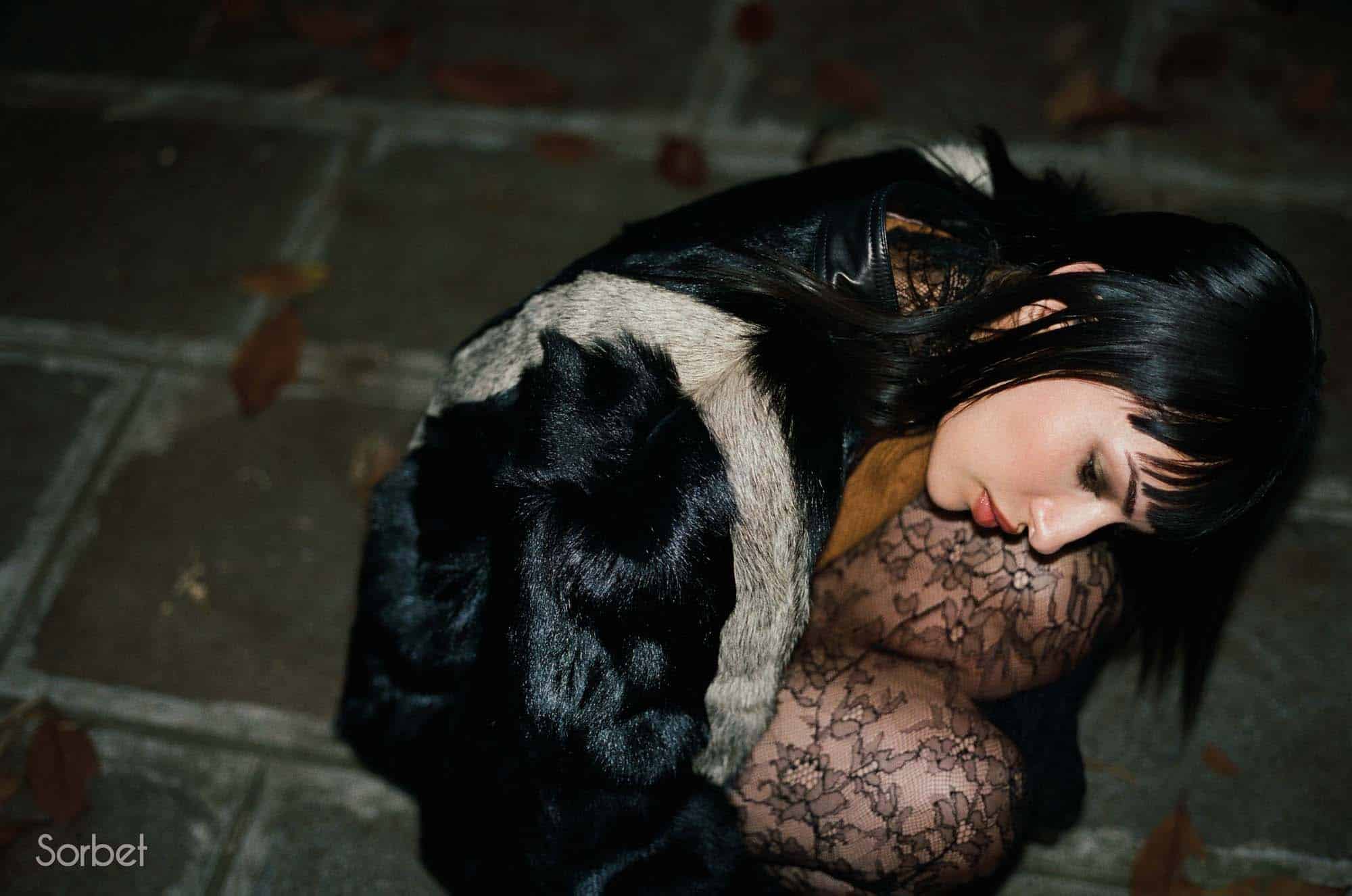
Leather bomber jacket, cable-knit cashmere sweater, black lace skirt finished with lace trims and bodysuit, VALENTINO

Grab your copy of Sorbet Issue 52 // The Fashion Issue: read.sorbetmagazine.com

Starring Kiss Facility | Creative Concept Studio Sorbet | Photographer Cheb Moha | Editorial Direction William Buckley | Styling Francesca Polerà | Production Roro Mroue at MMG | Hair Vasso Stathopoulou | Makeup Marie Tritsch | Production Assistant Michèle Nay | Fashion Valentino | City Paris

END OF STORY