
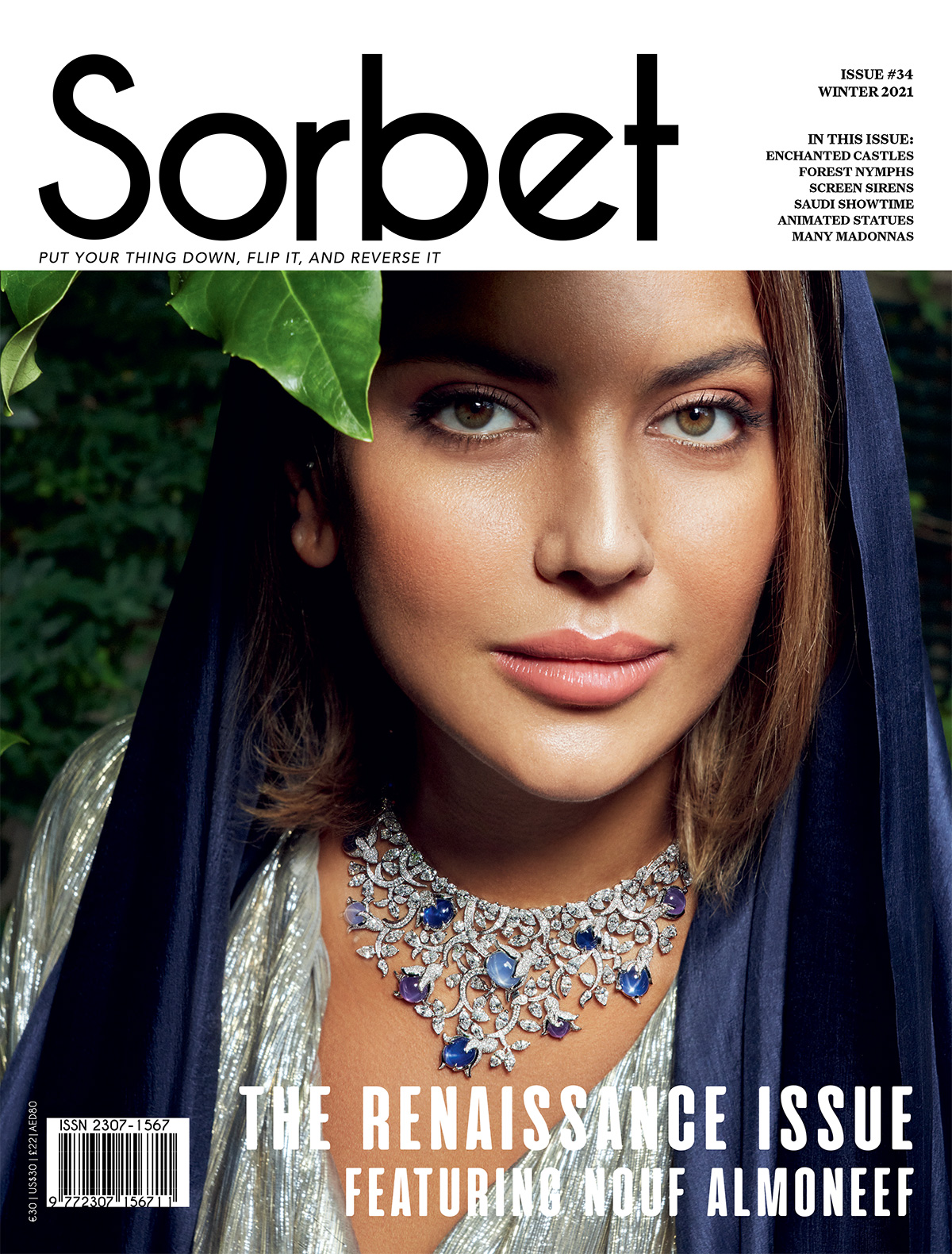
THE RHODES AHEAD Starring ZANDRA RHODES
Written By: William Buckley
High priestess of print. Shock-pink hair and sharper wit. Freddie Mercury capes, Diana Ross drama, chiffon-like stained glass. From Swinging London to America, Australia, India. Textile alchemist, fearless colorist, patron saint of flamboyance. A life lived loudly in pattern, paint, and singular style.
Few designers have shaped British fashion with quite the same fearless exuberance as Zandra Rhodes. For more than five decades, her electric prints, theatrical silhouettes, and unmistakable shock of pink hair have made her both a designer and a cultural icon, dressing rock stars, royalty, and generations of fashion dreamers.
Since bursting onto the London fashion scene in the late 1960s, she has built a world entirely her own, one defined by swirling calligraphic prints, saturated color, and a refusal to accept the ordinary. Her work has dressed everyone from Freddie Mercury and Diana Ross to royalty and cultural icons, while her signature magenta hair has become as recognizable as the clothes themselves.
Yet behind the flamboyance lies a deeply thoughtful creative mind. As Rhodes reflects in her recent memoir Iconic: My Life in Fashion in 50 Objects, her life and career are shaped by the objects, memories, and people that have accumulated around her over decades of making. “My home overflows with curiosities that I have collected throughout the course of my life… each tells a story about my journey,” she writes, describing how these objects form a living archive of inspiration.
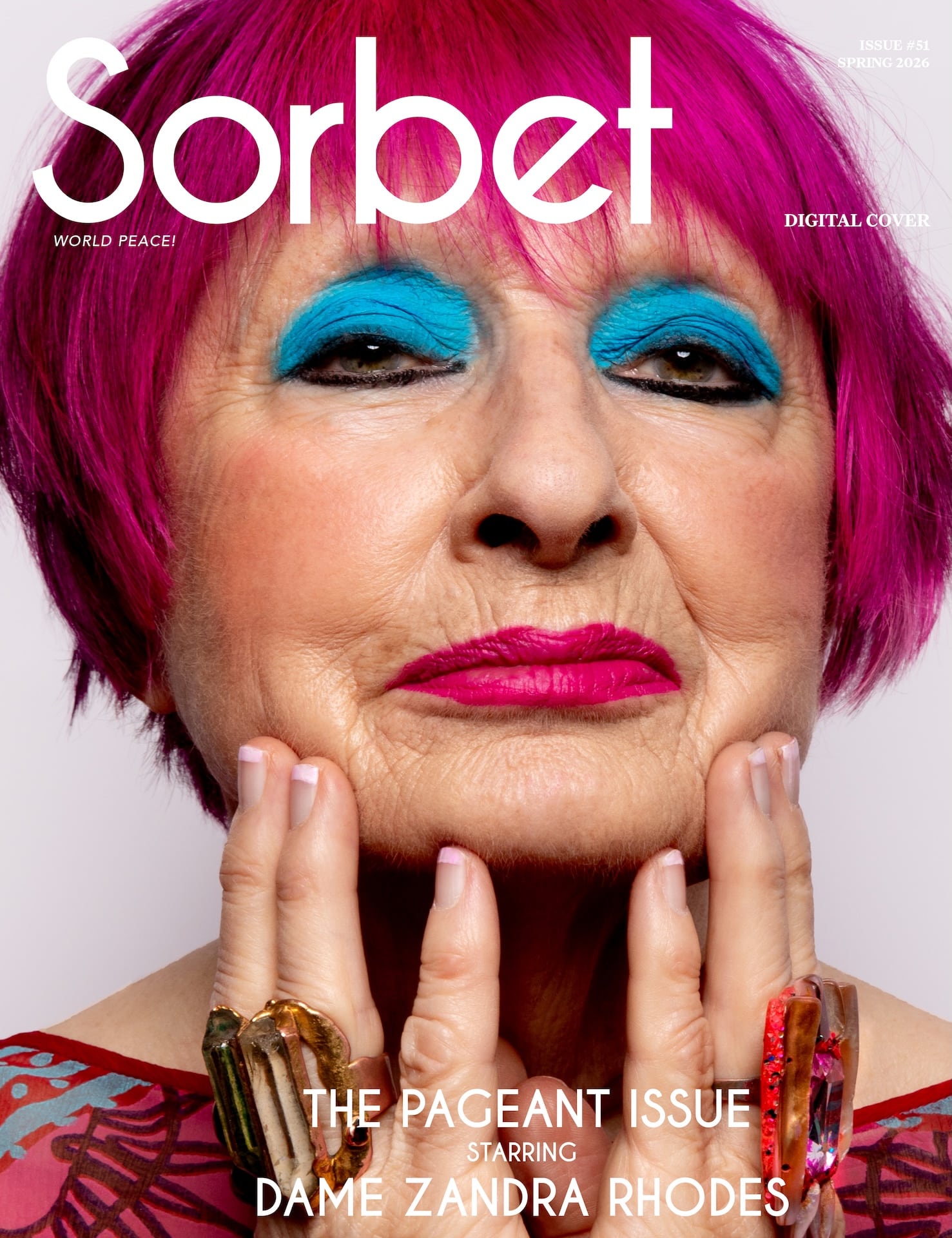
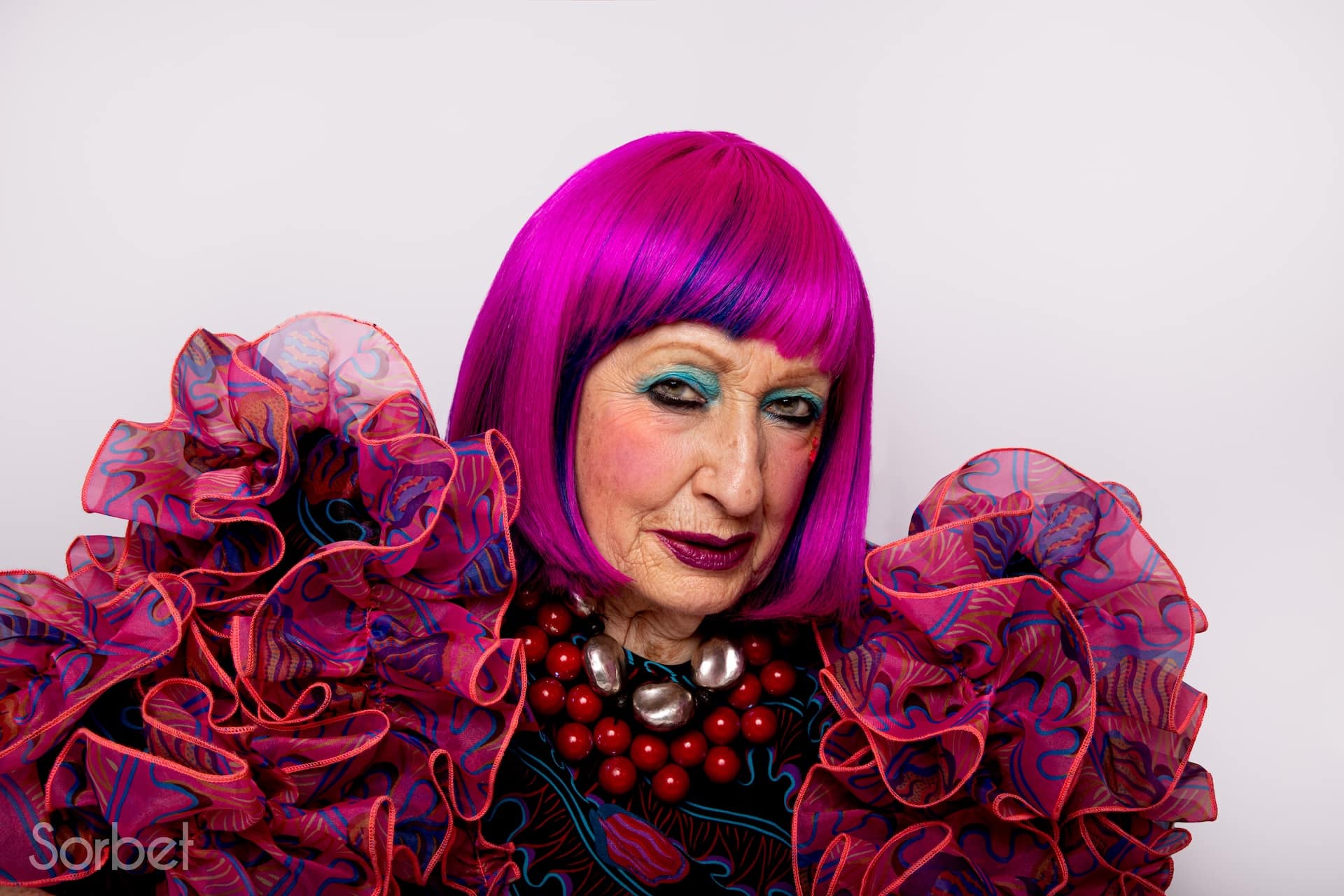
Denim Dimensions Beautifying Eye Trends palette, Rock’n’Roll Kohl eye pencil, Hot Lip, CHARLOTTE TILBURY; Dior Over Volume mascara, DIOR BEAUTY; Tom Ford Shade & Illuminating blush, TOM FORD BEAUTY, dress and jewelry, ZANDRA RHODES
One of the most instantly recognizable elements of the Rhodes universe, of course, is that extraordinary pink hair. In chapter 36 of the book, she recounts the moment the color became permanent. The dye she chose, appropriately enough, is called Pinkissimo. The shade was originally an experiment but soon became inseparable from her identity, transforming her appearance into something closer to living artwork than conventional designer branding.
It is a reminder that for Rhodes, fashion has never been simply about garments. It is about character, imagination, and the freedom to live creatively in every aspect of life.
Today, that spirit is being celebrated once again in Zandra Rhodes: A Life in Print, an exhibition currently on view at the Holburne Museum in Bath until 10 May 2026. The show traces the extraordinary visual language of Rhodes’s career, presenting decades of drawings, textiles, and garments that reveal how her distinctive prints evolved from sketchbook experiments into some of the most recognizable patterns in fashion history.
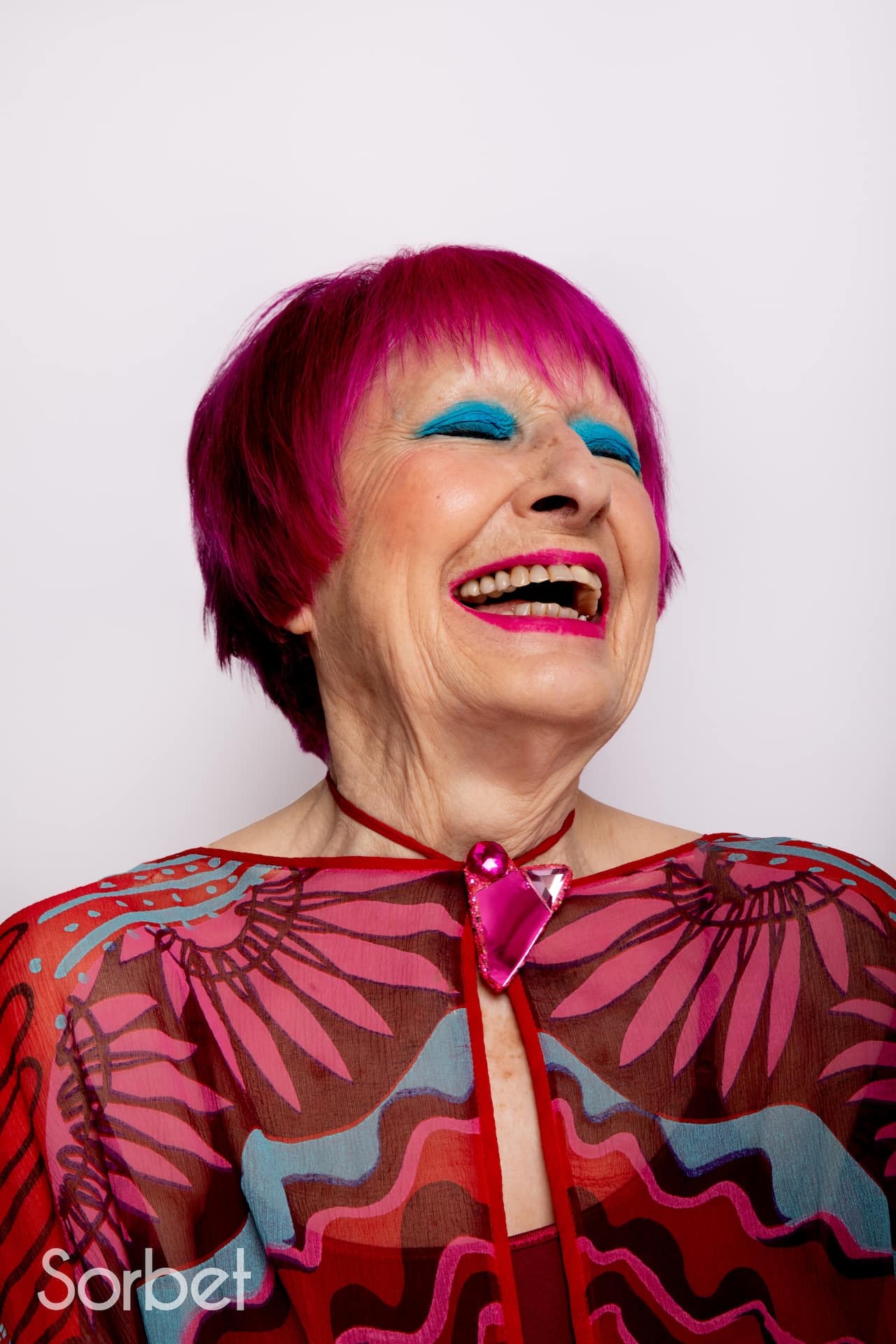
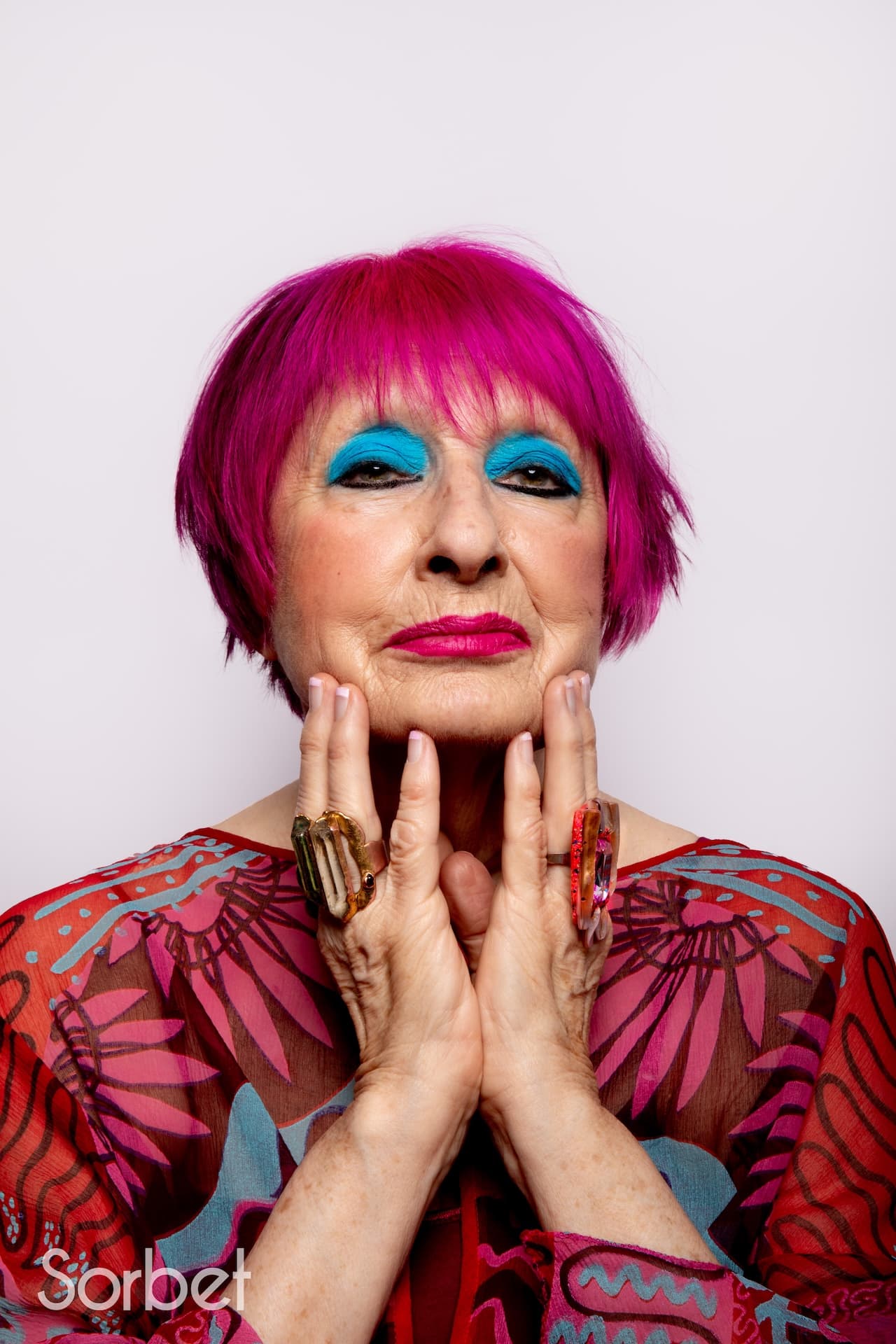
It is the perfect moment, then, to sit down with Rhodes herself. In conversation she is exactly what one might hope: sharp, generous, mischievous, and endlessly curious about the world around her. What follows is a discussion about creativity, individuality, and the joyful defiance that has defined one of fashion’s most enduring and original voices.
WILLIAM BUCKLEY: Let’s start at the beginning. I know you started a shop with a fashion designer, and that led to you starting your own studio. What was that like?
ZANDRA RHODES: I left Royal College as a textile designer and found that I could not make a living with my textile designs. To sell a design here and there wasn’t possible. And so, I was teaching two days a week to make the money to live. And I didn’t like teaching.
WB: Where were you teaching?
ZR: At Ravensbourne College of Art [now Ravensbourne University London], at High Wycombe, and in Birmingham.
WB: Why did you not like it?
ZR: My mother loved teaching but I just wanted to be doing my work. So, I’d go into work at five o’clock in the morning and set the work for a girl working for me. And then I’d get the train to Birmingham, or whatever I had to do in those days.
WB: Oh, gosh. That was to get enough money to live, and then you started your shop?
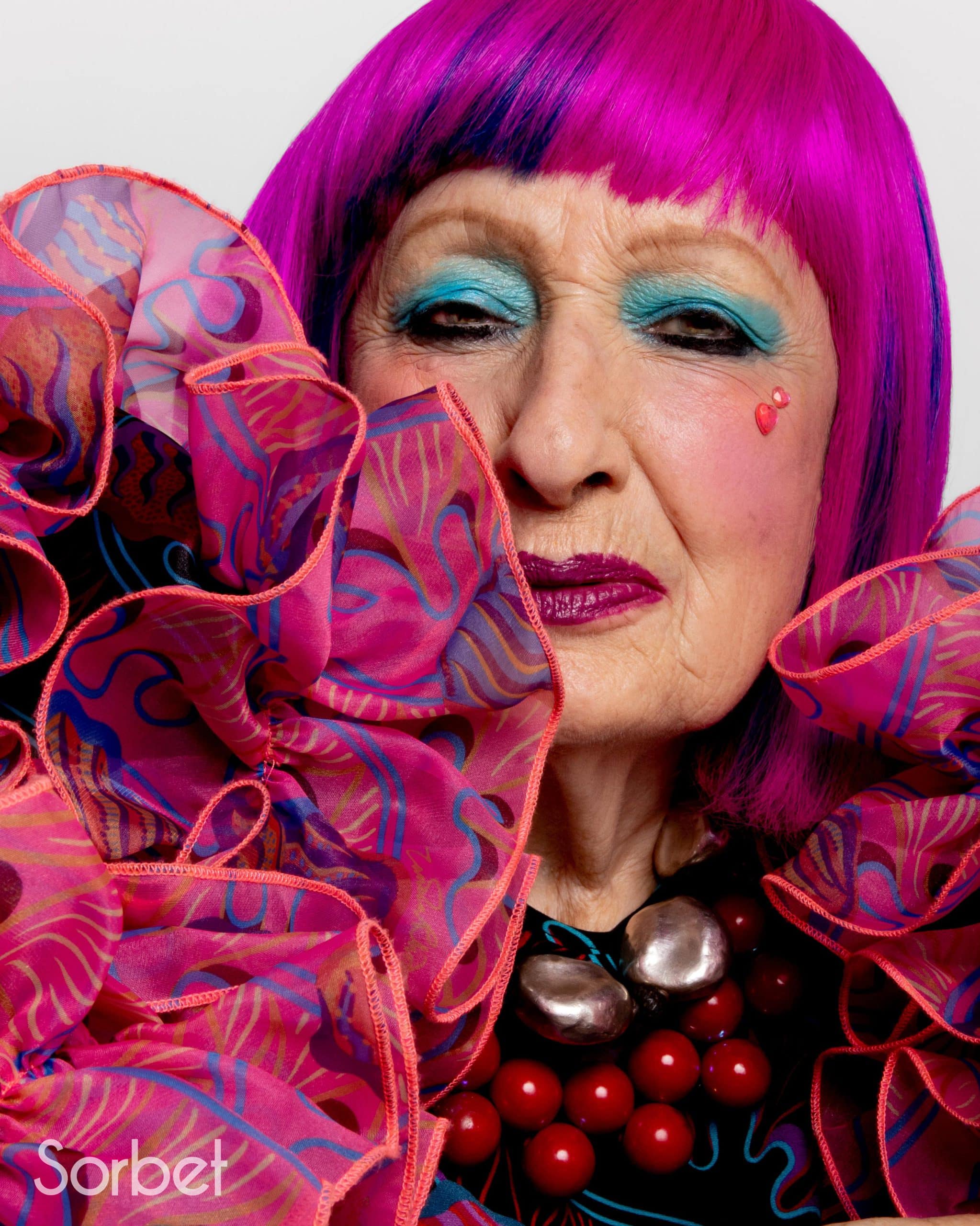
Dior Show 5 Couloirs, Dior Backstage Rosy glow stick, DIOR BEAUTY; Eye Color Quad in Metallic Mauve, Shade & Illuminating blush, F***ing Fabulous lipstick, TF brow pencil and black kohl pencil, TOM FORD BEAUTY; dress and jewelry, ZANDRA RHODES
ZR: I was living with another textile designer, Alexander McIntyre, and we set up a little studio in Porchester Road in London. And in that, we built a six-yard print table. So, I’d print my fabrics, and then in the room above I had a design room, and then in the top room I set up my workroom with machinists. Then when I left college, I had a fabulous break. I sold fabrics to two girls called [Marion] Foale and [Sally] Tuffin, and they were top designers in trendy Carnaby Street. And they picked my designs.
With that, I insisted that my work had publicity. They publicized who did the prints every time. So, it would say, ‘Foale and Tuffin, print by Zandra Rhodes’. I did prints for them for two years, which was fabulous – little stars, explosions, and very trendy London. Then they felt my designs were getting too extreme.
I was teaching with another girl called Sylvia Ayton, and together we formed Sylvia Ayton and Zandra Rhodes. I did my prints with little teddy bears and all sorts of Pop art things. We struggled along for about a year and a half, then met Vanessa Redgrave who backed us in a shop we called the Fulham Road Clothes Shop. It was opened with Joe Cocker singing and crowds of people. And it was very trendy, but it wasn’t the King’s Road, so it wasn’t trendy enough to stay open. So, it was very word-of-mouth. We were open for a year, but during that time, it got a lot of publicity.
And then Sylvia said, “I’ve been offered a job at Wallis shops,” and she was with Wallis until probably three years ago. So there was I – I’d got my studio already set up, and I met two mad Ukrainian-American girls who loved my chiffon caftans. And they kept saying, “Zandra, you’ve got to come to America. We’ll find someone to back you. They’ll adore you.”
So, I put together a collection – one caftan, one yellow coat, some blouses. And I had a letter of introduction from English Vogue to Diana Vreeland, the high priestess of fashion at American Vogue. Women’s Wear Daily also did a whole front page on me, funnily enough.
And then I went and presented the collection to American Vogue in September 1969. I had lipstick curls drawn on my face, and I wore high white beaver boots and flowing chiffon blouses. Diana Vreeland saw them and completely raved about how amazing they were, and said, “We must photograph them on Natalie Wood.” And she made a phone call to Henri Bendel, the top boutique.
She did a double-page feature on them, and Henri Bendel placed orders, and some of the top society women bought them. So that was really the beginning. And I didn’t find anyone to back me. But I came back, made those orders, delivered them, and at the same time, Fortnum’s did a shop with my clothes in it. I went on from there, building my business up.
WB: So, what was that like – you must have been in your 20s?
ZR: Fairytale land. Suddenly I was the feature of that period.
WB: Did you ever consider moving to New York?
ZR: I hadn’t thought about that, and a lot of incredible things were happening to me around that time. I did a huge campaign in Australia.
WB: What was it like, being part of that in the ’70s? Did you know at the time that it would be such an important, referential time in fashion?
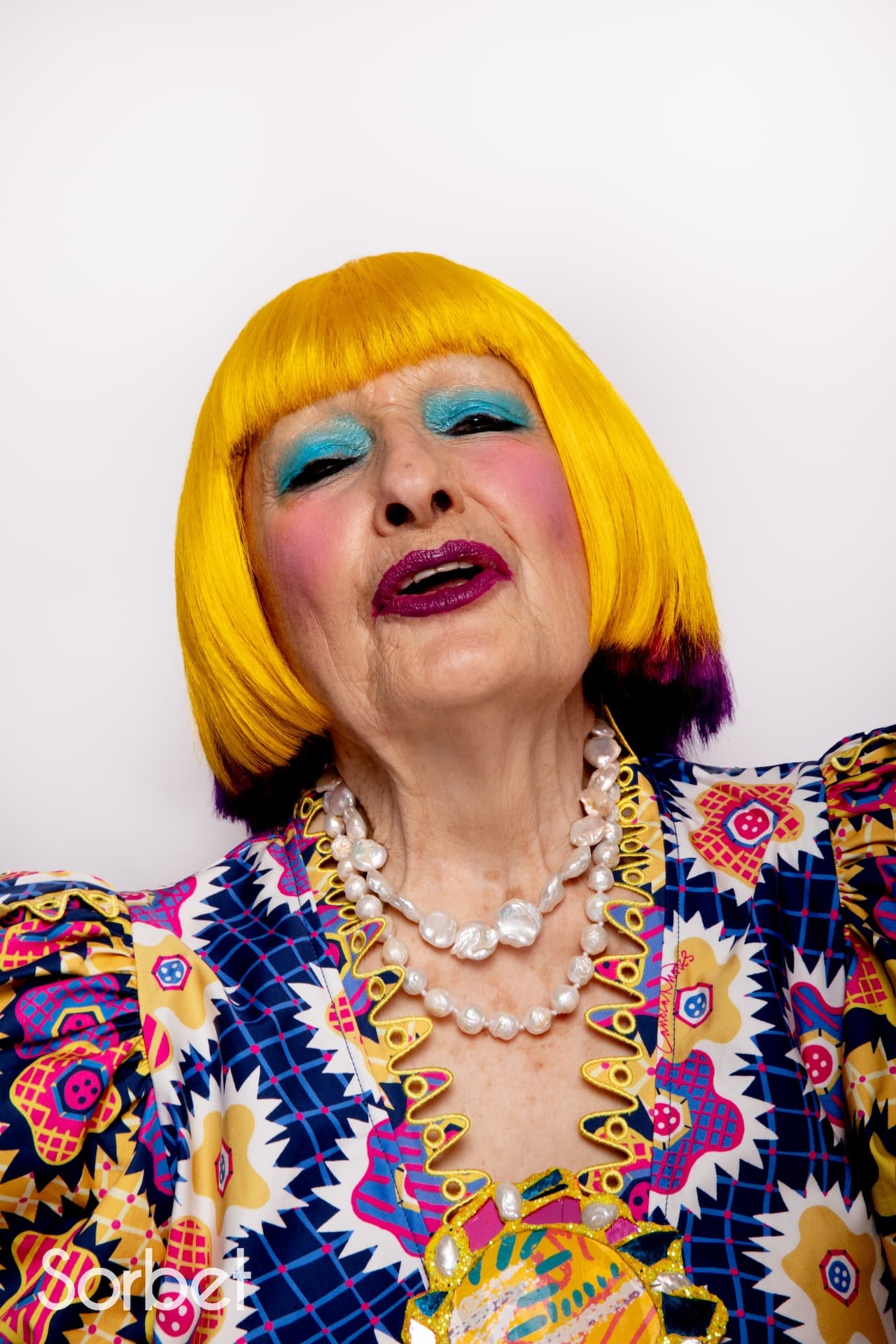
Zandra wears Pinky Glow Unreal Blush glow stick, Denim Dimensions Beautifying Eye Trends palette, Bedroom Black Rock’n’Roll Kohl eye pencil, Exagger Eyes mascara, and Airbrush setting spray, CHARLOTTE TILBURY; dress, ZANDRA RHODES
ZR: This is when English Vogue had beautiful pictures of people in lovely dresses.
WB: [laughs] So do you think that has come back around? Has the industry changed?
ZR: I think beauty and fashion have changed. I mean, because we’ve separated from the Common Market, we don’t have access to Europe anymore. You know, whereas our designers were regularly showing in Paris and right up until we separated [after Brexit].
WB: Did you feel like you were part of the London fashion movement?
ZR: I was doing my own thing, really. I was on the edge of the London fashion movement.
WB: And you’ve dressed celebrities and royalty. Can you tell me about some of those experiences?
ZR: Well, I made the famous outfit for Freddie Mercury, which was probably about 1973. I saw that [Queen] weren’t really huge, and they came to my funny little studio in Porchester Road, Bayswater, up the rickety stairs.
WB: No, stop. Freddie Mercury came up the little rickety stairs in the studio?
ZR: Right. But that would be ’73, before Barcelona and all that stuff. But there were other people that came up those stairs: Britt Ekland, Baby Jane Holzer, and Little Nell [Campbell] came upstairs when she really was Little Nell and came straight from Australia.
WB: Princess Diana didn’t come up the stairs?
ZR: No. By the time I dressed Princess Diana, I had a factory in Shepherd’s Bush.
WB: Oh, I live in Shepherd’s Bush.
ZR: Oh, I love Shepherd’s Bush. We had a lovely building there where I employed about 60 people and had two long print tables. Lauren Bacall came up those stairs. It was quite an amazing experience. And Halston sent her. I knew Halston very well.
WB: And tell me about the museum. When did that idea crystallize for you?
ZR: Really, as a designer, you go through a period when you’re really the hot number, and then it goes into different periods. So, I’d say that when it got to the late ’80s, I was still producing, but it got a lot smaller, and I’d reduced my staff.
I had my shop in Bond Street, but that closed, and I was dealing with just wholesale, traveling around America selling my clothes. I was reducing and reducing, and then my great friend Andrew Logan said he’d seen a building that was for sale and was empty. And he said, “Zandra, you’ve always wanted to do a museum,” because I’d saved all my clothes. And so I thought, why not? And I realized I could sell my house that I’d bought in the Notting Hill Gate area for the price that I could pay for the building, because they hadn’t built the Shard.
WB: Did the Shard send the whole area skyrocketing?
ZR: Before that, it was considered a down-and-out, dangerous area.
WB: No way. It’s so bougie now.
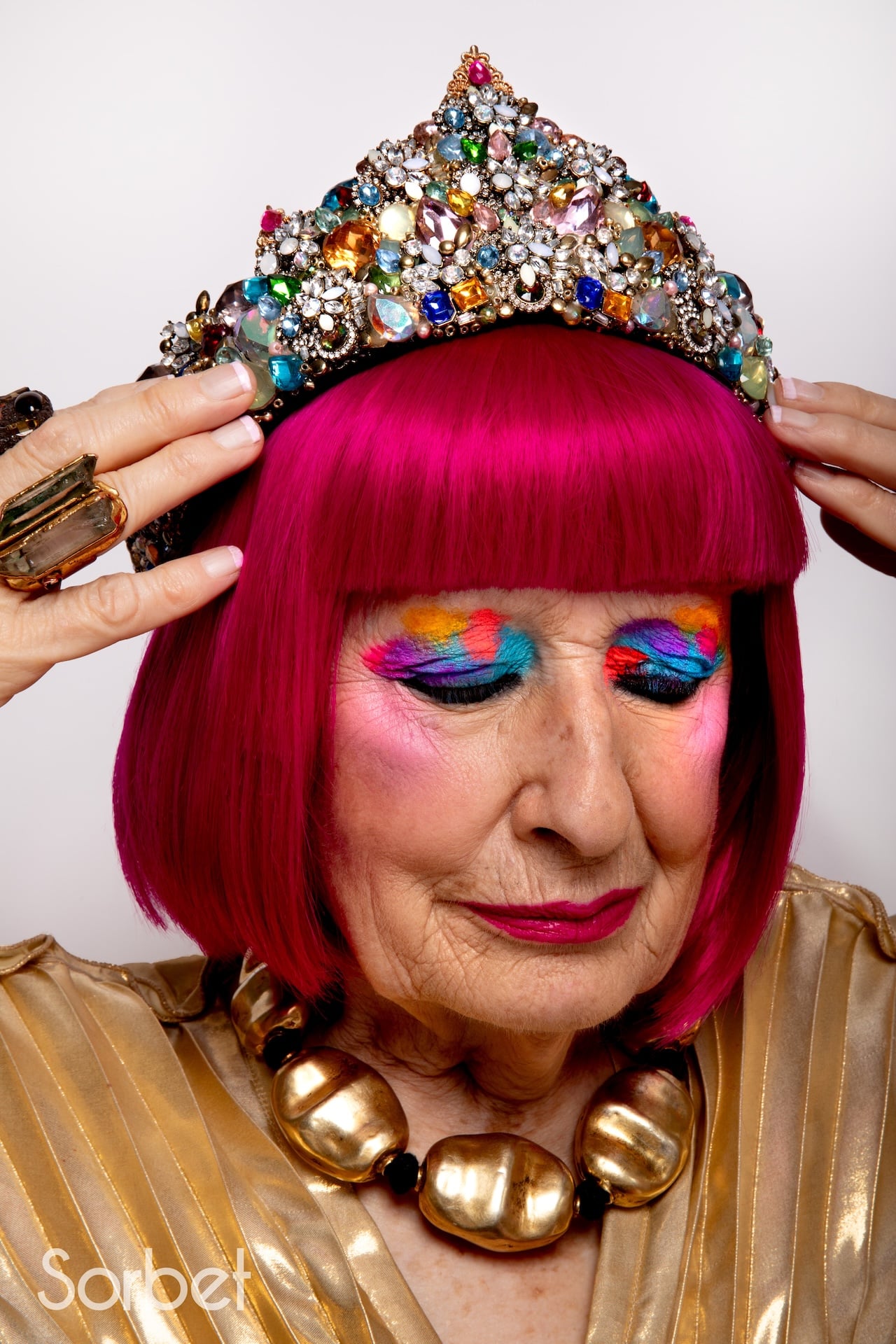
Dior Forever Blush in Fuchsia, Diorshow liquid liner, Diorshow 5 Coleurs, DIOR BEAUTY; Charlotte Tilbury Hot Lips, Lip Cheat in The Queen, CHARLOTTE TILBURY; Tom Ford Shade & Illuminating blush, TOM FORD BEAUTY; dress and jewelry, ZANDRA RHODES
ZR: Through my boyfriend, I met Mexico’s top architect. I persuaded him to come to London and paid for first-class air tickets and said, “This is an up-and-coming area,” and convinced him to do his first building in Europe. That was in ’95 when I bought it. But then I had to raise the money to convert it because I thought that the government would be interested in me doing a museum, but they weren’t. So he said, “Well, why don’t we get another architect to help, and then build nine apartments on the top, pre-sell eight of them, and that’ll pay for the building?”
WB: Who operates the museum?
ZR: Newham College for Further Education. Because once I built the museum and it was opened – by Princess Michael of Kent – and we had lots of PR, I found that people were interested in my work again. And so, suddenly, I was asked to do operas in America. So we organized for Newham to run it, just with me advising when they need it.
WB: Designing the costumes for operas?
ZR: And sets in Australia and America. That’s where I was last week, because I did an opera called The Pearl Fishers, and they revived it and put it on in West Palm Beach last week.
WB: When did you start getting involved in set design? I know you started doing textiles, and that moved into fashion, and then I believe you opened a store in California?
ZR: At one point, I had several stores. Bloomingdale’s had a Zandra Rhodes department, and Marshall Field’s in Chicago had a Zandra Rhodes department. But that was really in the ’70s.
WB: So, when did you get into set design?
ZR: In San Diego, I met the head of the opera, who said, “Have you ever had a go at doing set design? Why don’t you try it?” I ended up doing costumes for The Magic Flute, sets and costumes for The Pearl Fishers, and sets and costumes for Aida, which played in Houston, San Francisco, and the Coliseum in London.
WB: Which have been your favorite projects?
ZR: I will always remember Princess Anne in her engagement dress, because she looked like a fairy princess, really gorgeous. Then, although I never met her, the cover of Donna Summer’s album [Once Upon A Time, 1977], with one of my chiffon dresses.
WB: I also heard you were recently in India doing workshops. How did that come about?
ZR: I did a workshop painting fabric, yes. [A group] was founded by a woman called Faith Singh to keep crafts alive in India. People do paper cutting and mud-dyeing, and they’ve always wanted me to do a fabric class. So I did it, with 12 people sitting out under a tent painting fabric. It was great fun.
WB: So, what’s in the pipeline?
ZR: We’ve got some jewelry coming, and then probably a new print project. We have two museums in America wanting to do a show, and I have to work with the head of our foundation, Piers Atkinson. We’ve got to physically outline the show. So, we’re in the middle of that.
WB: And your show in Bath?
ZR: It’s really gorgeous, and it shows different prints right through from when I first started through to probably the mid-’90s.
WB: Did you go to London Fashion Week?
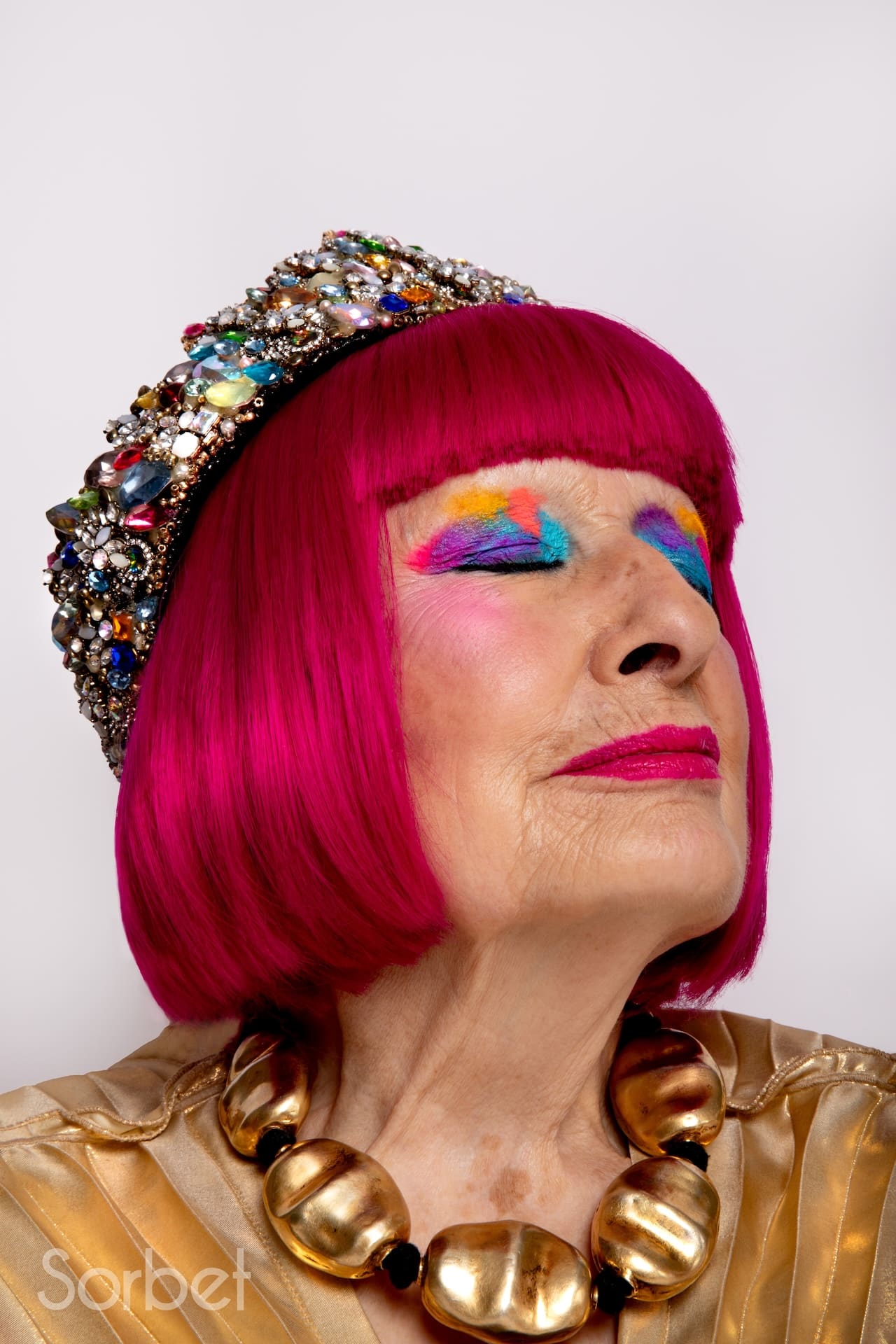
ZR: I was in America for my opera and have been so busy that I haven’t had a chance to go to anything.
WB: Would you, typically?
ZR: Fashion at the moment is more digital, and I think it’s moving away from print.
WB: A lot is done digitally, but you would have drawn all of yours.
ZR: Yes, then hand-screened it.
WB: Do you think that’s going to come back around?
ZR: You can see different things, very clever things they do with old things they find. They might be pulling some of mine to pieces and recreating them. You never know what’s going to happen in the future.
WB: Are there any designers coming up that you would like to work with? Matty Bovan seems like an exciting designer.
ZR: Have you been to his shows? They’re quite lovely.
WB: So lovely. I’ve been to a couple of them.
ZR: It’s really like objet trouvé, isn’t it?
WB: I wonder if there could be a collab.
ZR: Be quite interesting, wouldn’t it? [laughs]
WB: Well, it sounds like you’ve got enough on your plate. [laughs]
ZR: Yes. We’re cataloging the whole record of my work and my company, and that’s going to go to De Montfort University. And De Montfort are going to have a takeover of their whole campus with my work from September to January 2027.
WB: Oh, wow, I will have to come and see it.
ZR: We’ve got things where you see the original I created and then the stuff that we did with Marks & Spencer and Fluevog. And we did a whole range with IKEA that’s just been shown in Scotland. That was lovely.
WB: Finally, what’s your favorite sorbet flavor?
ZR: Lemon!
WB: Classic!
Starring Zandra Rhodes | Creative Concept Studio Sorbet | Photographer Jemima Marriott | Editorial Direction William Buckley | Styling & Production Krishan Parmar | Hair & Makeup Maria Comparetto | Photo Assistant Lee Furnival | Talent Studio Manager Lottie McCrindell | Fashion Zandra Rhodes | City London
Related Photoshoot, Fashion
- Fashion
- 5 Min Read
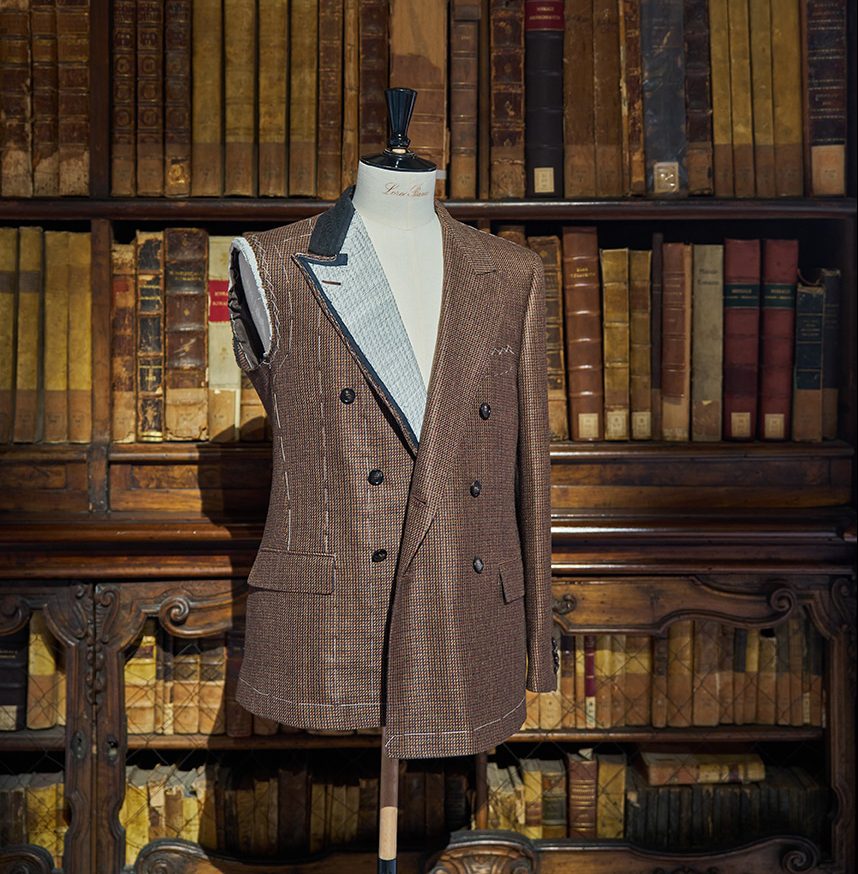
Loro Piana Staged Spring/Summer 2027 Inside One of Milan’s Oldest Libraries
September 29, 2026