
THE MISS UNIVERSE PAGEANT’S RISE TO FAME
Written By: Amanda Smith From tourism stunts to swimwear spectacles to Donald
Written By: Amanda Smith
From tourism stunts to swimwear spectacles to Donald Trump to bankruptcy, this is pageantry's past and present.
1921 – THE BIRTH OF THE MODERN PAGEANT
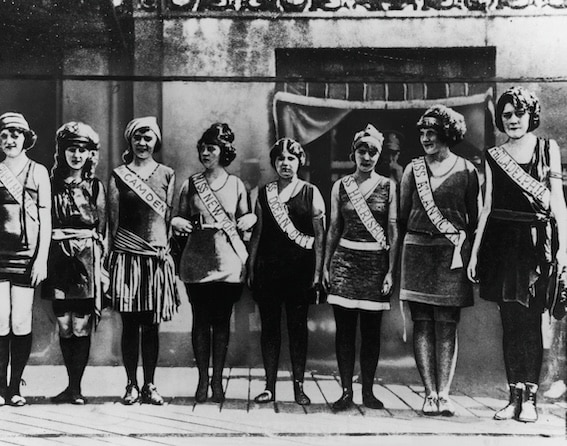
The modern pageant era begins in 1921 with the first Miss America, in Atlantic City. Officially, it was a tourism stunt to extend the summer season. Unofficially, it launched a national obsession with ranking beauty in public.
Contestants paraded the boardwalk in swimsuits, establishing the visual grammar of pageantry for decades.
The rules, however, were less glamorous: contestants had to be unmarried and white. The competition reflected the racial and gender hierarchies of the era, packaging them in satin and smiles.
Still, it worked. Miss America fused entertainment, advertising, and mass media into a glittering spectacle – the prototype for the global pageant industry that would follow.
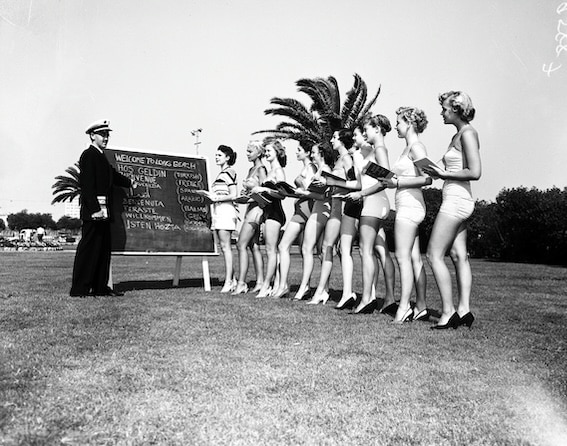
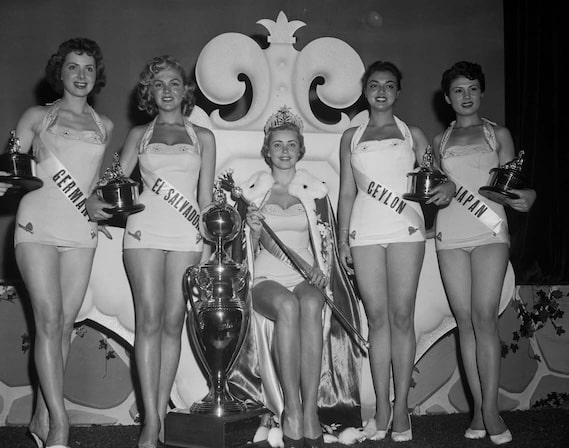
1952 – MISS UNIVERSE IS BORN
Miss Universe debuted in 1952 in California, created by a swimwear company that understood one simple truth: glamour sells bikinis.
The postwar economy was booming, and American consumer culture was discovering the power of spectacle marketing. Beauty pageants offered the perfect stage. Contestants from around the world arrived to represent their countries while quietly promoting an aspirational lifestyle of fashion, travel, and polished femininity.
Unlike the domestically focused Miss America, Miss Universe framed beauty as an international affair. The ideals still leaned heavily Western – because mid-century America rarely doubted its own aesthetic authority – but the concept worked.
A promotional gimmick had just launched one of the most recognizable global entertainment franchises.
1955 – TELEVISION MAKES IT A SPECTACLE
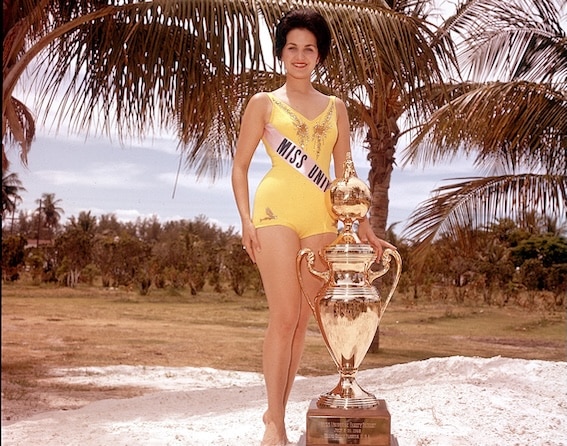
In 1955, Miss Universe made its debut on American national television, and the pageant found its true stage. During the 1950s, television ownership in the US exploded from about nine per cent of households to more than ninety per cent within a decade.
Suddenly, pageants weren’t seaside curiosities; they were living-room rituals. The format was made for television: shimmering gowns, choreographed entrances, suspenseful pauses, and the sacred phrase ‘And, the winner is…’ Advertisers quickly followed the spotlight, pairing beauty queens with cosmetics, fashion, and aspirational lifestyle branding.
Winners became celebrities, and the pageant itself became annual appointment viewing. Beauty, it turned out, was even more profitable when broadcast in primetime.
1960 – PAGEANTRY GOES PRIMETIME
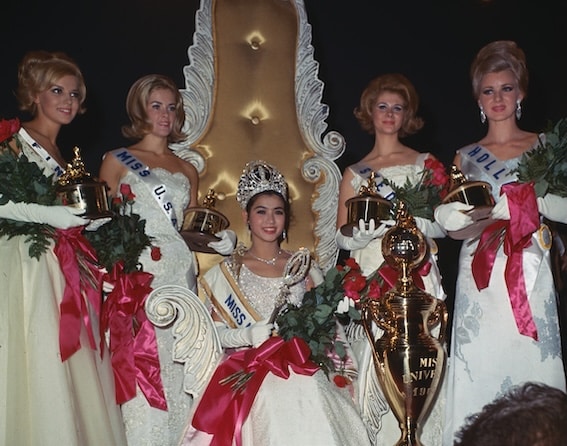
In 1960, CBS began broadcasting both Miss USA and Miss Universe, cementing pageants as reliable television entertainment. Producers refined the format into a polished spectacle – dramatic reveals, choreographed segments, interviews designed for maximum suspense.
Pageants became less a competition than a television narrative with characters, stakes, and carefully timed tension. The rules still reflected mid-century conservatism: contestants had to be unmarried, poised, and photogenic embodiments of traditional femininity. Racial homogeneity remained largely unchallenged. But television exposure transformed the stakes.
Winners became international celebrities and the crown became a global platform. For broadcasters, pageants delivered ratings. For sponsors, they delivered millions of viewers eager for glamour.
1965 – THE FRANCHISE ERA
In 1965, Miss USA and Miss Universe formally separated into distinct competitions. Think of it as a corporate restructuring, but with more sequins.
The split clarified the pipeline: contestants could climb from local competitions to national titles and finally the international Miss Universe stage. More importantly, it strengthened the franchise system.
National organizations purchased the rights to send contestants to the global competition, paying licensing fees for the privilege. Pageantry became a worldwide network of competitions feeding into one grand televised finale.
Host cities soon realized the tourism value of staging the event. By the mid-1960s, the crown was no longer just symbolic – it was a well-oiled international business model.
1983 – MISS BLACK AMERICA
For decades, mainstream pageants quietly excluded Black contestants. In 1983, the Miss Black America competition emerged as both celebration and correction. The pageant reflected broader cultural shifts following the civil rights movement, which had exposed the racial exclusions embedded in American institutions – including beauty contests.
Miss Black America created a stage where Black beauty, talent, and achievement could be celebrated without compromise. It was both cultural statement and joyous spectacle. Pageantry has always been political, whether it admits it or not. The crowns, the gowns, the judging criteria – they all reveal the values of the society staging them.
In this case, the message was clear: beauty had always been far more diverse than the judges allowed.
1996 – ENTER DONALD TRUMP
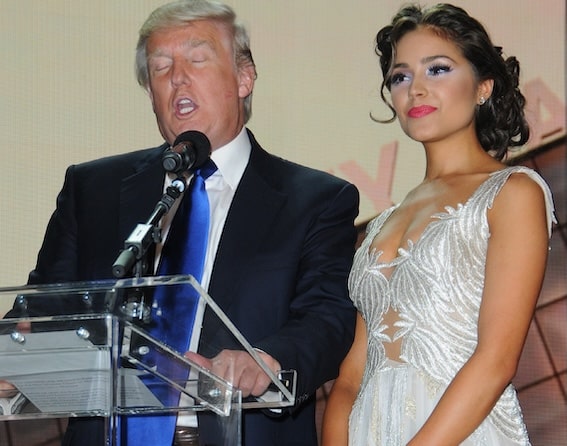
In 1996, businessman Donald Trump bought the pageant, renamed it the Miss Universe Organization, and moved its headquarters from Los Angeles to New York.
Under Trump, the pageant became a glossy branding machine tied to celebrity culture and television spectacle. Broadcast deals with NBC, franchise fees, sponsorships, licensing, and hosting fees from eager cities reportedly generated $15–25 million annually.
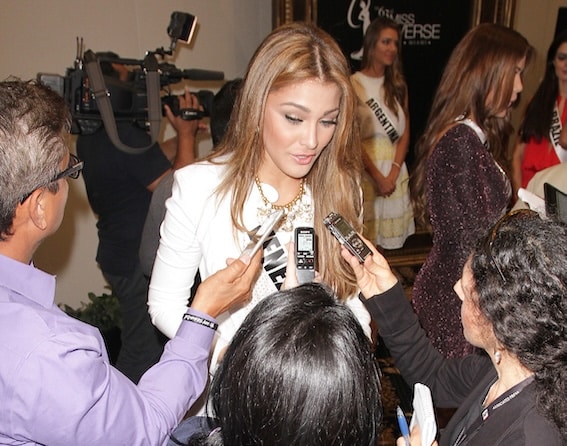
Contestants themselves paid entry and sponsorship fees in national competitions to reach the global stage.
For Trump, the pageant aligned neatly with his personal brand – luxury, glamour, and international visibility. The crown, it turned out, doubled as a surprisingly effective marketing tool.
2013 – MOSCOW AND SUSPICION
The 2013 Miss Universe pageant landed in Moscow after Russian developer Aras Agalarov reportedly paid $20 million to host it – a reminder that pageants often function as tourism marketing wrapped in rhinestones.
But the Moscow edition stirred controversy. Miss Jamaica, Kerrie Baylis, suggested the finalists mirrored Trump’s business interests, while Miss Singapore, Shi Lim, said contestants believed Trump had personally selected the top competitors. None of it was proven, but the whispers exposed an old tension in pageantry: the uneasy overlap of spectacle, money, and influence.
Still, the show proved how global the franchise had become, with host cities willing to pay handsomely for a few glittering hours of international attention.
2015 – THE TRUMP ERA COLLAPSES
In June 2015, the Miss Universe Organization entered full crisis mode. The same month Donald Trump announced his presidential campaign, NBC cut ties with him after controversial comments about immigrants.
Old controversies resurfaced quickly. Former Miss Teen USA contestants accused Trump of entering dressing rooms while contestants were changing. A 2005 interview resurfaced in which Trump said he could go backstage because he owned the pageant. The scandal arrived just as cultural attitudes were shifting. The emerging #MeToo movement was exposing questionable power dynamics across fashion, media, and entertainment.
Pageantry suddenly faced the uncomfortable question: was the crown still glamorous, or just outdated?
2022 – THAILAND TAKES THE CROWN
After several ownership changes, the Miss Universe Organization was purchased in 2022 by Thailand-based JKN Global Group for $14 million. The deal shifted the pageant’s center of gravity toward Asia, where beauty competitions still command massive audiences.
JKN promised modernization while preserving the glamour that built the franchise. But the landscape had changed. The golden era of television pageants had long passed, replaced by influencers, streaming platforms, and new conversations around beauty standards.
Ownership by a media company suggested a pivot toward digital audiences and global content distribution. The crown remained famous – but now it had to compete for attention in a very crowded entertainment arena.
2023 – BANKRUPTCY, BUT MAKE IT PAGEANTRY
In 2023, just one year after the acquisition, JKN Global Group filed for bankruptcy protection in Thailand. The company insisted the restructuring would not affect Miss Universe itself. The show, they promised, would go on.
The moment revealed how much the economics of pageantry have changed. Once a guaranteed television cash machine, the franchise now competes with reality shows, social media celebrities, and shifting cultural attitudes toward beauty.
Yet the spectacle persists. For contestants, the pageant still offers international visibility and career opportunities. For audiences, it remains a strange and glittering ritual.
Because if history has proven anything, it’s this: never underestimate humanity’s appetite for crowns, gowns, and dramatic pauses.