“ART IS A FORM OF EXPRESSION THAT IS BORN FROM EVERYTHING – ESPECIALLY AND PRECISELY FROM PAIN”: RÉMIE AKL ON LEBANON, PERFORMANCE, AND THE RADICAL ACT OF FREEDOM

Written By: William Buckley

In the mountains of Broummana, Lebanon, Rémie Akl reflects on a career defined by protest, the healing nature of performance, and why she refuses to separate her art from her motherland.

For many people, Rémie Akl arrived in their consciousness with a message. The politically charged spoken-word videos that circulated on phones everywhere in 2019 resonated with many; posted with the hashtag #iamarab, she arrived on everyone’s radar. Singer, dancer, actor, and performance artist, she stacks disciplines and sparks them together. And Lebanon remains the unshakable muse: family, church psalms, school rituals, Fairuz, and even ‘90s telenovelas echo through the work. Her art is statement, release, and protest, with life, politics, and faith braided into every note. This is the aura that surrounds everything she does – it’s powerful.

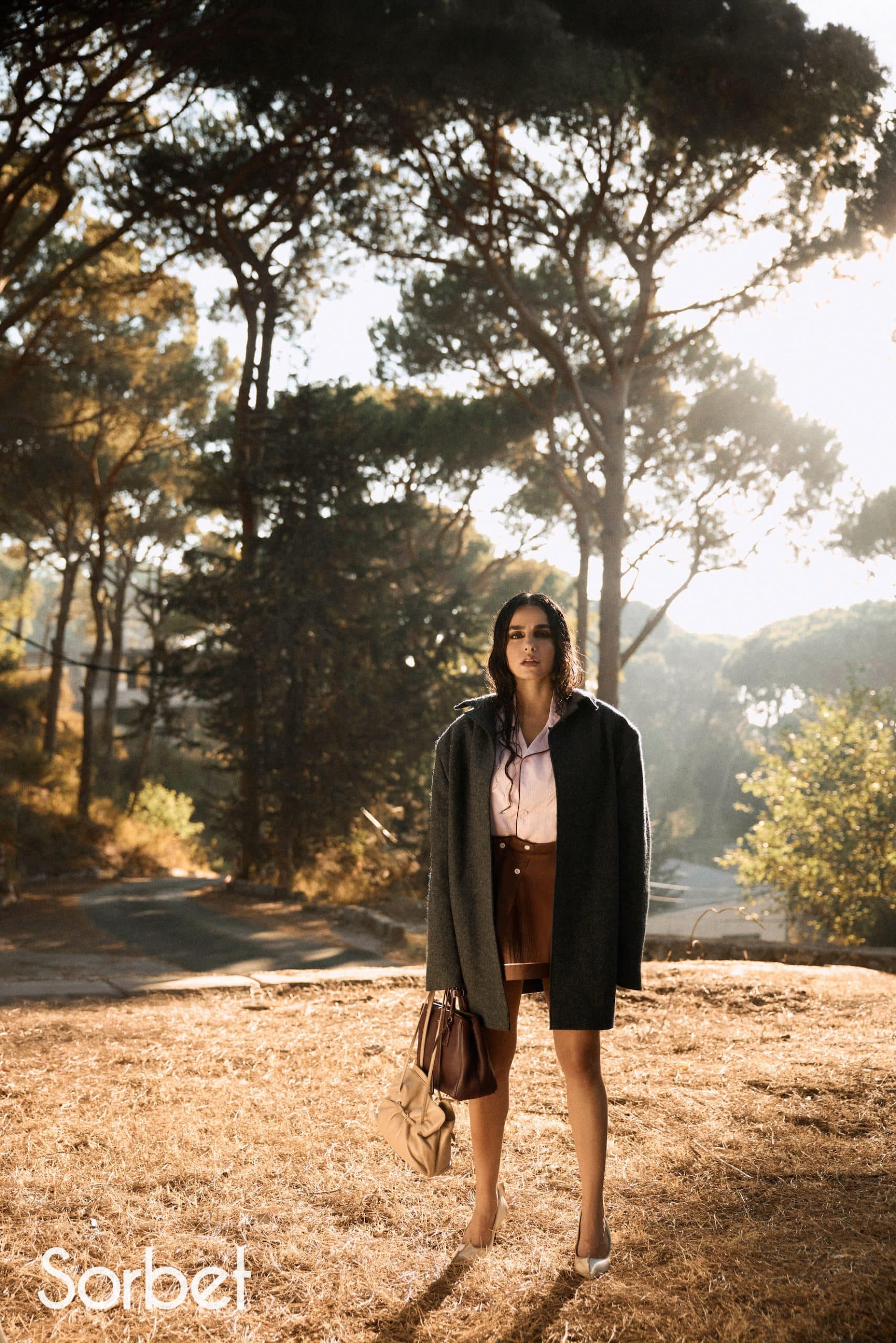
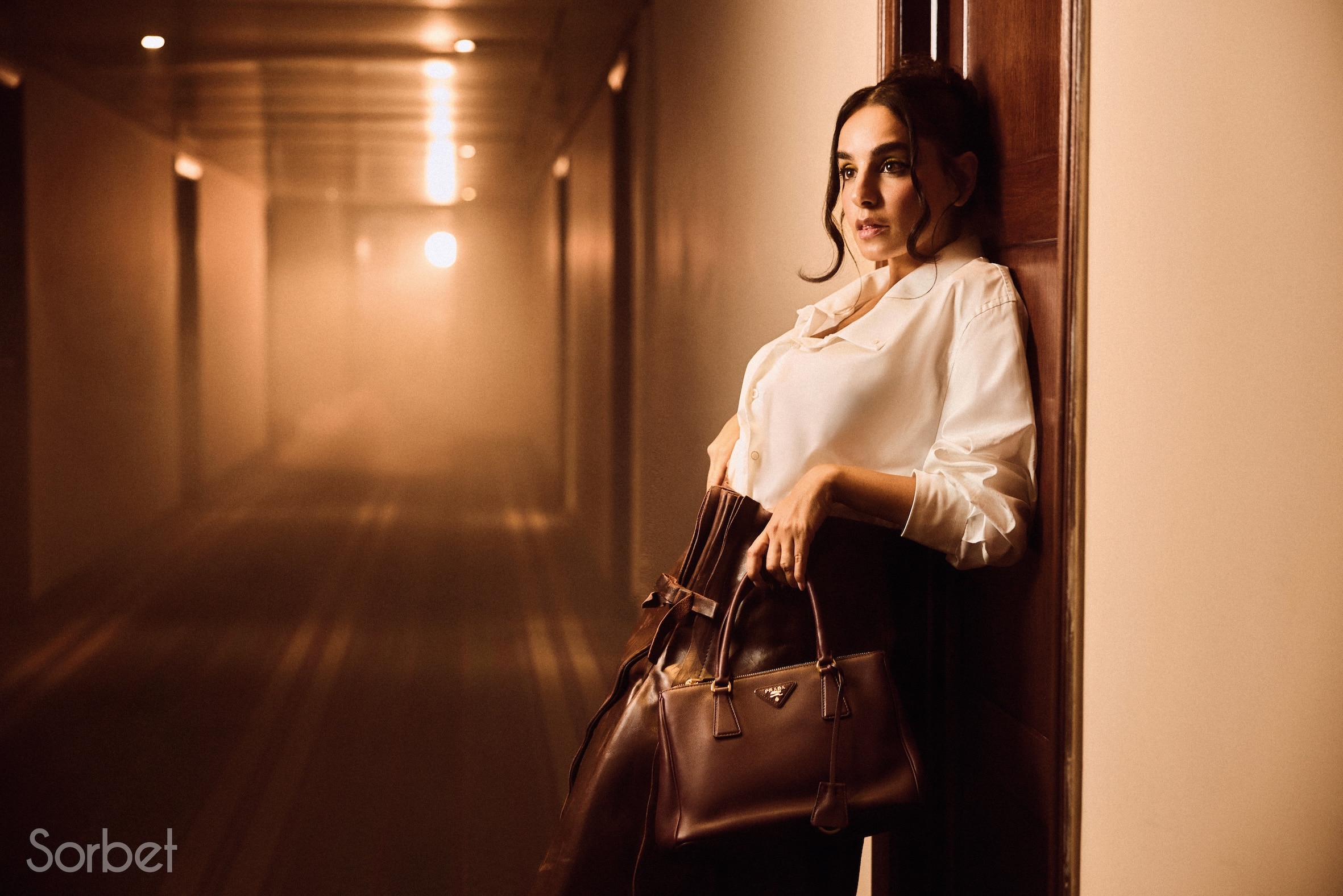
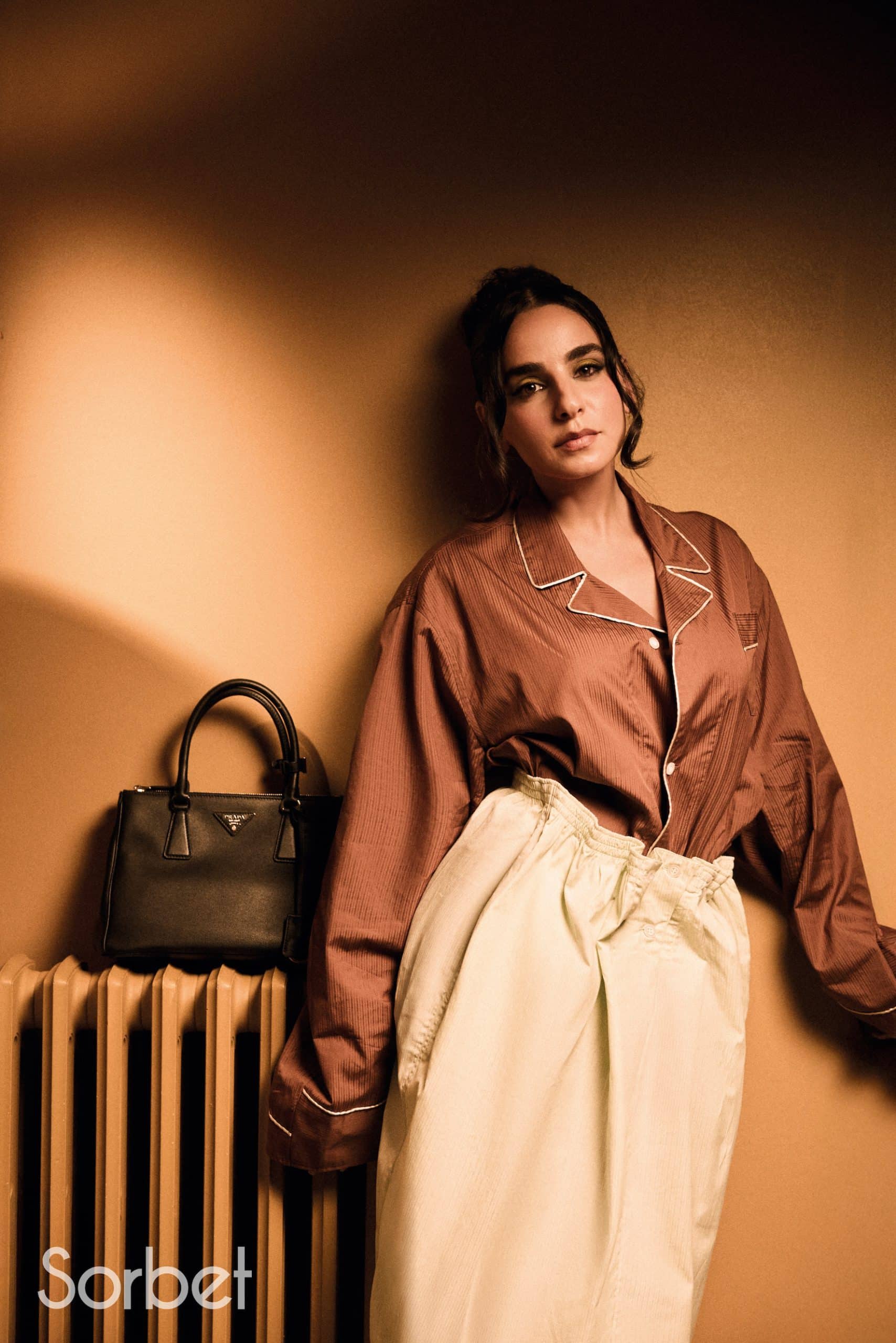
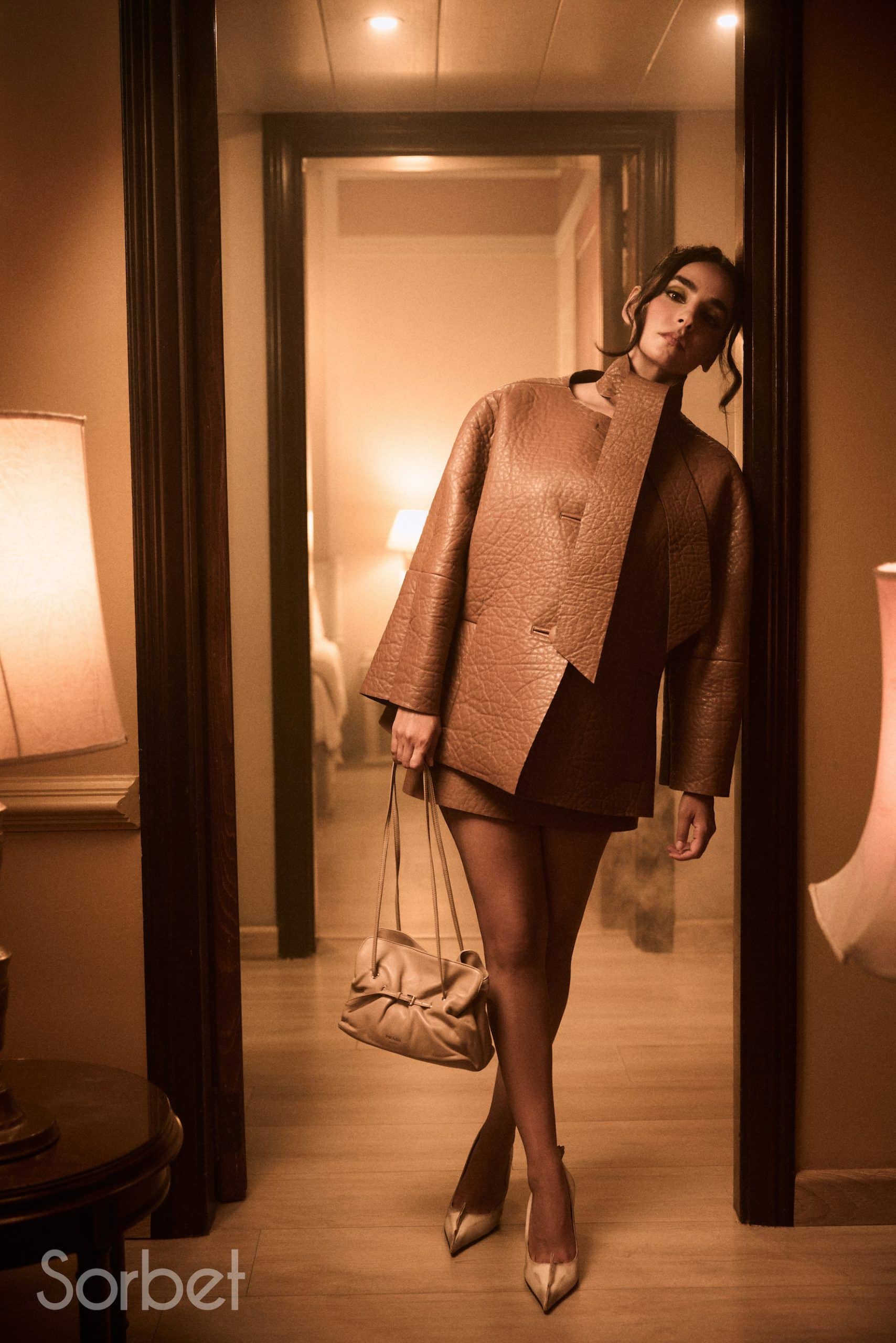
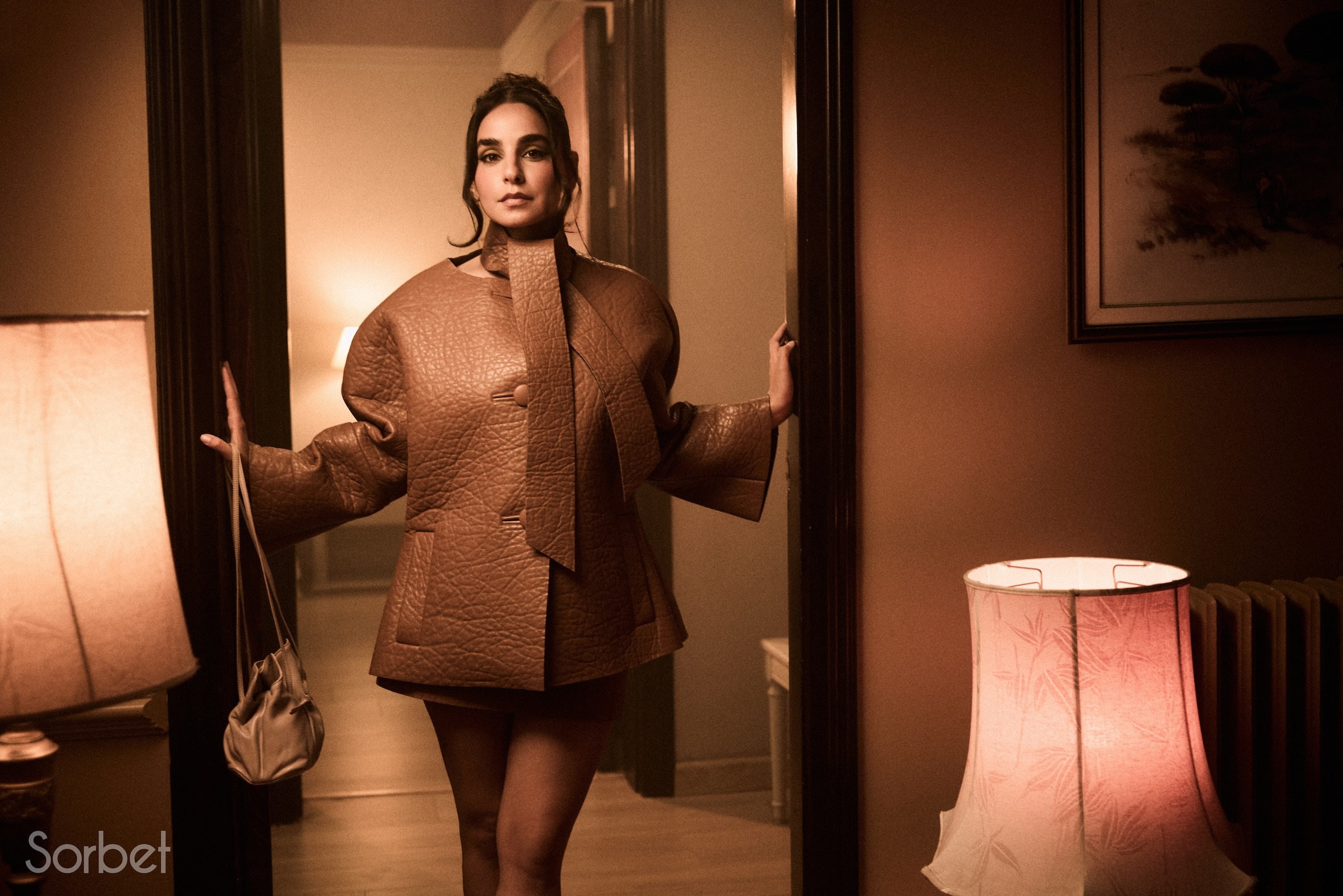
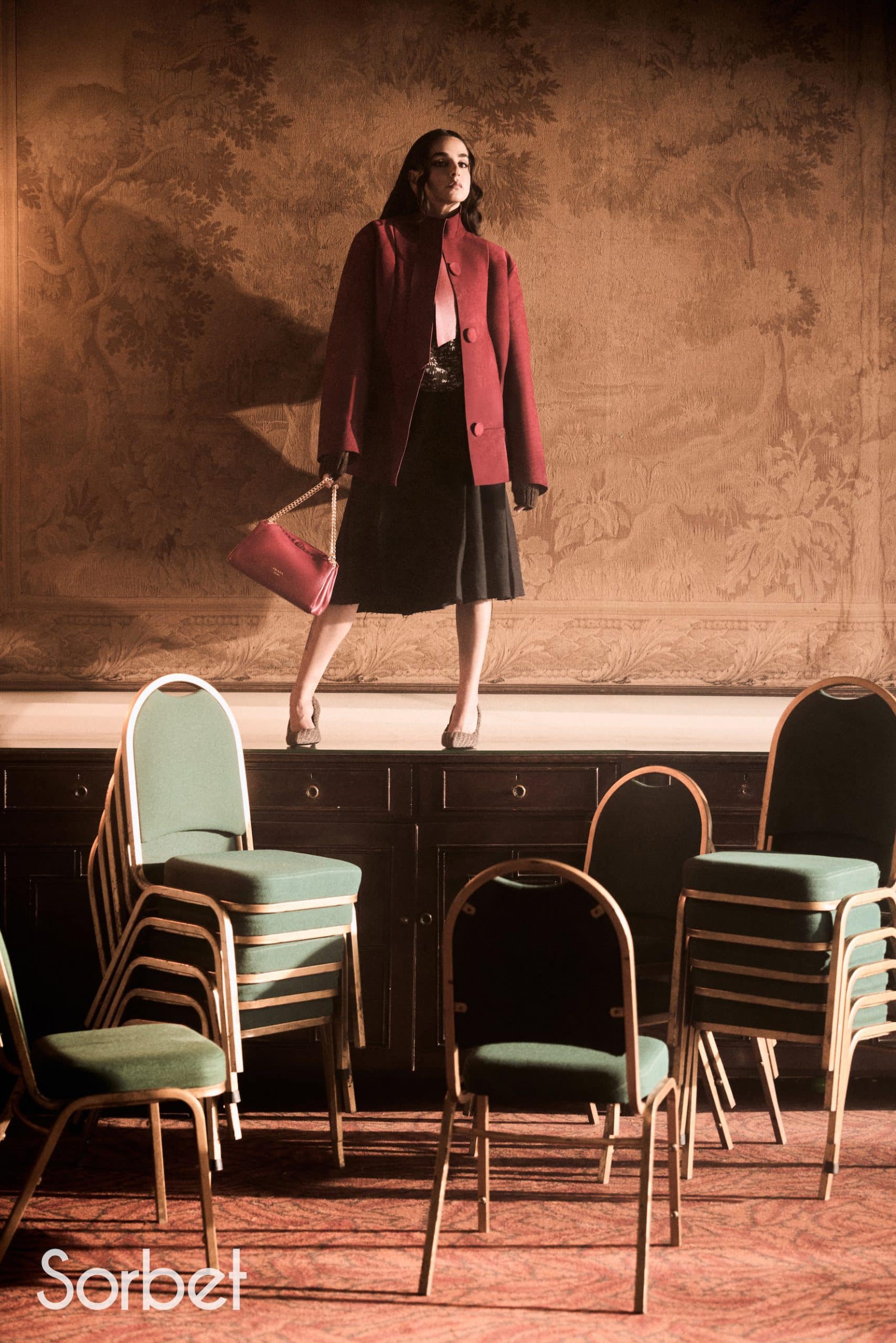
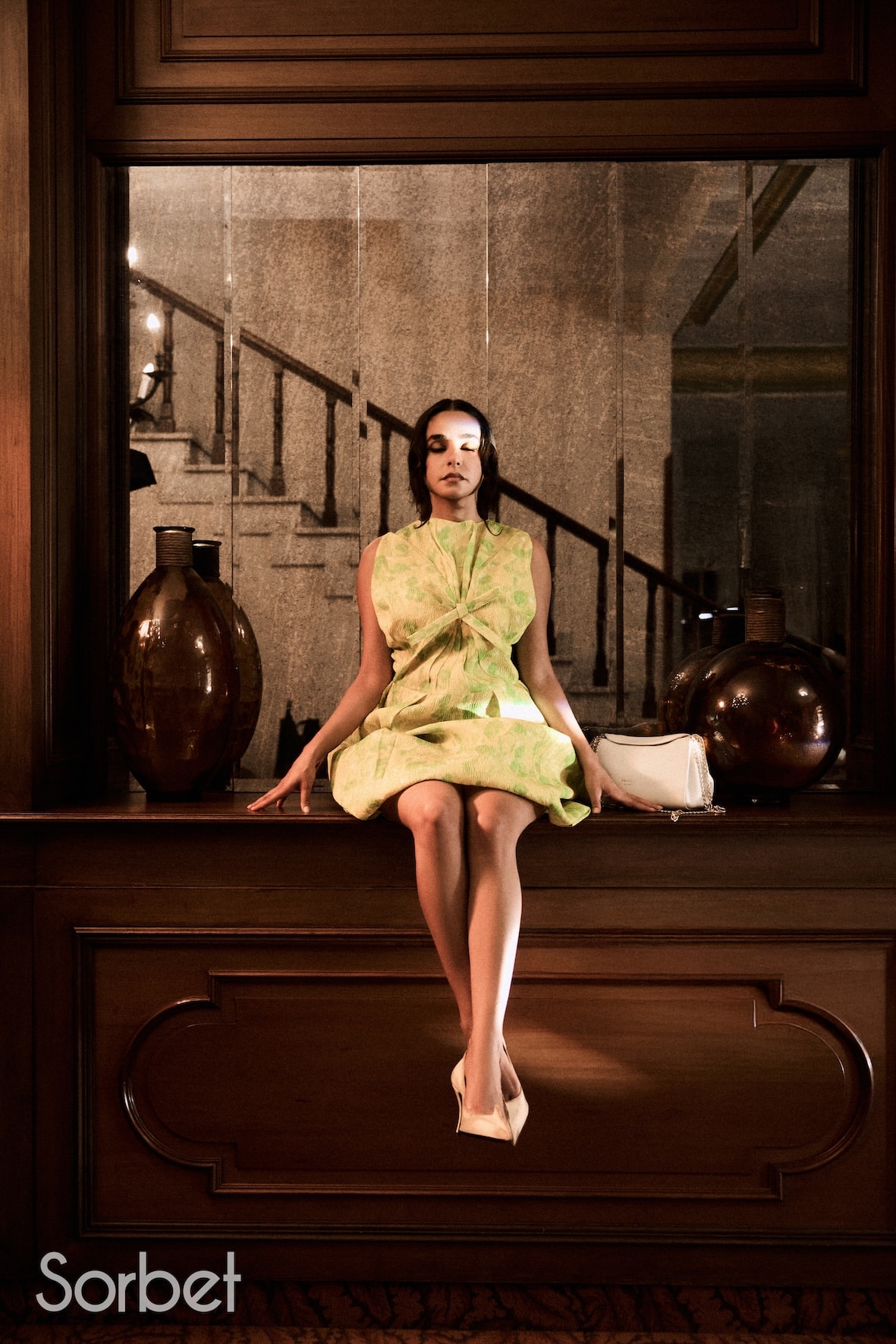
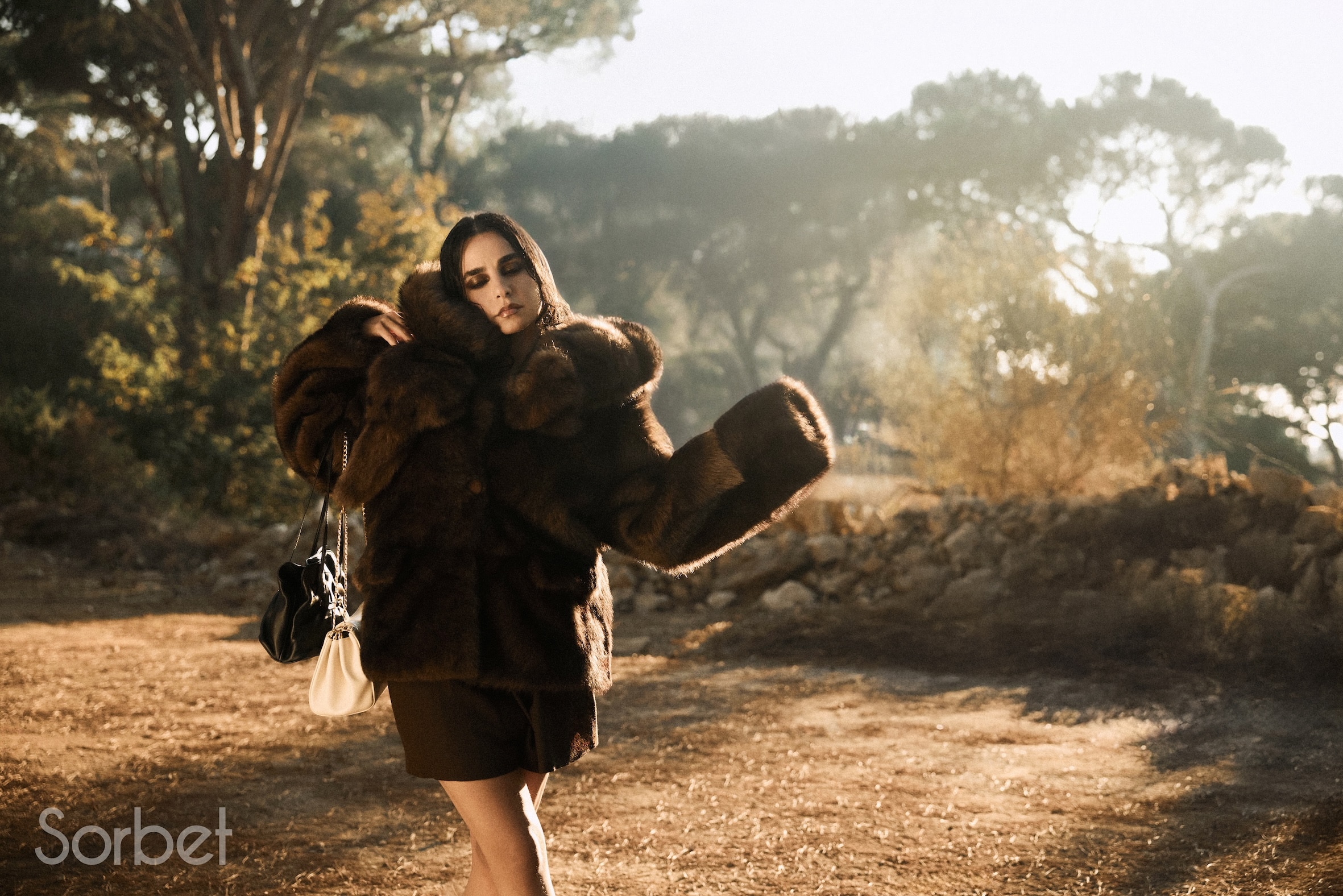
So for this shoot, of course we traveled to Lebanon. We wanted to tap into the aura of the land, so we traveled to the mountains, to Broummana, to the Printania Palace Hotel that was built in the 1960s – a lot of aura. We brought Prada’s Fall 2025 collection, with looks that referenced bygone decades – the ‘60s, the ‘70s – softness with structure and statement proportions, echoing the faded grandeur of the hotel. For photography, we secured Lebanese photo artist Lara Zankoul, known for re-staging realities and reimagining them as dreams. Surrounded by cedars in morning mist, with vintage carpets and chandeliers that hummed atmospherically above, we channeled all the aura.

Shetland wool jacket, cotton shirt, cotton skirt, leather pumps, Prada Galleria leather bag, Prada Dada leather bag, PRADA

WILLIAM BUCKLEY: You move between acting, singing, and performing – do you see yourself as one thing more than the others?

REMIE AKL: I get asked this a lot, and I always struggle to answer. The truth is, I’ve always done all three – since I was a kid. And over time, I’ve added another layer: filming myself while I perform. For me, performing includes dancing and storytelling; acting is also a form of storytelling, and singing is intertwined with both. I couldn’t possibly choose one over the others, because whenever I’m doing one, I’m subtly expressing the others too. Whenever I’m doing one, I’m confessing them all. Maybe it’s simplest to just call myself a performance artist. After all, a performance can combine all forms of art, right?

WB: Tell me about your recent TV show – how did that happen and how was that experience?

RA: So many coincidences happened for me to get the role; I believe this role was meant for me. It’s not something that I can explain – it’s something in my gut that tells me that. But if I have to connect the dots, I would say the main reason I acted in this series is because of what I previously presented on social media and how it resonated. They wanted a persona (quoting from the character study) an unapologetic, strong, rebellious one; someone who screams the truth without rationalizing. They didn’t want an actor who was technically strong; they wanted someone genuine and raw, and they saw that in my work, I guess (not to sound full of myself).

And it happened that the director of content at the platform, Joe Al Khawand, watched my film at the university once, and it stayed with him. Then, when he was conceptualizing the series, my name and my image rang a bell; he remembered me and put my name on the list. Simultaneously, the executive producer at Eagle, Joelle Bitar, was also thinking of me for the role. I’ve always yearned to explore longer-form video content beyond my social media platforms. My passion for acting has driven me to seek out opportunities in fiction and cinema. Having studied cinema, I was disappointed for years to find that opportunities in the region were scarce. Initially, I was hesitant to join a Lebanese or local drama, but the recent surge in high-quality productions has been a game-changer. The exceptional script and the fact that the project was with Eagle Films ultimately encouraged me to take the role.

Poplin shirt, mid-length leather skirt, Prada Galleria leather bag, PRADA

Cotton shirt, mid-length cotton skirt Prada Galleria leather bag, PRADA

WB: And how was the experience?

RA: The experience was one of the best of my life, and not only career-wise. Working with Eagle, Yango, and the director Tarek Rizk was enriching to me on a personal and even healing level. To me, this was not just a role or a series; it was an awakening process – an expressive playground that I needed in my life at that moment. Also, being able to connect with so many beautiful Arabic artists and actors, like Samer Al Ammar and the rest of the cast, was incredibly fulfilling.

In so many moments, the acting didn’t feel like acting; it was so real. This was Tarek’s request of me from the beginning: honesty. I would also like to say that Karma, the role I played in this series, represents what I stand for in terms of values, even if her characteristic traits differ from how I am in real life. We worked to bring that character to life – a character who, per Tarek, is steady and still, yet incredibly expressive, strong, and sharp. It was a great challenge for my acting coach, Ramy Atallah, and me.

WB: When did you first realize performance could be both a personal release and a political act?

RA: I never realized… To me, a performance is a statement; it’s an opinion and an expression, and that is already political. I can’t separate my personal art from the cadre spatio-temporel where it’s born. It is born from the social, political, and familial influences of that framework – even religion has its influence on me.

WB: Your work straddles stage and screen  – what feels more intimate to you: the camera lens or a live audience?

Nappa leather jacket, nappa leather skirt, Prada Dada leather bag, PRADA

RA: Hmm. I love both. I prefer the camera, but I usually do one-shot scenes where I perform the text once with no cuts, as if I’m performing it live in front of an audience. I really can’t tell; it depends on what I feel and how I want to express myself – the phase I’m in, the objective of the performance, and the project: l’œuvre artistique and its dimension. Behind a camera, I can make sure to deliver what I want to say without leaving it to the public… when it’s live, it is to each his own point of view, his own angle, and his own view (metaphorically and literally).

WB: Who were your earliest creative influences growing up in Lebanon?

RA: Hmm, my dad, my mom, my family, my cousins, and my neighbors – my Catholic school teachers, the nuns at school, my childhood rituals. I carry them in me in so many ways… in so many parts of my body: my hippocampus, my amygdala, my heart, my womb. They’re my story and my forever source of inspiration – the “reasons why,” in both the bad and good parts, without them even knowing. As a musical influence, I grew up singing Fairuz and songs nobody had heard of from my dad’s ‘60s, ‘70s, and ‘80s diaries. I used to also sing with my cousins, and there’s a huge part of my childhood at church. The psalmodies we used to sing in school influenced me deeply. We didn’t have satellite at home; my mom didn’t want us to sit still, so she used to accompany me to my ballet classes. But I can also say that the Mexican series in the late nineties and early 2000s also influenced me. I used to adore Thalia.

WB: What’s a role or performance that has stayed with you long after the curtain closed?

RA: A performance that I did once in Egypt, a few years back, I believe. Another one I did in Hamra, at a very small pub with great food and a great communist vibe – heheh. I was so naive and innocent in the business; just a girl expressing herself with no expectations.

WB: Lebanon is a muse for you. How do you negotiate love and critique for home?

RA:  I don’t negotiate. I’ve learned to love it as it is especially these few years. I think and believe that it really is a piece of ﺳﻣﺎ, as Wadih El Safi says. I’m doing everything I can to be able to be based in Lebanon fully 365 days a year, one day soon and have a life there. It’s my home, my happy and beautiful safe place. I’m never happy outside my water, my air, my land. And to me, there’s no place as home as Lebanon precisely. And yes, it is my forever muse, my source of inspiration, my wealth, and everything truly and deeply. As a Lebanese woman, I will never sit in an interview and talk from a critical eye about my country. I compare this to my values in a relationship; I would ﺻﺑﺢ ّﯾّﺔ ﻗﮭوة never sit and talk about my love with my girls friend. I‘d rather have that matiné with him, and we talk it through, fix it, me and him; I will even change the strategy of conversation/My mindset to make it work. Same with my country. I’m tired of criticizing it, tired of people criticizing and talking bad about it, tired of the propaganda around it. If Lebanon were a person, I’d imagine him screaming اﻟﻠﻲ ﻓﯾّﻧﻲ ﻣﻛﻔﯾّﻧﻲ ﺧﻼص . And so am I.

Floral print dress, leather pumps, Prada Tumulte nappa leather bag, PRADA

WB: Do you see yourself as part of a new wave of Lebanese artists rewriting the country’s cultural narrative?

RA: I’m working on it. Time will tell; time will write. When I die I would love to last in the Lebanese libraries. I imagine my pieces in some university libraries. I have to create more, though.

WB: How do politics – regional and global – affect your performances, even when the piece isn’t overtly political?

RA: It affects a lot, sadly. As an Arab, you feel so tied to the cause. And I stopped for a long time because of that. I wanted to sing joy, but it felt so irrelevant at the time. And I waited. I was watching, observing that transitional phase, waiting for that flag of peace to land, or rise. It didn’t truly happen, and I couldn’t wait anymore. I really want joy and music and love to come from within me – and also touch what’s within me.

WB: Your performances often have an element of protest – what’s the relationship between your art and activism?

RA: I create, I express, I speak..me. What I live, what I see, what I feel. What is art, and what’s activism? Art is a form of expression that is born from everything – especially and precisely pain. What is protest? I believe it’s the same. Protest is a form of expression, just like art.

WB: What responsibilities, if any, do you feel as a Lebanese woman performer representing your generation?

RA: I don’t feel a responsibility; I didn’t choose to be a woman or to be exposed. I just am. I just do what I want to do, and what I feel I want to do. Sometimes I feel I want to do nothing at all, and I do nothing. We don’t get to choose who we are; we can choose what we want to do with it, and where we want to reach.

Nappa leather jacket, nappa leather skirt, Prada Dada leather bag, PRADA

WB: Do you write and perform for yourself first, or always with an audience in mind?

RA: With an audience, for sure. Art is my communication format, and I believe art is a connection. It’s about connection. I’m an introvert; what I do is the only – and most comfortable – way for me to express myself to others and connect with them. It’s how I speak and have a conversation, whether we agree or disagree. Art is this act of exuding; it’s generous. Someone needs to receive it, or else it goes back to where it began.

WB: How do you balance vulnerability with spectacle on stage?

RA:  I don’t [laughs]. Vulnerability is the part of me that I don’t want to hide. I don’t like to hide. And vulnerability is not always about being fragile or emotional—crying and stuff. Vulnerability is sometimes the opposite of that; it can manifest in various ways. Vulnerability is being open and willing to show things of yourself when it feels scary: your emotions, your needs, your feelings. Some hide that they are in love; some hide that they feel confident; some hide that they feel glorious, or sexy… I don’t.

WB: What’s the most surprising thing that’s ever happened to you mid-performance?

RA: One time I was singing in a different country where I wasn’t even known, and I saw 5,000 people singing with me. I stopped and cried.

WB: Do you think your performances translate across cultures, or do you lean into being deeply Lebanese and let people catch up?

RA: Yes, I started as Lebanese, but I believe I resonated with everyone. Anyone with a head and a heart would relate to my stories. I don’t like to rely on being Lebanese or a victim –  that “please hear me out” or “please recognize me” kind of thinking. I don’t like to link my success and failure to a country or to a person. I rely on my stories and my expression and my art; my way of thinking and being. The ideas, my topics are universal. Art is a universal language, music, etc. Love is universal, injustice, racism, death, fear, abandonment, etc…

Shearling jacket, chevron shorts, Prada Dada leather bag, Prada Tumulte nappa leather bag, PRADA

WB: What future projects or roles are you dreaming of right now?

RA: I’m not dreaming; I’m working on a few things – music, and I’m writing. The Universe and God is watching .

WB: How do you want audiences to feel when they walk away from one of your performances?

RA: Thinking, wandering, feeling… and I want them to come back. I also want girls to feel sexy, powerful, confident, and in harmony with themselves and their imperfections.

WB: If you weren’t performing, what other life could you imagine for yourself?

RA: Psychology or design. I’m so passionate about psychology and design, people and spaces… ask my friends.

WB: What does freedom mean to you, both as an artist and as a human being?

RA: Without it, I can’t. No one can. On an individual level, not a single creature can grow and reach its higher purpose without freedom. Even flowers, even trees… I want people to feel what I’m saying as I answer, as I scream it. What is art without freedom of expression? What is love without freedom of choice? What is life without the freedom to exist? What is a system without freedom? What is humanity without freedom? How would one reach their higher self and achieve what they were sent by God to achieve with no freedom? How would a woman be if freedom were taken away from her? How would a country be without freedom? How would a child be without freedom?

And sadly, today in this modern world, the suppression of freedom has taken on new faces. The restriction of liberty has become hypocritical, silent, and very, very dangerous. Today, we are restricted without even realizing it. We are suppressed without even knowing it – and things will only get worse in the coming years. Freedom is a basic right given by God and not by humans; not by a country, not by a political system. No one, no thing, is allowed to take it away from us for whatever reason, for whatever motif, for whatever excuse. As Remie, as Lebanese, as a human being, as a woman, I want to live in a place where freedom is audible and visible. And I want this place to be this planet: the continents, my continent, my country, and my neighbors. I love this question, William… I’ve always wanted to be asked this, and I hope one day we won’t need to question and answer this topic.

Creative Concept Studio Sorbet | Starring Rémie Akl | Photographer Lara Zankoul | Styling William Buckley | Makeup Moe Maanieh | Hair Mark Merhy | Photo Assistant Cesar Abdelhak | Styling Assistant Nour El Hak Karmeche | Fashion Prada Fall 2025 | Location Ritania Palace Hotel | City Broummana, Lebanon


END OF STORY