
Written By: Ali Y. Khadra & Khansaa Houlbi
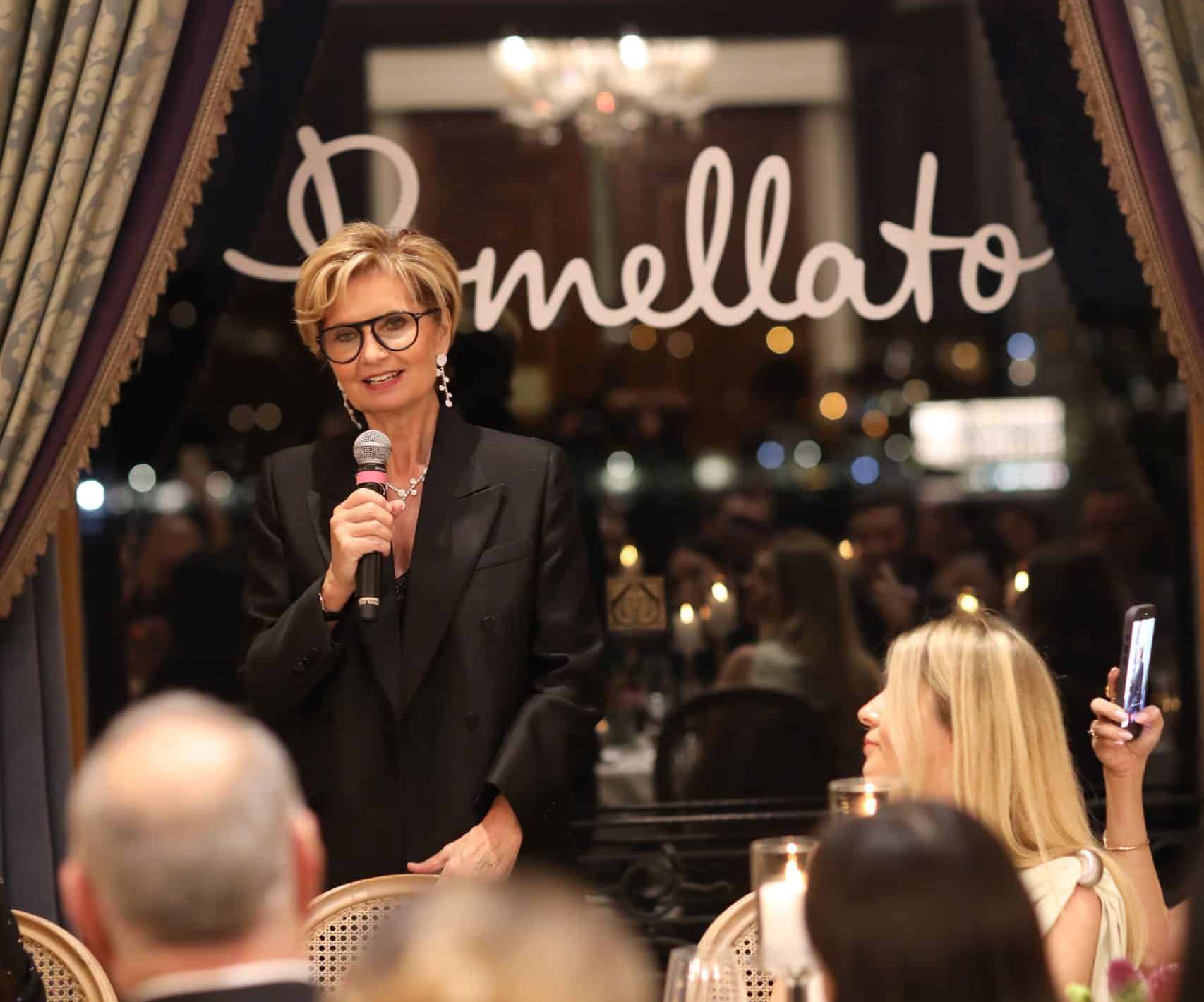
Pomellato brings Milan to Istanbul, turning the city into a stage for artisanship, storytelling, and the luminous spirit behind Iconica. Sorbet speaks to CEO Sabina Belli about Iconica and heritage with soul...
Gold is one of humanity’s oldest shared fascinations. Traded, treasured and worn close to the skin, it carries memory as much as value. Those who shape it know that craftsmanship is not simply technique, but inheritance.
Courtesy of Pomellato
Pomellato embodies that belief. Renowned for its Milanese goldsmithing, the house travelled to Istanbul to honor its Art of Iconic Craftsmanship, choosing a city where tradition is not preserved behind glass but woven into daily life. Turkish culture speaks through its artisans – in rugs, textiles and intricate design – mirroring the same patience and precision Pomellato applies to gold.
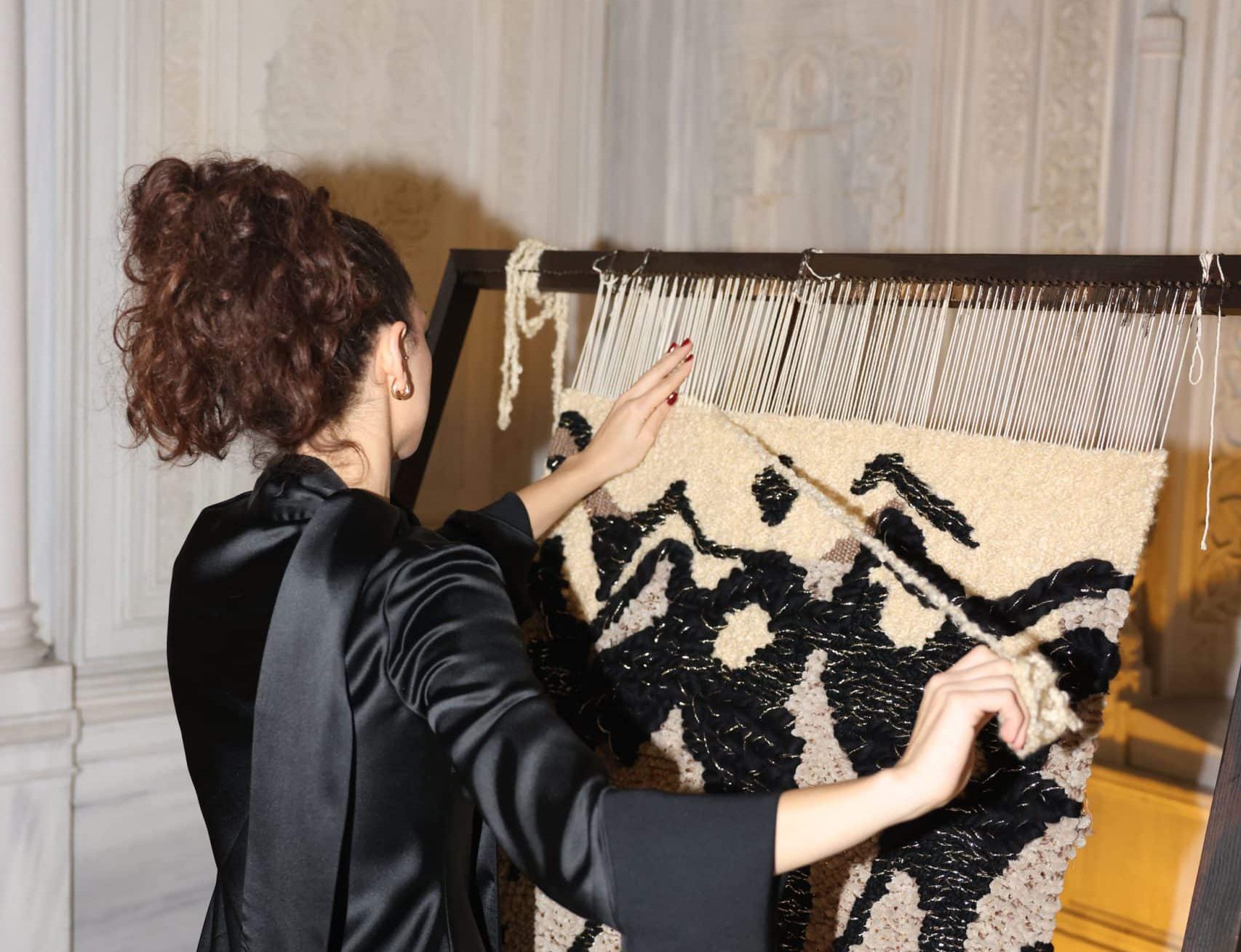
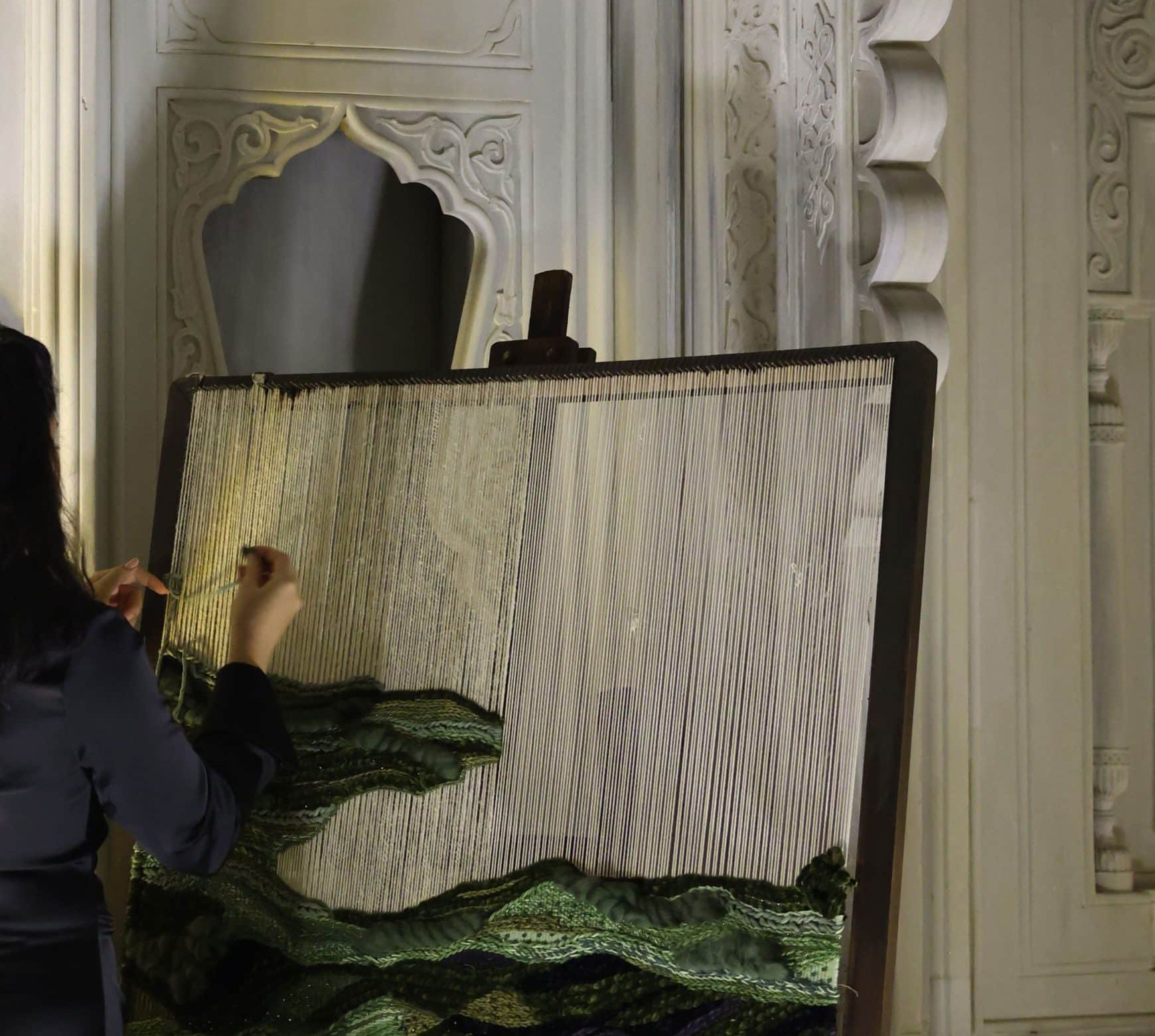
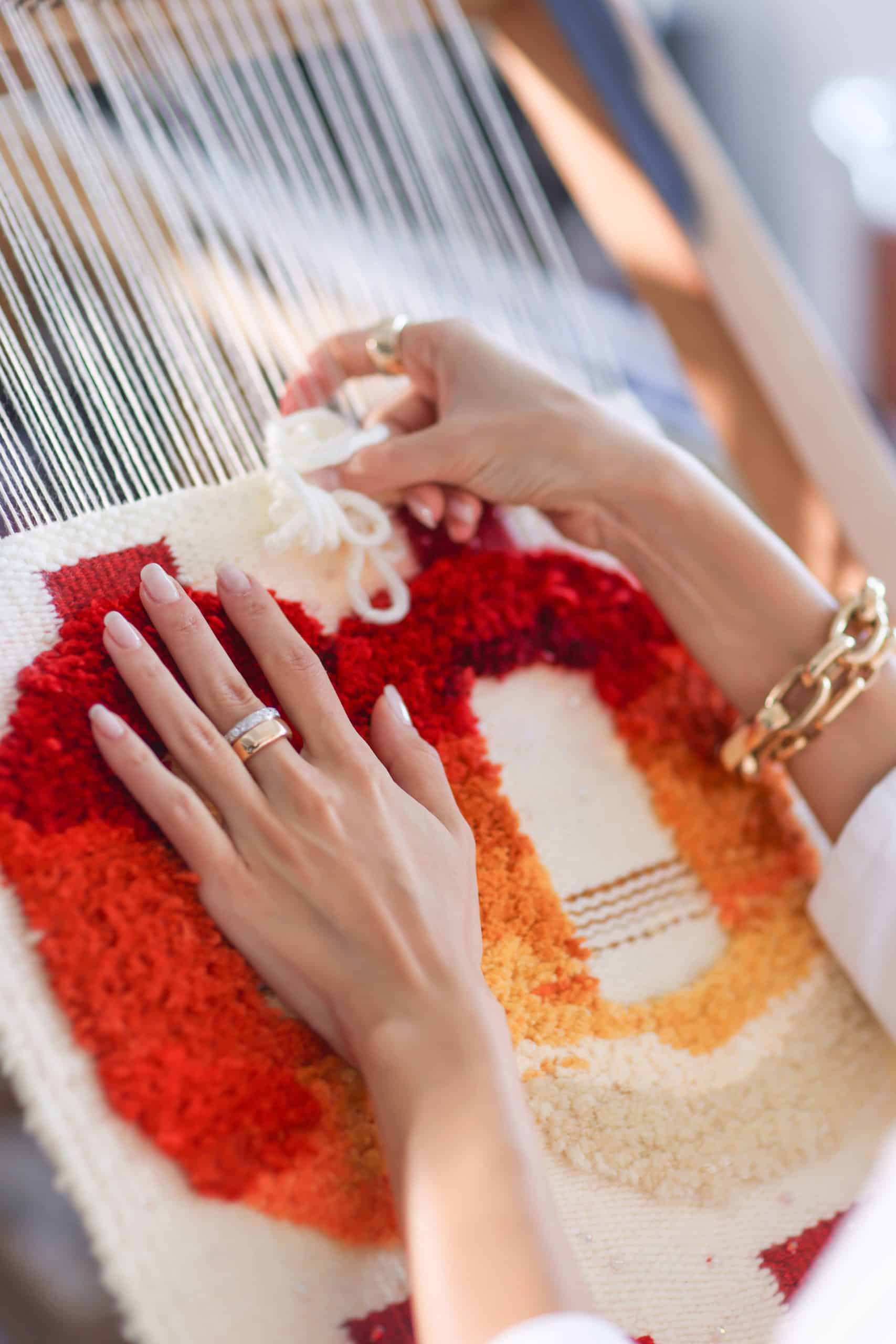
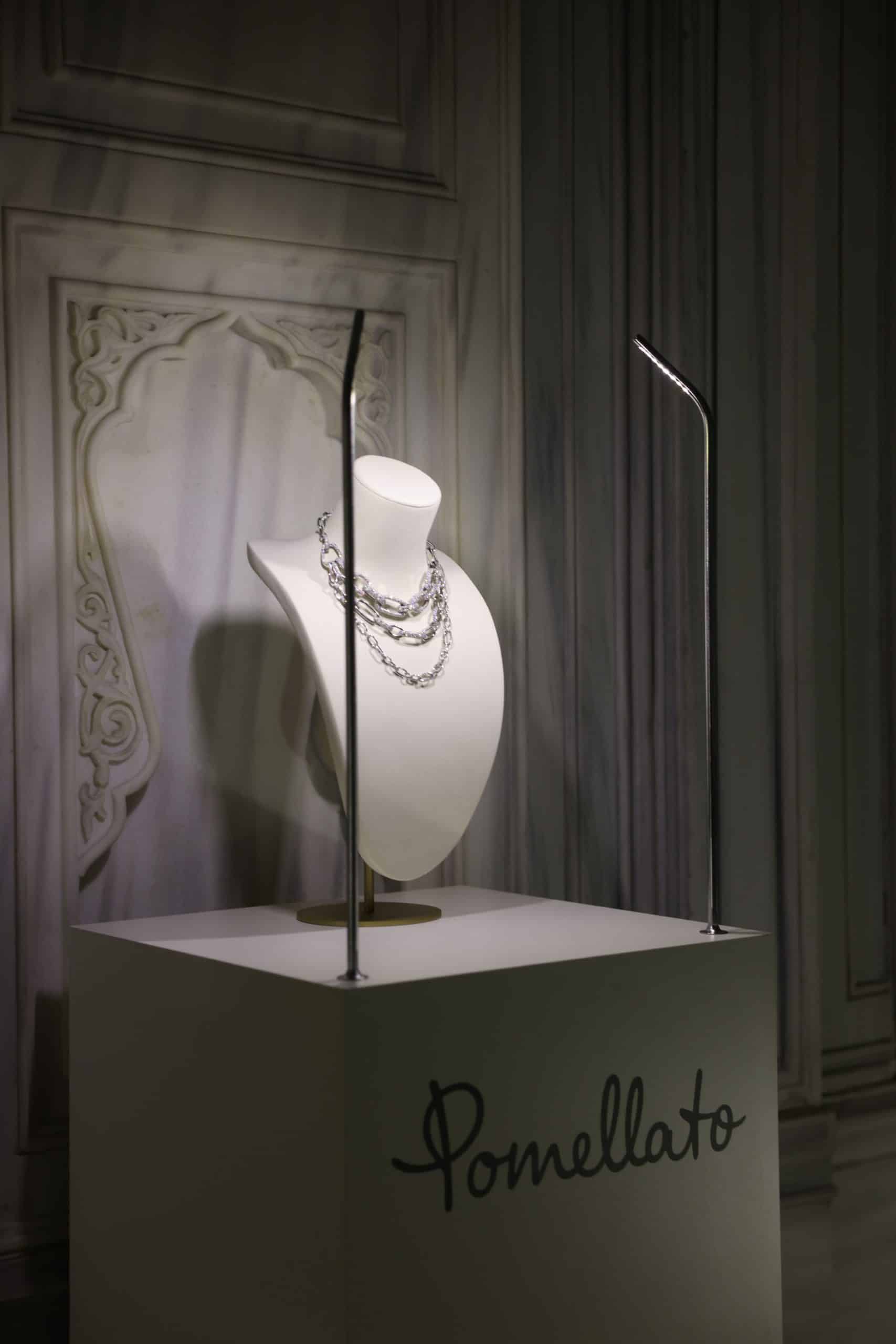
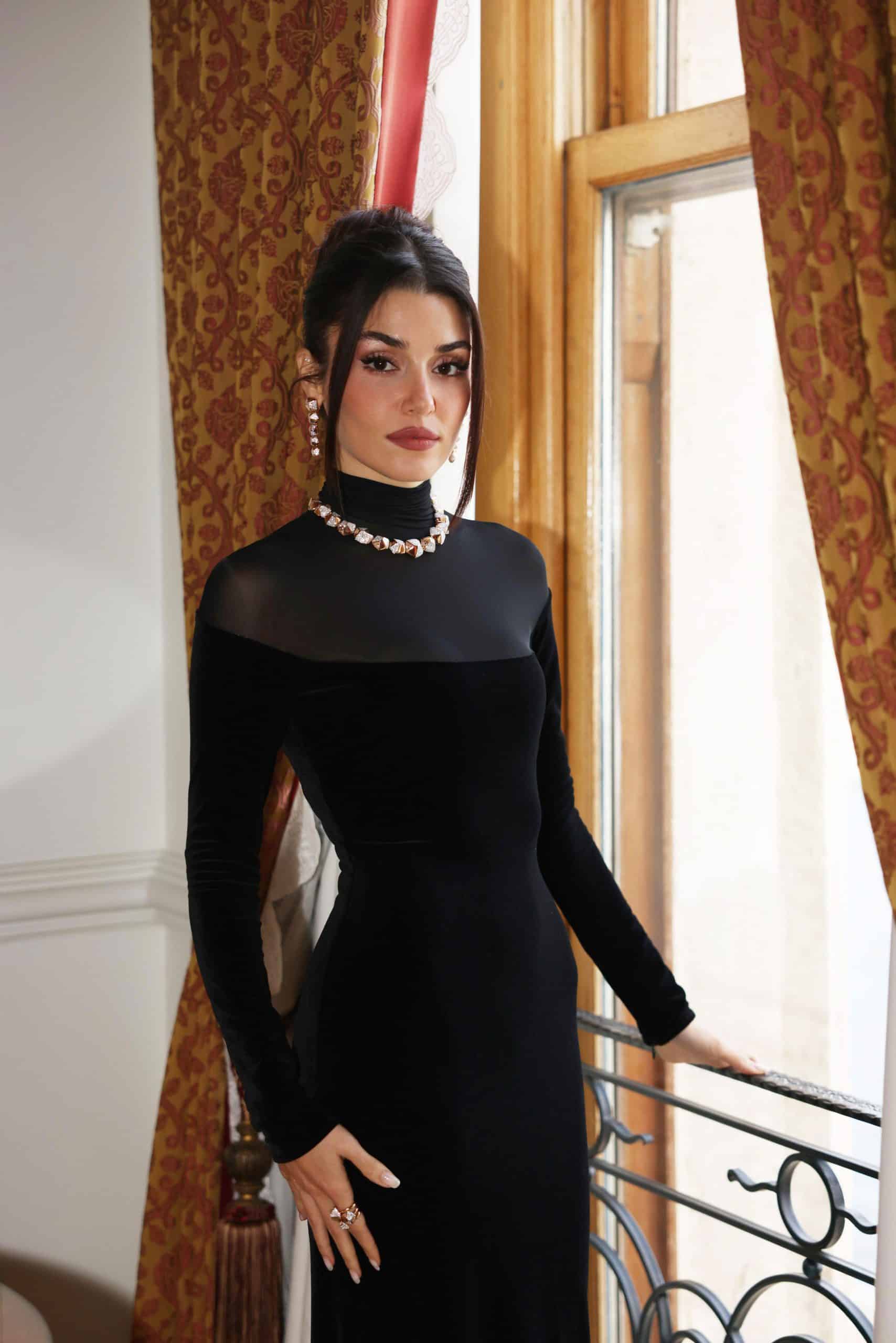
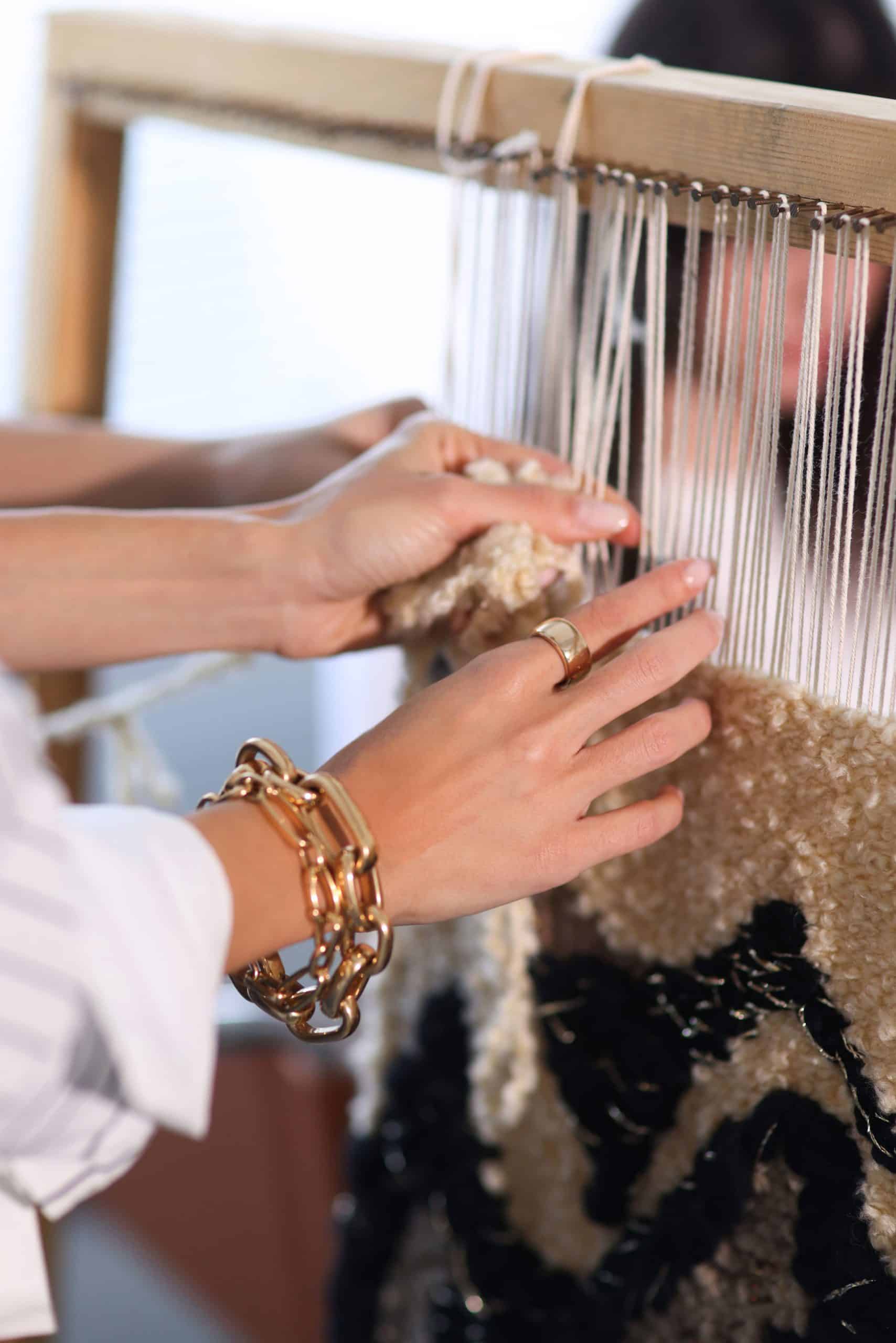
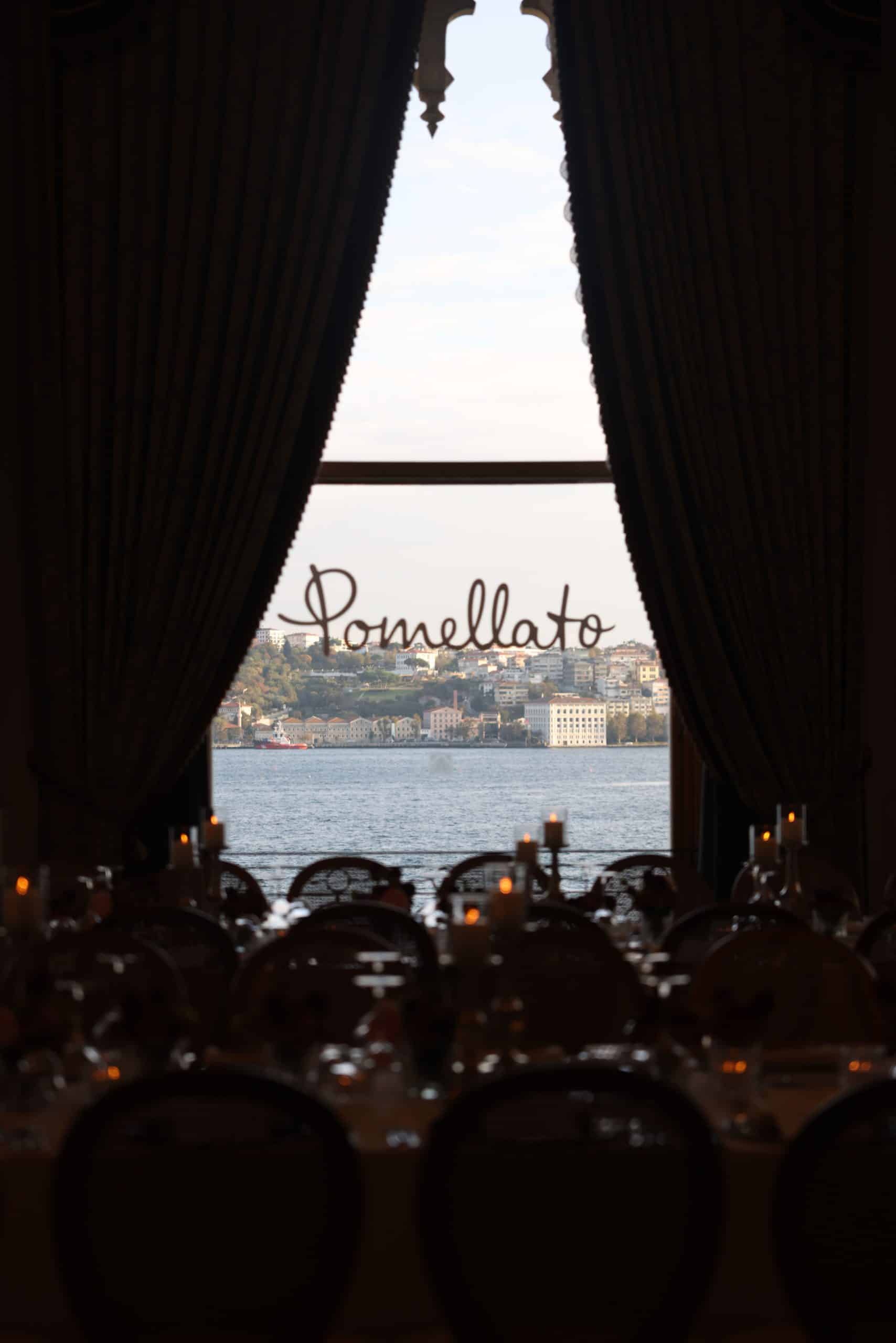
This meeting of sensibilities unfolded at the historic Çırağan Palace Kempinski with brand ambassador Hande Erçel, whose affinity for heritage made her a natural bridge between the two worlds. Guests entered the palace hammam to cocktails and a live weaving performance by students of Mimar Sinan Fine Arts University, a thoughtful nod to the way Turkish traditions continue to be studied and reinterpreted by an emerging young generation of artisans.
It was an evocative moment, because Pomellato champions the same idea. Just as Mimar Sinan Fine Arts University preserves its weaving traditions through education and apprenticeship, Pomellato nurtures its own lineage of goldsmiths through initiatives like Pomellato Virtuosi. The weaving students echoed the maison’s ethos, showing that skill survives only when it is taught, renewed, and carried forward.
In this atmosphere of shared tradition and living skill, we sat down with Pomellato CEO Sabina Belli to explore Iconica and consider how heritage evolves into modernity without losing its soul.

Courtesy of Pomellato
ALI Y. KHADRA: What values guide your decision-making when balancing heritage with innovation?
SABINA BELLI: It’s a very pertinent question in Pomellato, because we are a relatively young jewelry brand — not even 60 years old — competing with Houses that have existed for centuries. We cannot claim a past linked to emperors, crowns, or aristocratic glamour, where jewelry was a symbol of power.
Pomellato was born at a very specific moment, when women were redefining their aspirations around freedom. In 1967, our founder, Pino Rabolini, was immersed in the Milanese intelligentsia of Brera – artists, photographers, journalists, designers – and he sensed the emergence of a new woman: more independent, more autonomous, ready to break the mold.
That mold included traditional platinum-and-diamond jewelry inherited from grandmothers, locked away in bank safes and worn only on special occasions. Meanwhile, this woman had long frizzy hair, wore kaftans, traveled to India, listened to The Beatles, and wanted something more daily, more decomplexed. Rabolini understood he had a role to play as a jeweler for her.
Pomellato became a witness to social change – always observing its time – while carrying another obligation: protecting Italy’s centuries-old goldsmithing tradition, this intelligence of the hand. It counterbalanced contemporaneity and freedom with deeply traditional, craftsman-oriented making. That tension became our unique twist.
This is when industrial design entered goldsmithery: chains inspired by mechanics, manufacturing techniques drawn from industry, even an internal vocabulary borrowed from those worlds. It’s a mindset. Jewelry entered everyday life without lowering standards – on the contrary, the level of quality and expertise remained extremely high.
Today, we have 150 master goldsmiths in Milan. When I joined 10 years ago, watching them work was an epiphany – millennia-old techniques combined with contemporary ones. But we realized our age pyramid was dangerously skewed toward retirement. There was no new generation ready to replace them.
In Italy, from the ’60s and ’70s onward, families valued white-collar university paths, relegating technical schools to second-class status. Yet we saw that artisanal training led to long-term employment and high recognition, while unemployment among highly educated graduates remained high.
So we acted. We partnered with the Galdus school to create Pomellato Virtuosi, a diploma program starting at age 16, with three-, five-, or seven-year courses covering all sub- métiers of goldsmithery, from 3D modeling to stone-setting. A new generation is now coming to life, and we are very proud of that.
This balance – between deep artisanal savoir-faire and an avant-garde vision of design – is the Pomellato signature.
AYK: This is a problem all brands are facing, not just Pomellato…
SB: Yes, but most brands have chosen industrialization. Today, handmade pieces are often reserved for high jewelry, while best-sellers are industrially produced – and there’s nothing wrong with that.
We made a bold decision to fully verticalize, keeping a 360-degree production tool in-house. What’s interesting is that we injected extreme modernity and technology into very traditional skills. We now work in

Courtesy of Pomellato
Courtesy of Pomellato
lean production islands, led by individuals overseeing the full process – not linear production, as in the past, but a much more dynamic way of working.
AYK: Are students graduating from Pomellato Virtuosi required to stay with Pomellato?
SB: No, and that’s one of our boldest decisions. Pomellato Virtuosi is open to all brands.
And yet we have a very high level of pride, because our students are wearing the uniform saying Pomellato. They will possibly end up in another Maison, but with a savoir-faire that is really grounded in traditional goldsmithery and yet able to introduce incredibly modern techniques, such as industrial design or even metalwork.
AYK: As a CEO, how closely do you collaborate with your creative or design directors on new collections?
SB: At Pomellato, everyone shares a very precise understanding of what the brand stands for – values, role, woman, product, and way of making. There is a very strong design signature: you either have it in you or you don’t.
Our creative director, Vincenzo Castaldo, and I share an immediate understanding of what belongs to Pomellato. I can look at 10 pieces and instantly know which one doesn’t fit – and he does this even more instinctively than I do.
This dialogue isn’t about rigidly protecting DNA – a brand must breathe – but about honoring emotional obligations. And when collections are shared internally, teams immediately own them, because they see themselves reflected in the work.
Our conversations are free and emotionally driven, not dictated by merchandising grids. That said, business matters. We work with precious materials, complex inventories, and clear objectives. Creativity must coexist with responsibility.
And yes – as a woman CEO, I’m not ashamed to say my priority is also to deliver results, profits, and growth.
AYK: Before I met you, I always saw the brand as a friendly brand – easy to love. Like they used to say about Zaha: she was the queen of curves. You’re the queen of curves as far as jewelry is concerned – fluidity, curves, sensuality, no angles. What does iconicity mean to you?
Courtesy of Pomellato
SB: Well, I think it’s a word in our vocabulary that, in terms of semantics and meaning, encapsulates something that is very immediately understandable. When you say ‘this is an icon’, it’s like saying ‘this is a diva’. There are criteria that define archetypes or personas – diva, icon, star. You immediately understand because meaning has been built over time.
In whatever is iconic, there must be something quintessential. The iconic encapsulates, in an immediate way, the main concept, the main values, the main messages – explaining uniqueness and immediate identification. An icon has to stay for a long time. It cannot be fashionable, because fashion, by definition, goes out of fashion. Iconicity is there to represent something for a long time.
And, of course, in interior design, as I’ve said, you can juxtapose extremely contemporary pieces with something ancient or traditional, but iconicity gives meaning. It’s like living in a world where two types of icons communicate and express the same values – “We are here to stay; we are here to represent.” An icon has a high responsibility – it symbolizes something. That’s huge.
AYK: You spoke a lot about uniqueness and identity. Can you give us insight about the technique of trompe-l’oeil?
SB: Yes, well, trompe-l’oeil is the effect. For example, if you look at our Iconica rings or bands, or even the door handles of our shops – there is this idea of creating something geometrically simple and yet very perfect. But we allow it to be somehow imperfect because of the sensuality of the shapes, because, being organic, there could be slight imperfection.
We are not in the field of high-level technology where a circle has to meet a geometric paradigm. It is more like an illusion or allusion to a shape you know very well – the circle – but made in a way where we also welcome natural imperfection. And that is very much the consequence of the human hand. If you ask a human to draw a perfect circle, even those with the best control of their gesture will never produce perfection. And that is precisely why, as it is human, it is very moving.
AYK: Beautiful. What triggered the Turkish-Italian heritage celebration?
Courtesy of Pomellato
Courtesy of Pomellato
SB: This is a cultural bridge that is extremely natural, because these are two countries have been incredibly enriched by movements of migration, cultural added value from all different styles, centuries, and mindsets crossing these regions. It is really the crossroads of influences that were sometimes opposite or not easy to merge.
One thing we admire in Istanbul and Turkey is the incredible specificity of this country – hosting many influences and histories in a very harmonious and peaceful way somehow. The result is an eclectic city.
Likewise, in Italy, if you walk around, you see pieces from ancient Rome, the Renaissance, and contemporary times. These two things are very much linked.
Another thing is that both countries sit at the edge of this new polarized world – between the East, the Americas, and Eastern Europe.
Somehow Turkey is at the doors of Asia. We have this question to ask ourselves: what is our region’s role for the rest of the world?
In France they call it ‘exception culturelle’ – the idea that a country must preserve culture but also embrace influences from migration flows and transform and explain them in ways meaningful to the contemporary world.
Personally, I don’t want Europe to become a dusty museum for the rest of the world. If people come to Italy or France just to consume a little Colosseum and pasta and go home, it will be sad. It’s deeper than that.
I think new generations – millennials and alphas – will have to keep in mind that, yes, they are rooted in millennia-old countries, but are now influenced by fast culture from social media and other forces preventing them from bridging these worlds to create a third exception culturelle.
And this school you will meet tonight that makes carpets – it is incredible because they are using ancient techniques but reinventing carpets in contemporary ways. We face a puzzling situation: either we protect our past, our museums, our traditions and pomp – or we go into modernity and tech. Doing both is extremely difficult because you get two different audiences.
In art, either you have avant-garde people who believe contemporary art is the only language, or you have the old masters – and the two collide.
I hope opportunities like this show young people that something classical, or rooted in tradition, can be interesting. I’m proud that a new generation interested in craftsmanship – goldsmithing, embroidery, restoration – is discovering métiers that contribute to the future, not just having a hobby.
In Japan, there has been a much more interesting way of valuing these skills: ‘living treasures’, the idea that some people protect something bigger than life. Let’s not forget we belong to those humans who built the Pyramids, the Taj Mahal, the Louvre, and so on. Who is doing that today?
Maybe science and artificial intelligence are as big as the Pyramids – but where is that extravagance? A memorial for a beloved woman – who does that today?
In a world where anything money can buy is possible – you can picnic on Mount Everest if you pay – money has killed extravagance. And I think that we own the last piece of that in jewelry because it is extravagant.
AYK: Your collaboration with Hande Erçel and the students of Mimar Sinan University – how did that start?
SB: It’s really a story of friendship. We decided she was an incredibly pertinent persona – a representation of what the Pomellato woman should be: free, determined to pursue a dream and make it happen.
She is more than an actress, more than a beautiful woman. She had this passion. We started in a mere discussion during lunch with colleagues, and she threw out the idea, saying, “In Istanbul, there is this school…”. The way she spoke about the project and the passion was like, wow. So we followed her intuition.
We immediately saw parallels with our own school – the hands together with intuition and emotion producing invaluable things.
What I love about this approach is that, contrary to other segments of jewelry, where price is rationally attributed, in our world you can’t. It is the color of the gemstones, the intelligence of the hands, and production of something that is a bit like, ‘Look at this ring – who would have designed such a thing, and which woman would wear it?’ It is a bit weird.
But there is room for twisting ideas and giving value – monetary value – to a piece linked to emotion, not the carats or grams of gold. One of your colleagues once asked how many million-dollar pieces we have, and I asked: “Who cares?” because that is not a goal.
AYK: When you think about the future of Pomellato, what excites you the most?
SB: I’m thinking of two things. The first is that the future is feminine. The future belongs to women. There are many women making their own money – celebrating themselves for achievements or personal goals. This gives us a huge consumer base emerging in all markets. Only a couple of decades ago, a woman had to wait for a husband or lover to give her jewelry – unless you were Queen Victoria – to buy your own jewelry. Now women buy jewelry for themselves, and particularly our clients do that.
So we have a great opportunity to talk to women who understand that if they spend their own money on something valuable and eternal, rather than a handbag or shoes, there is something linking us.
The second thing is that we are now designing and dialoguing with the next generation – daughters, nieces – a generation raised with different perceptions of rarity, value, and luxury. For years, people believed whatever was expensive was luxurious – which is not true. High quality is luxurious. Expensive is not a good paradigm.
Courtesy of Pomellato
We must liaise with this generation to convey that handmade, design, and understanding the subtle balance in jewelry matters. Luxury requires understanding – not just walking into a store and trading a plastic card for something.
So we must protect education, sharing, and the behind-the-scenes. Invite people to visit the atelier and understand the job.
Short-term, we will face gold prices and scarcity of gemstones. A fierce trade has made pricing irrational. Stones once considered second-class are now rare and everyone wants them. To respect consumers and give them good quality materials, it will be tough to find a valuable trade-off.
AYK: And lastly, what’s your favorite sorbet?
SB: My favorite sorbet is – let me tell you – how can you ask this of someone who moved to Paris at 15 and discovered a place called Bertillon on Île Saint-Louis, the emperor of sorbets? Still today, I think they are probably the best ice creams and sorbets. You don’t know Bertillon? Bertillon is like Barthelemy, the cheese store. It serves the most incredible tables – and they have the purest sorbet in Paris.
And they are seasonal, fresh strawberries, and you eat it. Now, I think they have kind of licensed “By Bertillon,” which you can find in very fine restaurants.
Coming from Italy, where gelato is everything, discovering sorbet, the real sorbet, fresh, very monolithic flavor, I loved it. I think fraise des bois.
Courtesy of Pomellato
Courtesy of Pomellato
Related Interview, Fashion

- Culture
- 5 Min Read
Miu Miu Partners with Art Basel Paris Once Again for the 2026 Edition
September 16, 2026


- Fashion
- 5 Min Read
Clarie Denis Reimagines Female Bonds for Miu Miu Women’s Tales in Venice
September 11, 2026
